
Stop sign
A road traffic sign instructing drivers to come to a complete stop at intersections. Commonly octagonal and red with the word STOP; used worldwide with some regional variations and legal rules.
The stop sign is a road traffic control device used to require drivers to come to a complete stop at an intersection or other place where entering traffic must yield. Stop signs are most often placed where signalized control (such as traffic lights) is not present or where a lower-cost measure is preferred. Their primary purpose is to assign right-of-way, reduce conflict points, and protect pedestrians, cyclists, and motorists.
Image gallery
1 Image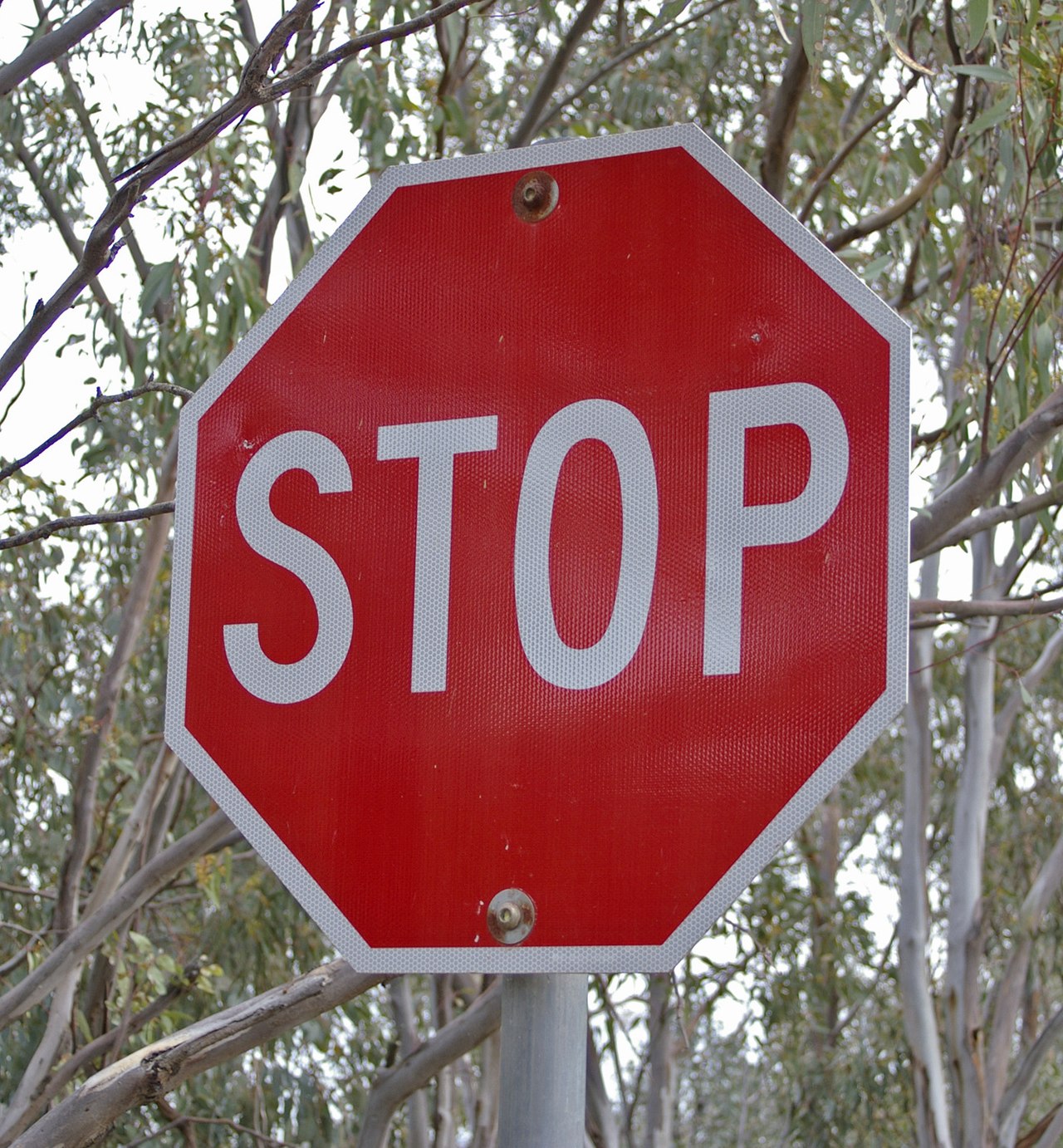
Design and distinguishing features
- Shape and color: The octagonal form and red field with a white legend are widely recognized. The distinctive silhouette helps identification even if the face is obscured or covered by snow.
- Legend: Most signs show the word STOP in capital letters; some jurisdictions use a local-language equivalent while many retain the English word for international recognizability.
- Materials and visibility: Retroreflective sheeting and standardized sizes make the sign visible at night and from a distance. Some signs have supplementary plates indicating "ALL WAY" or directional arrows.
- Placement elements: Stop lines, crosswalk markings, and advance warning signs are commonly used with stop signs to indicate where a vehicle must stop.
Historically, early stop signs varied in appearance and were sometimes black on yellow or other color schemes. Over the twentieth century many countries converged on the red octagon, aided by international treaties and national traffic manuals that encourage consistent shapes and colors to improve driver recognition. Standard-setting documents and manuals in different countries specify sizes, mounting heights, and retroreflectivity to ensure consistent performance.
Function, rules, and common variations
When approaching a stop sign, a driver is normally required to halt at the marked stop line, or if none exists, before entering the crosswalk or intersection. After stopping, the driver may proceed only when the way is clear and yielding to other vehicles or pedestrians with priority. Variations include multiway stop controls (often signed "4-WAY" or "ALL WAY") in which all approaching traffic must stop and right-of-way is determined by arrival order. A flashing red signal is usually treated the same as a stop sign.
Stop signs differ from yield signs: a yield sign allows a controlled slow approach and merging without a full stop when the path is clear; a stop sign requires a complete stop regardless of perceived traffic. Enforcement, penalties, and required stopping procedures vary by jurisdiction but are generally part of traffic law.
Importance and notable facts
- Stop signs are a fundamental safety tool for low- to moderate-volume intersections where traffic signals are unnecessary.
- The octagon shape is reserved in many countries specifically for stop signs so that even a turned or partially obscured sign remains recognizable.
- Although universally familiar, local variations in language, size, and placement exist; drivers are expected to know and obey the rules that apply where they are driving.
Questions and answers
Q: What is a stop sign?
A: A stop sign is a sign that is placed at crossroads where there are no traffic lights.
Q: When should a driver stop at a stop sign?
A: A driver should stop at a stop sign when they reach a crossroad and wait for other vehicles to pass.
Q: What should a driver do when the road is clear at a stop sign?
A: A driver can only proceed when the road is clear at a stop sign.
Q: Is the stop sign an important traffic sign?
A: Yes, the stop sign is one of the most significant and well-known signs of road traffic.
Q: Is it necessary to stop at a stop sign if there are no other vehicles around?
A: Yes, a driver must stop at a stop sign even if there are no other vehicles around.
Q: What happens if a driver does not stop at a stop sign?
A: If a driver does not stop at a stop sign, they could cause an accident or receive a traffic violation.
Q: What is the purpose of a stop sign?
A: The purpose of a stop sign is to instruct drivers to stop at a crossroad and wait for other vehicles to pass, ensuring safety on the road.
Related articles
Author
AlegsaOnline.com Stop sign Leandro Alegsa
URL: https://en.alegsaonline.com/art/94078