
Tractor: agricultural work vehicle and its roles
A tractor is a powerful vehicle designed primarily for agricultural work, capable of pulling or powering a wide range of implements; modern tractors include varied sizes, drive systems, and precision controls.
A tractor is a self-propelled vehicle designed to deliver high tractive effort for hauling and powering agricultural implements. Most commonly associated with farming, tractors serve as a platform to tow equipment, drive mechanized tools, and move loads across fields and farms. They are built to operate reliably on rough terrain and under heavy-duty conditions.
Image gallery
10 Images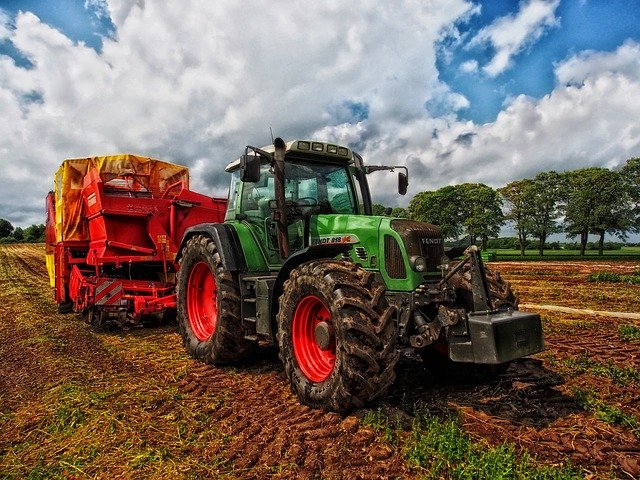


Characteristics and main components
Typical tractors are powered by internal combustion engines, often diesel, and combine a robust transmission with large tires or, in some models, rubber tracks to distribute weight. Key features include a power take-off (PTO) shaft that transfers engine power to implements, hydraulic systems to lift and control attachments, and standardized hitching systems such as the three-point hitch. Many tractors offer open operator stations or enclosed cabs with climate control, and safety structures like roll-over protection systems (ROPS).
Types and variations
- Row-crop tractors: taller clearance and adjustable wheeltrack for cultivating between planted rows.
- Utility tractors: medium-sized machines for general tasks on farms and properties.
- Compact and garden tractors: smaller units for lawns, orchards, and smallholdings.
- Tracked tractors: use rubber tracks to reduce soil compaction and improve flotation on soft ground.
- Industrial tractors: adapted for construction, forestry, or municipal work.
History and development
Tractors replaced animal draft power during the mechanization of agriculture in the early 20th century. Early machines evolved from steam traction engines to gasoline and then diesel-powered designs. Over the decades manufacturers standardized controls and attachments, increasing versatility so a single chassis could perform many jobs by fitting different implements.
Uses, attachments and modern advances
Beyond towing trailers and wagons, tractors supply mechanical power to implements such as ploughs, cultivators, seeders, mowers, balers, sprayers and many more. Attachments are connected directly or driven by the PTO, allowing a tractor to act as the central power unit for diverse tasks. Examples include soil preparation, planting, crop care, harvesting support and material handling. Farmers and contractors increasingly adopt precision technologies—GPS guidance, automated steering, and telematics—to improve efficiency, reduce overlap and monitor machine health.
Safety, fuel efficiency and soil impact are ongoing concerns. Operators use slower speeds, appropriate tires or tracks, and careful implement choice to limit compaction. For more on common implements and their selection, see tools and towing options such as trailers.
In sum, the tractor remains a central machine in modern agriculture and land management: versatile, rugged, and continually updated with new mechanical and electronic capabilities to meet changing farm needs.
Related articles
Author
AlegsaOnline.com Tractor: agricultural work vehicle and its roles Leandro Alegsa
URL: https://en.alegsaonline.com/art/101013
Sources
- commons.wikimedia.org : Tractor