
Basset Hound: appearance, history, behavior, and uses
A short-legged scent hound known for a powerful nose, loose skin, and distinctive appearance; developed for tracking game and now kept as hunting and companion dogs.
Overview
The Basset Hound is a short-legged scent hound bred to follow ground scent trails slowly and persistently. As a member of the hound family, it is valued for an exceptional sense of smell used in tracking quarry, second only in many accounts to the Bloodhound. The breed combines moderate strength with a steady, deliberate gait that suits trailing over long periods.
Image gallery
10 Images



Appearance and characteristics
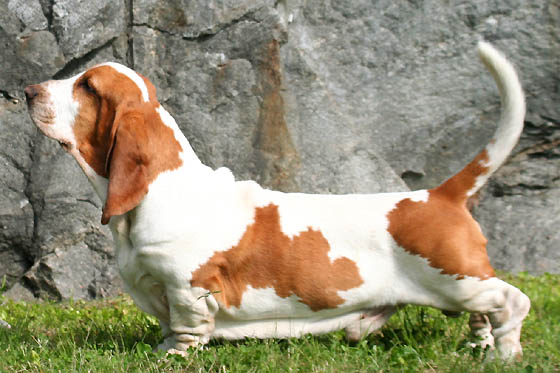
Basset Hounds are immediately recognizable by several features: long, drooping ears; heavy loose skin that forms wrinkles around the face; short, bowed forelegs; and a deep chest. Typical adult height at the shoulder is low compared with most breeds, while weight and build are sturdy. Coat colors commonly include tri-color patterns of black, brown and white, as well as bicolor and other combinations.
- Coat and color: commonly black, white and brown or other spotted patterns (coat varieties).
- Size: low to the ground with a solid, heavy bone structure.
- Scenting ability: excellent olfactory tracking adapted for trailing on foot (hunting).
Origins and development
The name Basset derives from French roots meaning "rather low," reflecting the breed's short stature; the word is linked to small or low breeds in French dog nomenclature and may be traced through regional types in northern France. Modern Basset Hounds were shaped in the 19th century from older low-scenting hounds, with influences attributed to French short-legged strains such as the Basset d'Artois and related regional varieties. Selective breeding emphasized an ability to follow cold and concentrated trails at a slow pace suitable for hunters on foot or with limited mounts.
Uses, temperament and care
Originally developed for scent hunting, the Basset remains useful for trailing and tracking but today is also a popular companion. Temperament is typically even, affectionate, and mildly stubborn; the breed is usually good with families and other dogs but requires consistent training because strong scent interest can make them distractible. Exercise should match their scenting instincts—regular walks and scent-based games—but care is needed because their low stature and heavy body can predispose them to joint and back issues.
Notable distinctions
Basset Hounds are often compared with other scent hounds for their unique combination of a powerful nose and slow, methodical pace. Their drooping ears and loose facial skin help trap scent near the nose, enhancing tracking efficiency. For breed standards and detailed health guidance, consult breed clubs and veterinary sources; general information can be found through breed organizations and breed-specific reference links (name origin, classification, hunting roles, comparison with Bloodhound, coat types).
Related articles
Author
AlegsaOnline.com Basset Hound: appearance, history, behavior, and uses Leandro Alegsa
URL: https://en.alegsaonline.com/art/9306
Sources
- dictionary.reference.com : "Basset | Define Basset at Dictionary.com"