
Small-cell carcinoma (small-cell lung cancer)
Aggressive neuroendocrine carcinoma most commonly of the lung, marked by rapid growth, early spread, and distinctive small-cell histology. Treated mainly with chemotherapy and radiotherapy; prognosis often guarded.
Small-cell carcinoma is a high-grade neuroendocrine malignancy that most frequently arises in the lung but can occur in other organs. It is sometimes called small-cell lung cancer or oat-cell carcinoma. The term applies to a tumor type defined by its microscopic appearance and clinical behavior: small, tightly packed tumor cells with scant cytoplasm and a propensity for very rapid growth. For basic clinical definitions see cancer classification and general oncology references at medical resources.

Image gallery
6 Images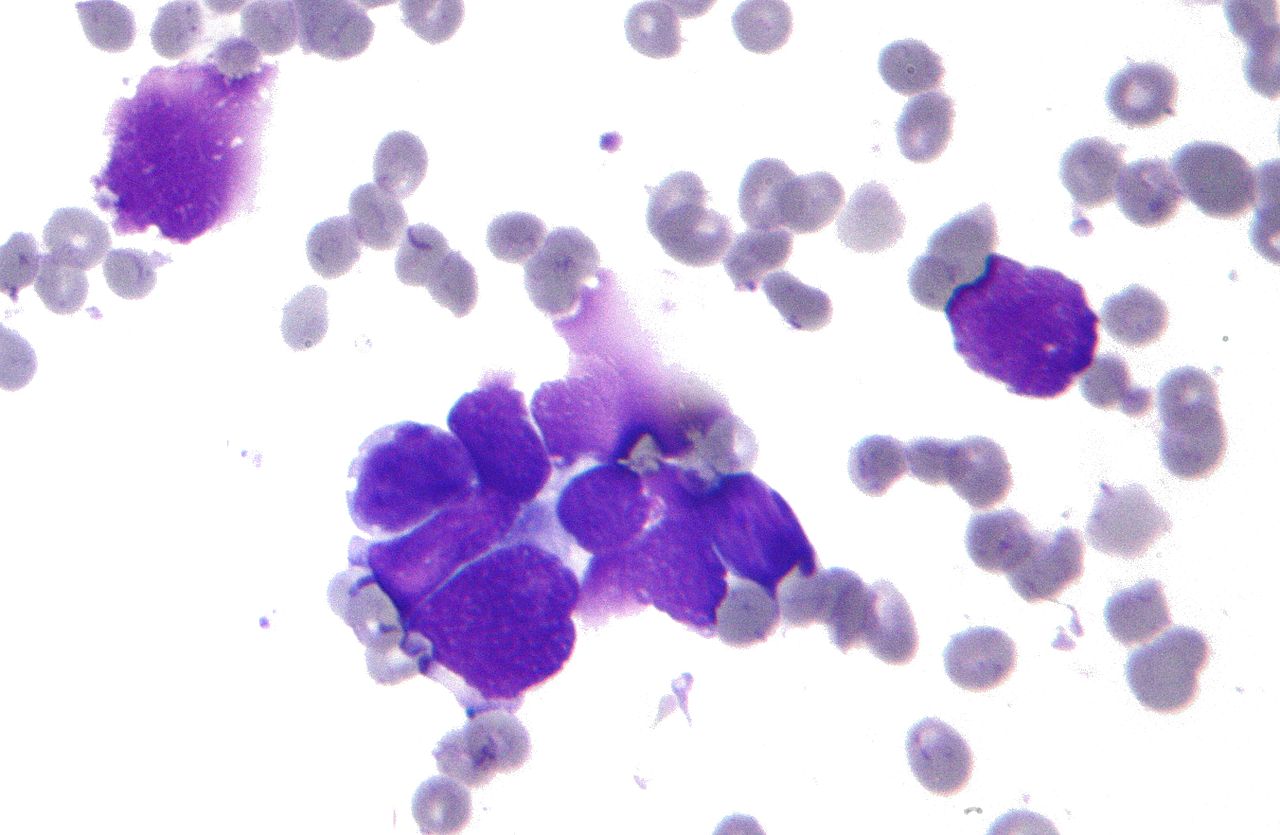


Characteristics and pathology
Under the microscope, small-cell carcinoma shows sheets of small, round to fusiform cells with finely granular chromatin and minimal cytoplasm. Tumor cells often express neuroendocrine markers. Compared with non-small cell tumors of the lung, this carcinoma has a higher growth fraction, shorter doubling time and earlier tendency to metastasize. Although most cases originate in the lung (pulmonary small-cell carcinoma), similar histology appears less commonly in the cervix, prostate and parts of the gastrointestinal tract.
Clinical presentation and diagnosis
Patients commonly present with cough, breathlessness, chest pain or symptoms from metastatic sites such as bone pain or neurological changes. Paraneoplastic phenomena — for example inappropriate hormone production — are well recognized and can produce hyponatraemia or endocrine syndromes. Diagnosis depends on imaging to identify a primary mass and biopsy or cytology to confirm histology and immunohistochemical profile.
Staging and management
Staging paradigms distinguish limited disease, when cancer is confined to one hemithorax and regional lymph nodes, from extensive disease with distant spread. Because of its systemic nature at presentation in many patients, treatment centers on systemic therapy: combination chemotherapy often combined with radiotherapy to the chest or to symptomatic metastatic sites. Surgery is rarely the primary option. In recent years immunotherapy and new targeted approaches have been explored for selected patients.
Prognosis and importance
Prognosis is generally less favorable than for many non-small cell lung cancers due to early dissemination and rapid progression, although outcomes can vary with stage and response to therapy. Early detection is uncommon, and multidisciplinary care that includes oncology, pulmonology and supportive specialists is important to address symptoms and treatment complications.
Notable distinctions
- Histologic: small cells, neuroendocrine features vs larger cells of non-small cell types.
- Clinical: rapid growth, high metastatic potential, and frequent paraneoplastic syndromes.
- Therapeutic: systemic chemotherapy and radiotherapy are mainstays; surgery is limited.
For further reading and detailed guidelines consult specialist oncology texts and trusted clinical resources: classification guides, treatment protocols, and organ-specific reviews at pulmonary resources, gynecologic oncology, and uro-oncology.
Related articles
Author
AlegsaOnline.com Small-cell carcinoma (small-cell lung cancer) Leandro Alegsa
URL: https://en.alegsaonline.com/art/91178
Sources
- mercksource.com : small-cell carcinoma
- ncbi.nlm.nih.gov : "Advanced small cell carcinoma of the uterine cervix treated by neoadjuvant chemotherapy with irinotecan and cisplatin followed by radical surgery"
- doi.org : 10.4081/rt.2011.e6
- pubmed.ncbi.nlm.nih.gov : 21464879
- content.karger.com : "Pure small cellliterature review"
- doi.org : 10.1159/000324717
- ncbi.nlm.nih.gov : 3072185
- pubmed.ncbi.nlm.nih.gov : 21475596