
Sidewalk
A sidewalk is a paved pedestrian way beside a road, called pavement or footpath in other English varieties. This article explains its design, history, uses, accessibility, and common variations.
A sidewalk is a surfaced route intended for people walking alongside a street. In some contexts the term redirects to other meanings (for example the rock band Pavement), but in everyday urban use a sidewalk provides a distinct space separated from moving traffic. Different English dialects prefer different names: American English commonly uses "sidewalk", while British English and South African English often say "pavement". Other varieties use terms such as footpath or footway.
Image gallery
10 Images


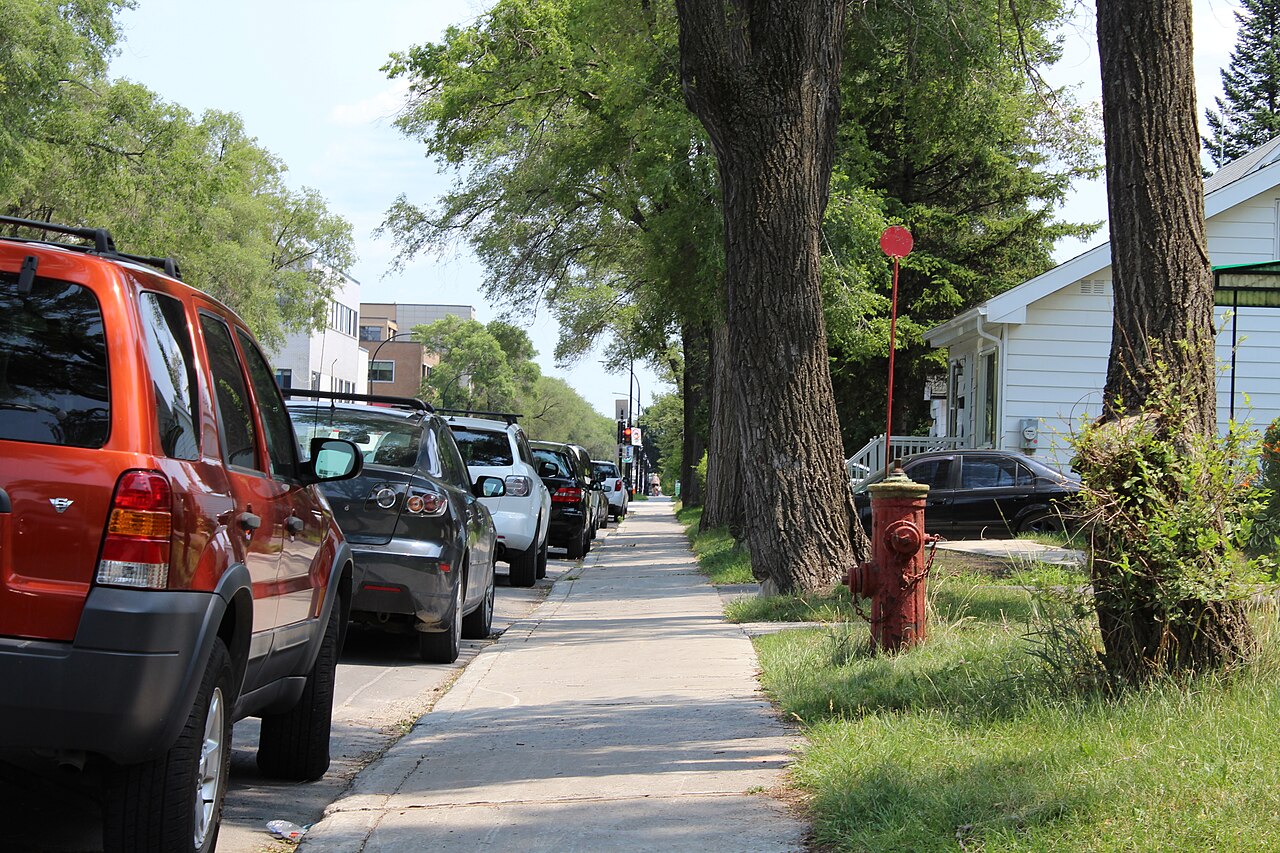


Definition and common names
Broadly, a sidewalk is a path for pedestrians running alongside a road or between buildings and the carriageway. Engineers and planners may call it a footway. In countries such as Australia, Ireland and India speakers often use local variants — see Australian English, Irish English and Indian English for regional usage.
Typical components and materials
Sidewalks combine several elements designed for safety, durability, and convenience. Typical components include a curb separating pedestrians from vehicular lanes, a paved walking surface, ramps or curb cuts at crossings, and tactile indicators for visually impaired users. Materials vary by climate, cost and style: concrete, asphalt, brick and stone are common, while timber boardwalks occur in coastal or wetland settings.
- Surface materials: concrete, asphalt, pavers, cobbles.
- Edge treatments: curbs, gutters, planters and street trees.
- Accessibility features: ramps, tactile paving, detectable warnings.
History and development
Separated pedestrian ways have existed in many premodern cities in varied forms, from raised pavements in ancient towns to promenades and arcades. The modern sidewalk as a defined urban element became widespread with 19th-century urbanization and the rise of formal street design. Municipal ordinances often required property owners or city departments to install and maintain sidewalks as cities grew.
Uses, safety and public benefits
Sidewalks protect people from motorized vehicles, improve mobility, and support commerce and social life by providing a predictable place to walk, pause and interact. They also enable safer routes for children, older adults, and people with mobility aids. Well-designed sidewalks contribute to public health by encouraging walking and reducing pedestrian collisions.
Accessibility, maintenance and regulation
Many jurisdictions have standards that specify slope, width and surface treatments so sidewalks are usable by wheelchairs, strollers and people with visual impairments. Responsibility for upkeep — such as snow clearance, repairs and tree root management — may fall on municipalities or adjacent property owners depending on local law. Permeable pavements and green buffers are increasingly used to manage stormwater and reduce urban heat.
Variations and notable types
There are several variants: wide promenades and esplanades by waterfronts, narrow historical pavements in dense old towns, shared-use paths that accommodate both pedestrians and cyclists, and elevated boardwalks. Design priorities — safety, accessibility, aesthetics, ecology — shape how each type is built and managed.
For further reading on related topics and regional terminology see resources on pedestrian planning and street design (paths and public space), comparative language usage (British, American), and engineering guidance (footway standards). Additional references address pedestrian behavior and traffic interactions (pedestrians vs vehicles), and regional naming conventions (Irish, Indian, New Zealand).
Related articles
Author
AlegsaOnline.com Sidewalk Leandro Alegsa
URL: https://en.alegsaonline.com/art/90226