
Signal Iduna Park (Westfalenstadion) — Dortmund's football stadium
Signal Iduna Park, formerly Westfalenstadion, is Borussia Dortmund's home ground in Dortmund, Germany. Renowned for its capacity, atmosphere and the 'Yellow Wall' standing terrace.
Overview
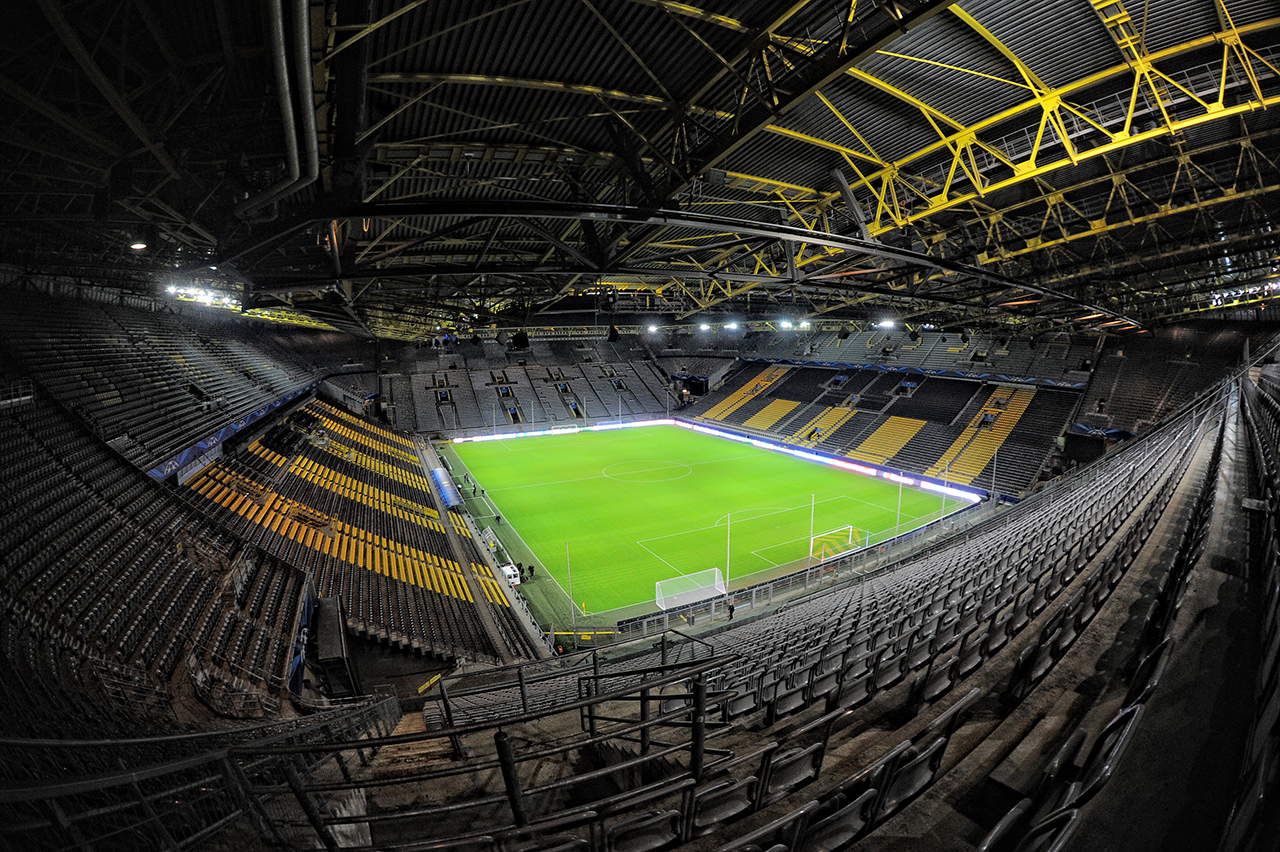
Signal Iduna Park, historically known as the Westfalenstadion, is a major association football stadium in Dortmund, Germany. Opened for the 1974 era and officially renamed after a sponsorship agreement in 2005, it is the largest football stadium in Germany with an all-seated and standing capacity of around 80,700 spectators. The venue is the home ground of Bundesliga club Borussia Dortmund and is widely praised for its intense match-day atmosphere and fan culture. For more on the stadium's original name see Westfalenstadion.
Image gallery
10 Images




History and development
The stadium was constructed to host major international matches in the 1970s and has undergone several renovations and expansions to meet modern standards and growing attendance. Naming rights were sold in 2005, which led to the commercial name Signal Iduna Park while many supporters continue to use the traditional Westfalenstadion. Over the decades the ground has been adapted to accommodate television, safety, and comfort requirements while preserving its distinctive terraces.
Characteristics and layout
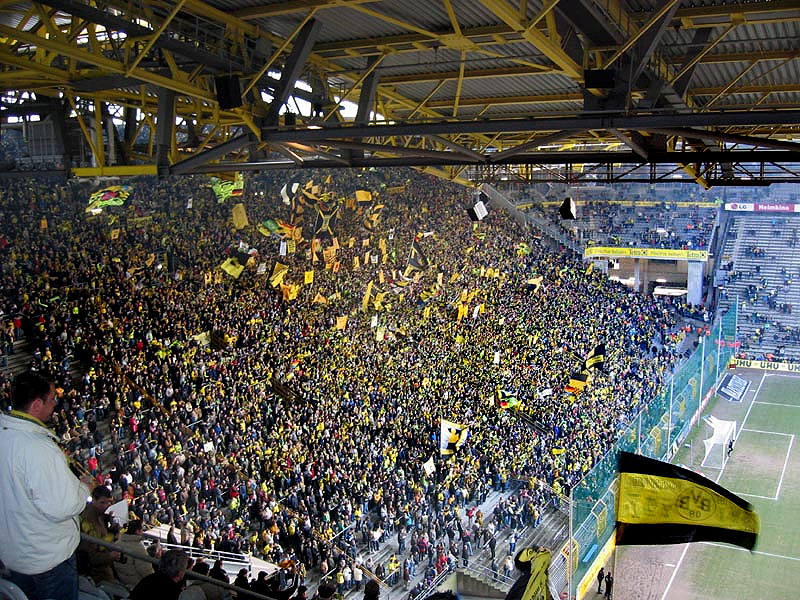
Signal Iduna Park combines seated stands and large standing terraces. Its most famous feature is the South Stand, commonly called the "Yellow Wall" (Südtribüne), a continuous standing terrace that forms one of the largest single-capacity terraces in Europe and is central to the stadium's reputation for vocal support. Other notable components include an imposing roof that enhances acoustics, modern floodlighting and training and hospitality facilities used by the club and visiting teams.
Uses, events and transport
The stadium hosts domestic league matches, European club fixtures and occasional international games and special events. It is classified by UEFA among the top-tier stadiums, enabling it to stage high-profile fixtures. On match days the site is served by Dortmund's public transport network and dedicated stadium stops; for official schedules and transport links consult club and city resources here and here.
Atmosphere, supporters and culture
Signal Iduna Park is often cited as one of Europe's most atmospheric stadiums: supporters organize tifos, chants and coordinated displays that create a distinct match-day identity for Borussia Dortmund. The club's fan base regularly produces among the highest average attendances in European football, and the structure of the stadium—particularly the South Stand—contributes to a famously loud, unified crowd. Many articles and fan accounts describe the Yellow Wall as a defining element of modern football fandom; further reading is available here.
Notable facts and distinctions
- Capacity: approximately 80,700, making it the largest football stadium in Germany.
- Nickname: Westfalenstadion remains widely used by supporters despite the commercial name.
- Terrace: the Südtribüne, or Yellow Wall, is one of the most famous standing terraces in European football.
- Classification: recognized by UEFA as a top-level venue suitable for major competitions.
For official club information, ticketing and visitor guidance see the club's resources and official stadium pages here.
Questions and answers
Q: What is Signal Iduna Park?
A: Signal Iduna Park is an association football stadium located in Dortmund, Germany.
Q: How many spectator places does Signal Iduna Park have?
A: Signal Iduna Park has 80,708 spectator places.
Q: What is the classification of Signal Iduna Park by UEFA?
A: Signal Iduna Park is classified by UEFA as an "elite stadium", allowing it to host the finals of major club competitions.
Q: Which German Bundesliga team plays at Signal Iduna Park?
A: Borussia Dortmund, a German Bundesliga team, plays at Signal Iduna Park.
Q: What record did Borussia Dortmund's spectators set at Signal Iduna Park?
A: Borussia Dortmund's spectators set a new European record with 1.35 million spectators (average approx. 76,500 per play) in the season 2003/2004.
Q: Where is Signal Iduna Park located?
A: Signal Iduna Park is located south B 1 to the Strobelallee beside the stadium red ones earth and in the proximity that Westfalen resounding.
Q: What is the official name of Westfalenstadion since November 2005?
A: The official name of Westfalenstadion since November 2005 is Signal Iduna Park.
Related articles
Author
AlegsaOnline.com Signal Iduna Park (Westfalenstadion) — Dortmund's football stadium Leandro Alegsa
URL: https://en.alegsaonline.com/art/90323