
American English
Variety of English used in the United States, distinguished by regional dialects, pronunciation, vocabulary, spelling conventions, and historical influences shaping its standard and social varieties.
Overview
American English is the set of English language varieties spoken in the United States. It functions in government, education, media and commerce, and is commonly treated as a regional dialect of the broader English language. Its forms reflect settlement patterns, contact with Indigenous languages, immigration from many countries, and subsequent internal change. While some uses are widely understood across the country, regional and social variation remain strong.
Image gallery
2 Images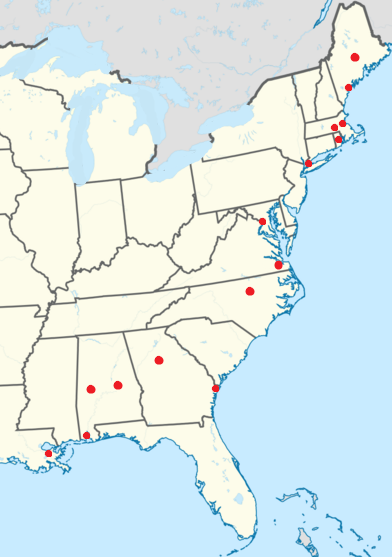

Phonology and pronunciation
Major phonological features distinguish many American accents from other world varieties. Most American accents are rhotic (pronouncing /r/ in all positions), a trait that contrasts with many southern British accents. Several large-scale vowel changes are important in regional classification: the Northern Cities vowel shift and various Southern vowel shifts influence vowel quality across large populations. Other notable patterns include the cot–caught distinction in many regions and the flapping of intervocalic /t/ and /d/ in casual speech.
Spelling, vocabulary and grammar
American orthographic conventions commonly favor forms such as color, organize or center, differences that were promoted in the 19th century by educational reformers and lexicographers. Vocabulary differences from other varieties are extensive: for example, truck versus lorry, apartment versus flat, and cookie versus biscuit. Grammatical preferences sometimes vary: collective nouns are more often treated as singular in standard American usage, and regional varieties show characteristic patterns such as the habitual aspect marked in African American Vernacular English (AAVE).
History and standardization
The development of American English began with the dialects brought by English settlers and evolved through contact with other languages and internal innovation. Standardization increased through public schooling, printing, and influential dictionaries and grammars. These processes encouraged national norms while allowing local pronunciations and usages to persist. Over the 20th and 21st centuries, national media, mass education and modern communications reinforced shared forms even as new variations emerged.
Regional and social varieties
Within the United States there are many regional dialect groups—commonly labelled Northern, Midland, Southern and Western—as well as island and New England varieties. Social and ethnic varieties are also prominent: African American Vernacular English (AAVE), Chicano English, and other community-based forms have distinct phonological, lexical and syntactic features. A reference style often called General American is widely used in broadcasting and language teaching but does not erase local speech identities.
International influence and usage
American English has global reach through film, television, technology, higher education and business. Its influence affects international media and second-language teaching in many regions, producing both adoption of American vocabulary and hybrid forms. Differences with other principal varieties, such as British English, remain an object of study and practical concern in translation, publishing and cross-cultural communication.
Resources and further reading
- Surveys and pronunciation maps document regional sound patterns and change.
- Historical studies examine the role of dictionaries and schooling in establishing norms.
- Corpora and contemporary media samples help trace ongoing shifts and new usages.
For general introductions and reference materials see linguistic overviews and educational collections available from major language and cultural organizations: dialect studies, comparative English resources, national archives and educational sites, and surveys comparing world varieties such as comparative guides.
Questions and answers
Q: What is American English?
A: American English, or US English, is the dialect of the English language spoken in the United States of America.
Q: How does it differ from other types of English?
A: It differs from other types of English, such as British English, in some ways.
Q: Where did most types of American English come from?
A: Most types of American English came from local dialects in England.
Q: Is there a difference between US and UK English?
A: Yes, there are differences between US and UK English.
Q: Are these differences significant?
A: The differences can be significant depending on the context.
Q: What are some examples of these differences?
A: Examples include spelling (e.g., "color" vs "colour"), pronunciation (e.g., "tomato" vs "tom-ah-to"), grammar (e.g., using present perfect tense), and vocabulary (e.g., using different words for certain items).
Q: Does American English have any influence on other languages around the world?
A: Yes, American English has had an influence on many languages around the world due to its widespread use in popular culture and media.
Related articles
Author
AlegsaOnline.com American English Leandro Alegsa
URL: https://en.alegsaonline.com/art/3393