
SGR 1806-20: a magnetar in Sagittarius and the 2004 giant flare
SGR 1806-20 is a highly magnetized neutron star (magnetar) in Sagittarius, notable for a December 2004 giant gamma-ray flare that became the brightest extrasolar burst recorded and disturbed Earth's upper atmosphere.
Overview
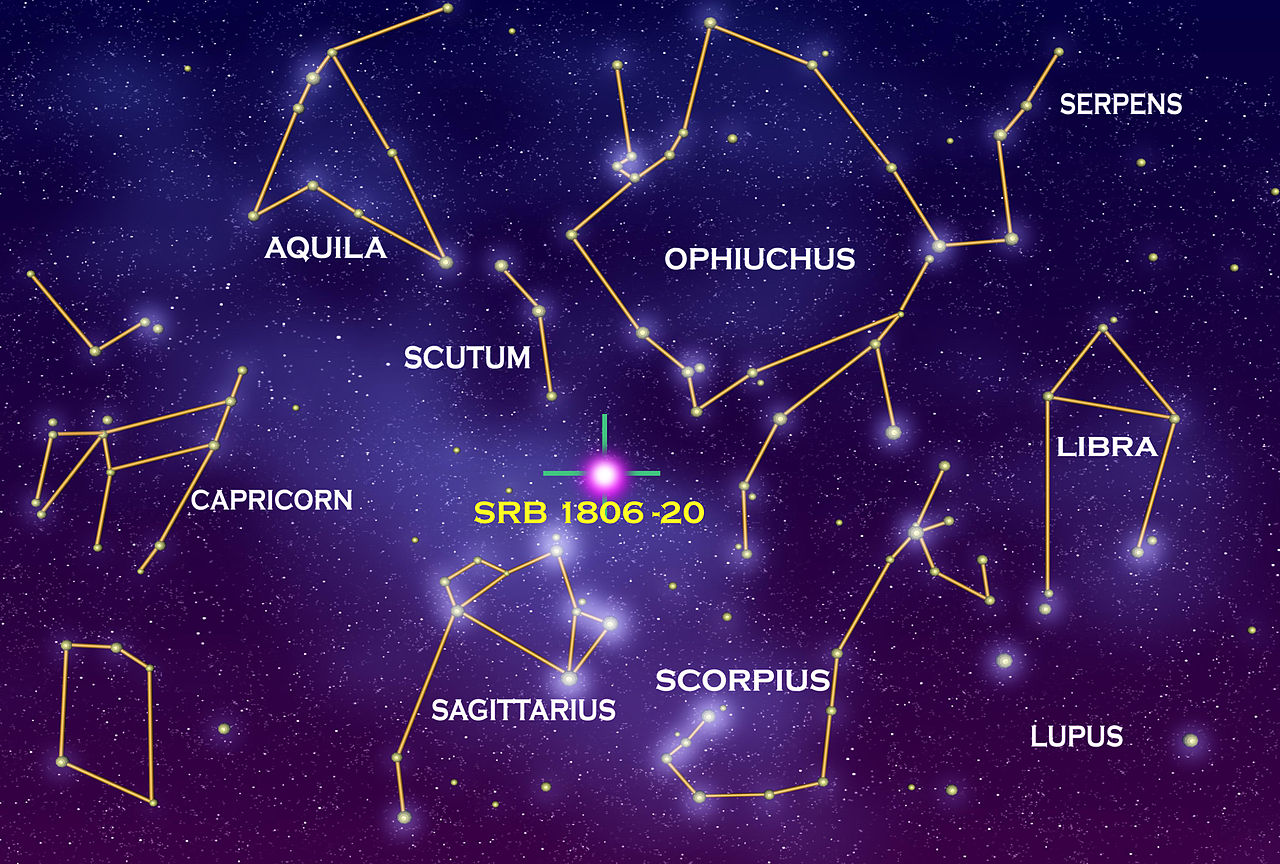
SGR 1806-20 is a compact stellar remnant classified among soft gamma repeaters and often described in older literature as a pulsar. It lies in the direction of the constellation Sagittarius at an estimated distance of roughly 50,000 light years from the Sun and the Earth. SGR 1806-20 is generally interpreted as a magnetar: a neutron star with an exceptionally strong magnetic field that produces recurrent bursts of X-rays and soft gamma rays.
Image gallery
4 Images

Physical characteristics
The object shows a rotation period of several seconds, typical of magnetars, and its magnetic field strength is believed to be among the highest observed for neutron stars. Its emissions include short, repeating bursts and, on rare occasions, far more energetic "giant flares". Observations of these events display an intense initial spike followed by a decaying tail that is modulated by the star's rotation.
2004 giant flare
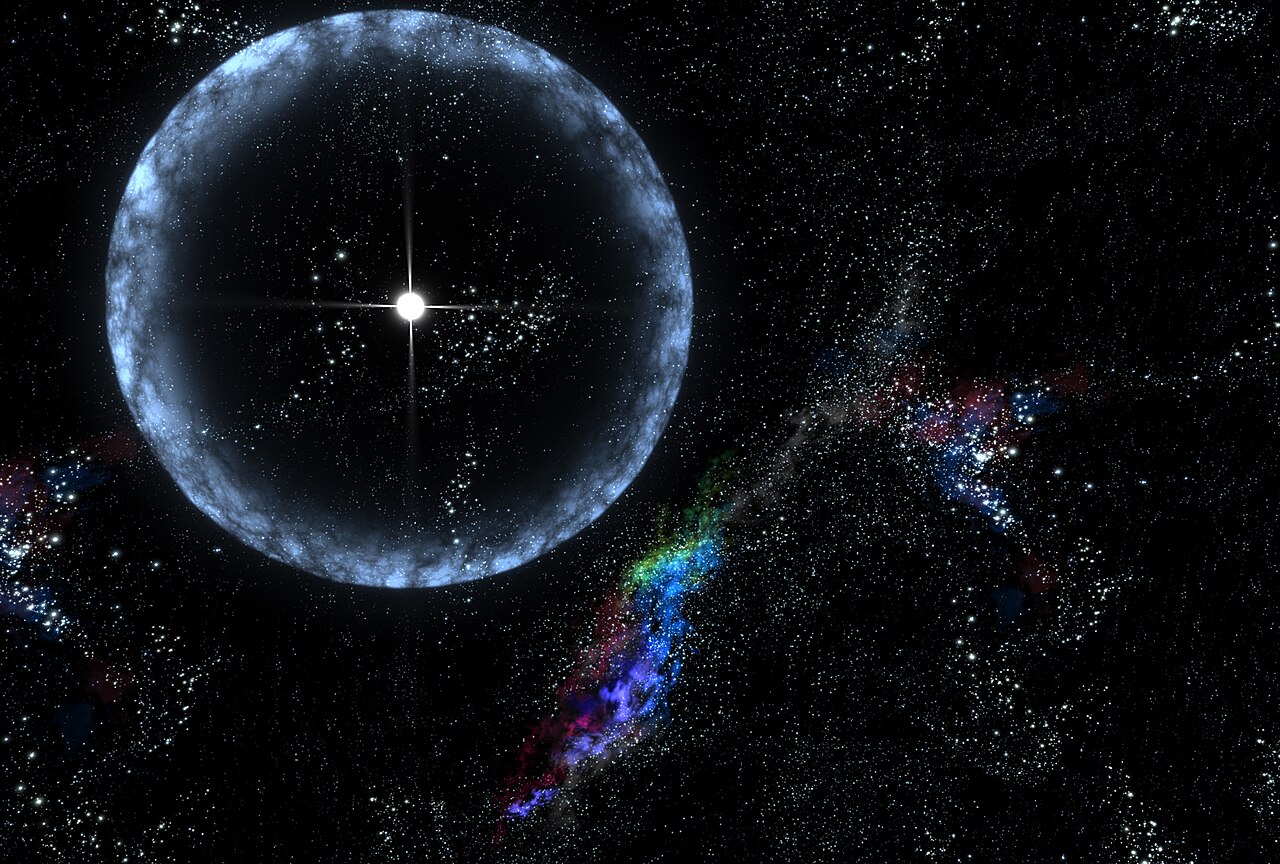
On 27 December 2004, SGR 1806-20 produced a giant flare that was detected by multiple spacecraft and ground instruments. The burst briefly outshone most other sources in the sky and produced effects measurable at Earth, including disturbances in the planet's upper atmosphere and transient impacts on satellite detectors. The event has been described in the literature as one of the brightest flashes recorded from beyond the Solar System; contemporary reports referred to it as a dramatic example of magnetar activity and as a natural laboratory for high-energy astrophysics.
Location and environment
SGR 1806-20 sits within or near a compact cluster of massive stars and is associated spatially with luminous objects such as the extreme luminous blue variable known as LBV 1806-20. The crowded stellar environment and interstellar material along the line of sight make detailed study challenging at optical wavelengths, so much of what is known comes from radio, infrared, X-ray, and gamma-ray observations.
Importance and observations
- SGR 1806-20 provides direct evidence of magnetar behavior and extreme magnetic processes in neutron stars.
- Its 2004 outburst helped refine models of magnetically driven flares and their potential effects on planetary atmospheres and space-based technology.
- Continuous monitoring by high-energy observatories has improved understanding of burst recurrence, energetics, and afterglow phenomena.
Notable distinctions
Because of the exceptional brightness of the 2004 flare, the event is commonly cited when discussing the most luminous transient phenomena observed from beyond the Solar System; in some reports it is referred to as a giant gamma-ray burst or more precisely a magnetar giant flare. Its status as one of the brightest extrasolar bursts recorded — an occurrence described by observers as the brightest event from outside the Solar System at the time — has made SGR 1806-20 a frequent reference point in reviews of high-energy transient astrophysics.
Related articles
Author
AlegsaOnline.com SGR 1806-20: a magnetar in Sagittarius and the 2004 giant flare Leandro Alegsa
URL: https://en.alegsaonline.com/art/89317