
Shukrayaan-1 — Indian proposed Venus orbiter
Shukrayaan-1 is a proposed Indian Space Research Organisation orbiter to study Venus's atmosphere and surface. The mission has been under study with international cooperation but had not been finalized.
Overview
Shukrayaan-1 (sometimes rendered "Venus craft") is a proposed orbital mission by the Indian Space Research Organisation to conduct remote sensing and in situ studies of Venus. The project has been described as a concept under study rather than a confirmed flight; work on mission definition, instruments and technologies has been intermittent and contingent on funding and international partnerships. The mission's stated intent is to improve understanding of Venus's dense atmosphere, extreme greenhouse environment and surface properties through a sustained orbital presence around the planet. See background on Venus exploration here.
Image gallery
5 Images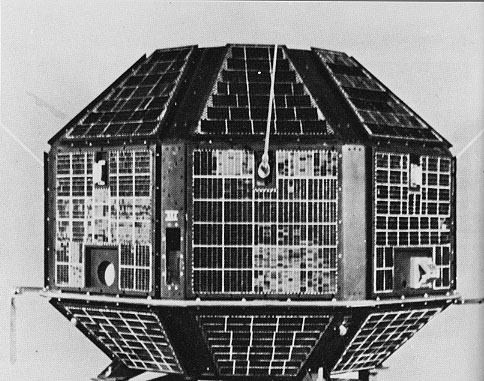



Scientific goals and payload concepts
Shukrayaan-1 is typically framed around a combined set of atmospheric and surface objectives. These include characterizing atmospheric composition and dynamics, measuring isotopic ratios to learn about planetary evolution, mapping surface morphology beneath clouds using radar, and detecting active geological or geochemical processes. To achieve these aims, proposed payload types generally include:
- Remote sensing instruments such as multispectral and thermal imagers and spectrometers to analyze atmospheric gases and surface emissivity.
- Radar sounders or synthetic aperture radar to penetrate the thick cloud layer and produce surface maps.
- Mass spectrometers or neutral and ion sensors to sample upper-atmosphere composition and escape processes.
- Radio science experiments to investigate atmospheric structure and gravity.
History and mission development
Interest within ISRO in a dedicated Venus mission has existed for several years. During 2016–2017, ISRO cooperated with the Japan Aerospace Exploration Agency on atmospheric studies using data from JAXA's Akatsuki orbiter; that collaboration helped refine measurement approaches and demonstrated the value of coordinated observations. In 2017–18 the Government of India increased funding for space science studies and allocated resources for conceptual work on multiple projects, including a mission to Venus and a follow-on Mars orbiter study. Those funds supported feasibility studies rather than a concrete launch plan. For more on institutional context see ISRO materials here.
International cooperation and technology considerations
The Shukrayaan concept has been discussed with international partners for both scientific input and technology sharing. ISRO has held talks with agencies such as the Japan Aerospace Exploration Agency and France's space agency about instrument contributions and mission support. In particular, discussions with the French space agency have included the development of aerobraking techniques to reduce propellant needs for orbit insertion and long-term orbital operations, a complex maneuver that requires detailed engineering and testing. ISRO's earlier data-exchange work with JAXA highlighted practical collaboration opportunities; technical study cooperation is referenced in public releases here.
Importance, challenges and comparisons
Venus remains a high-priority target because its runaway greenhouse effect and dense atmosphere present a counterpoint to Earth and Mars in studies of planetary climate and habitability. A dedicated Indian orbiter would add coverage, complementary measurements and new instruments to an international fleet. Major challenges include operating in a hot, corrosive environment for payload development, achieving the propulsion and thermal control needed for Venus transfer and orbit, and securing the sustained funding and international partnerships required for a complex planetary mission. Further technical and programmatic details of the mission concept and how it compares with other Venus missions are discussed in scientific planning documents here.
Because Shukrayaan-1 has been presented primarily as a studied proposal, timelines have remained tentative; announcements and formal approvals would be required before a launch could be scheduled. The mission remains an example of how national space programmes can expand into comparative planetology through partnerships and incremental technology development.
Questions and answers
Q: What is Shukrayaan-1?
A: Shukrayaan-1 is an orbiter to Venus by the Indian Space Research Organisation (ISRO) to study the surface and atmosphere of Venus.
Q: Is it confirmed that Shukrayaan-1 launch will happen?
A: No, it is not confirmed whether the Shukrayaan-1 launch will happen or not. It is just an idea.
Q: Was there enough money in 2017 to conduct research about the mission?
A: Yes, there was enough money in 2017 to do research about the Shukrayaan-1 mission.
Q: When is the expected launch of the Shukrayaan-1 mission?
A: If all of the costs are paid for, then the Shukrayaan-1 mission will launch in the early 2020s.
Q: Has the Indian government increased the budget for the Department of Space?
A: Yes, the Government of India gave the Department of Space a 23% increase in money in 2017-18.
Q: What is the money for "Space Sciences" section for?
A: The money under the space sciences section is for "Mars Orbiter Mission II and Mission to Venus".
Q: Has ISRO worked with other space organizations regarding Venus exploration?
A: Yes, from 2016 to 2017, ISRO worked with JAXA to study the atmosphere of Venus using signals from the Akatsuki Venus orbiter. ISRO and France (CNES) are currently talking about jointly developing aerobraking technologies for the Shukrayaan-1 mission.
Related articles
Author
AlegsaOnline.com Shukrayaan-1 — Indian proposed Venus orbiter Leandro Alegsa
URL: https://en.alegsaonline.com/art/90091
Sources
- aerojournalindia.com : "After Mars, Isro aims for Venus probe in 2-3 years"
- rri.res.in : "ISRO Space Physics: future missions"
- cospar-assembly.org : "Indian Mars and Venus missions: Science and exploration" · web.archive.org
- techtimes.com : "India Plans Mission To Venus Following Success Of Mars Orbiter"
- spaceflightinsider.com : "India eyes possible mission to Venus"
- deccanchronicle.com : "Isro to undertake the heaviest launch in December"
- business-standard.com : "Budget 2017: ISRO gets funds for 2nd Mars mission, maiden Venus venture"
- isro.gov.in : "Department of Space, Annual Report 2016-17"
- meetingorganizer.copernicus.org : "Initial results of the radio occultation experiment in the Venus orbiter mission Akatsuki" · web.archive.org
- doi.org : 10.1186/s40623-017-0722-3
- tech.economictimes.indiatimes.com : ISRO to work with its French counterpart for inter-planetary missions to Mars, Venus