
Solar System: Structure, origin, major bodies and notable facts
Overview of the Sun and the bodies that orbit it, the system's structure and formation, major planets and moons, belts and minor bodies, historical context and key distinguishing features.
Overview
The Solar System is the Sun and the complete collection of objects bound to it by gravity: eight major planets, their moons, dwarf planets, asteroids, comets, dust, and other small bodies. It formed roughly 4.6 billion years ago from a rotating cloud of gas and dust and remains a single gravitationally bound system dominated in mass and energy by the central star. Its size, composition, and dynamical behavior provide the basic laboratory for understanding how planetary systems form and evolve around other stars.
Image gallery
10 Images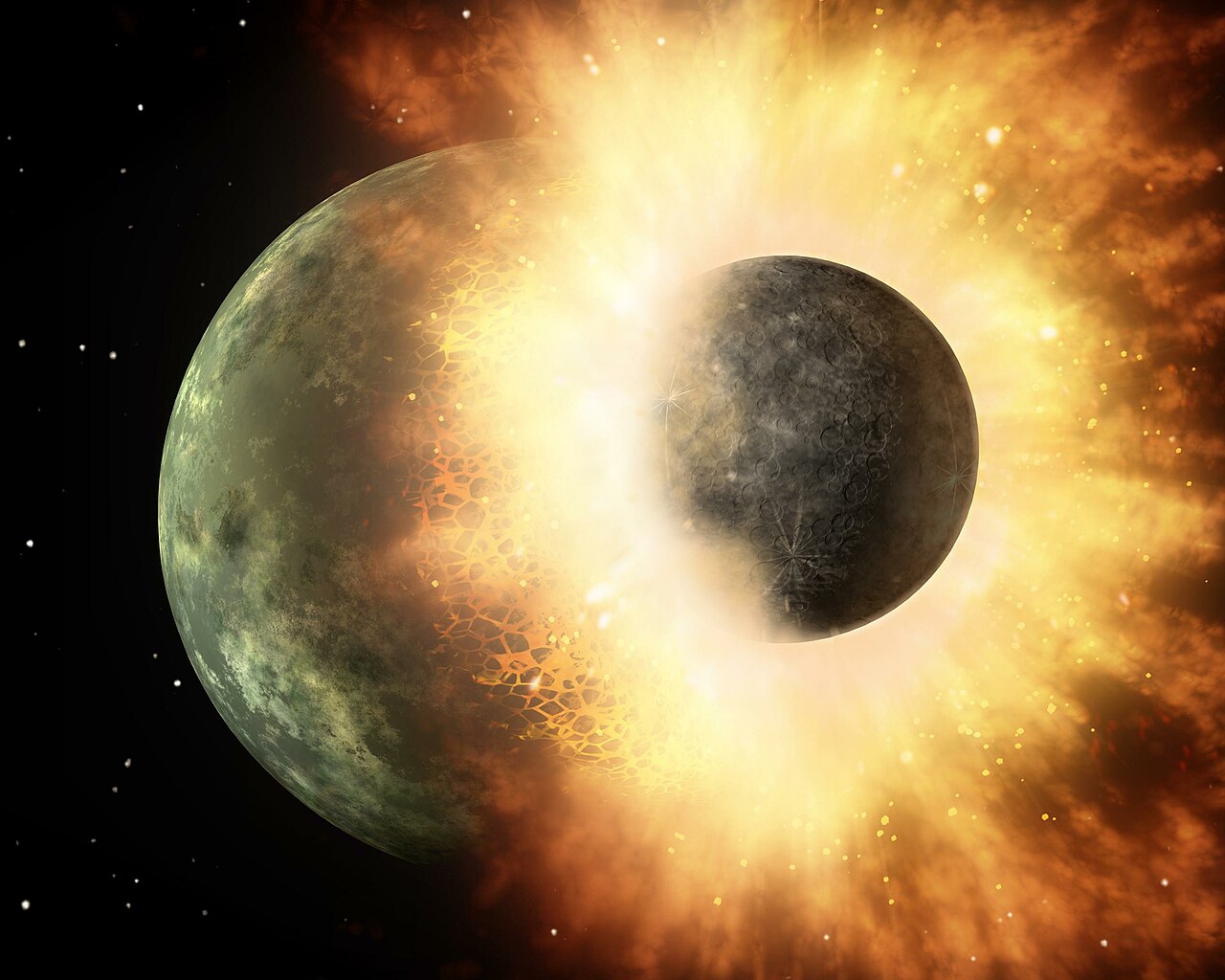




Structure and main components
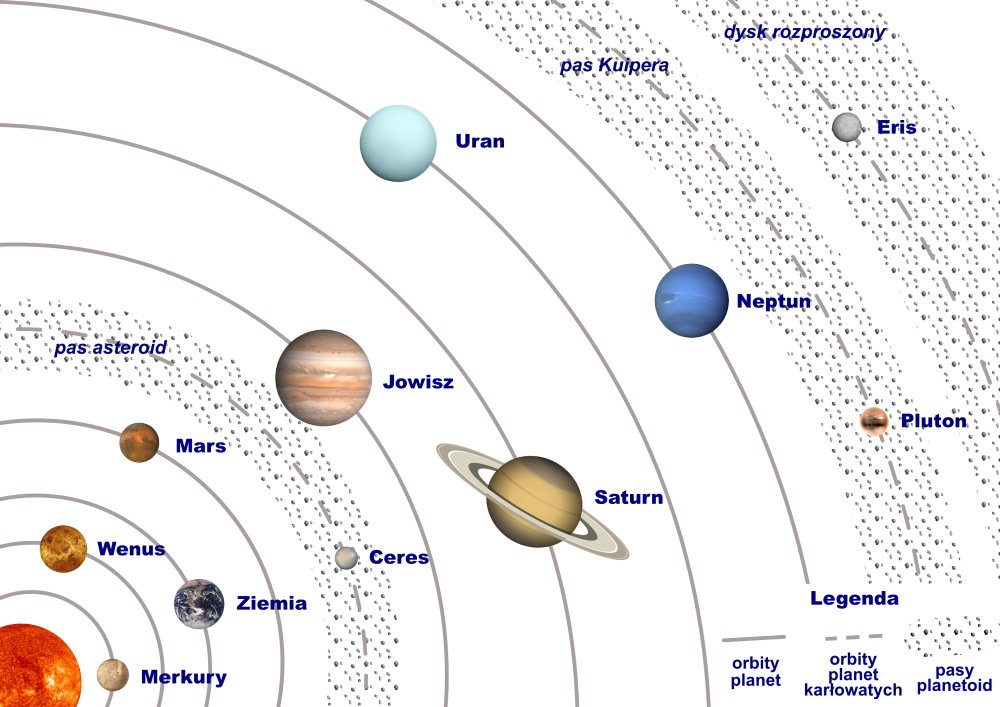
At the center is the Sun, a middle-aged star that contains the vast majority of the system's mass and whose gravity governs the motions of all orbiting bodies. The primary categories of objects are:
- Terrestrial planets: smaller, rock- and metal-rich worlds with solid surfaces (Mercury, Venus, Earth, Mars).
- Giant planets: more massive planets with extensive gaseous envelopes or thick volatile layers (Jupiter, Saturn, Uranus, Neptune).
- Dwarf planets and small worlds: bodies that orbit the Sun and have sufficient self-gravity to be nearly round but have not cleared their orbital neighborhoods (examples include Ceres and Pluto).
- Small bodies: asteroids, comets, centaurs, and interplanetary dust that occupy belts, reservoirs, and transient orbits.
Formation and evolution
The accepted model for the Solar System's origin begins with a cold, dense molecular cloud that collapsed under gravity to form a rotating protosun surrounded by a protoplanetary disk. Over millions of years solids accreted into planetesimals and then planets, while gas was accreted onto the larger cores to form the giant planets. Dynamical processes — including migration of gas giants, collisions, and resonance interactions — reshaped the system, scattering many small bodies and sculpting belts and gaps. The system's age, estimated at about 4.6 billion years, places many of these formative events in the early history of the Sun.
Moons, belts and minor populations
Most of the major planets are orbited by natural satellites; Jupiter and Saturn hold hundreds of known moons between them, with large individual satellites that rival small planets in size. Some moons, such as Titan, possess substantial atmospheres; Titan's thick nitrogen-rich envelope and surface chemistry make it unique among moons. Beyond the orbit of Neptune lie the Kuiper belt and the scattered disc, which contain many icy bodies and several recognized dwarf planets. The inner Solar System contains the asteroid belt between Mars and Jupiter and populations of near-Earth objects; comets arrive from the distant reservoirs on elongated orbits, creating visible tails when heated by the Sun.
Scientific importance and exploration
Studying the Solar System answers questions about planetary formation, chemical evolution, and habitability. It is the only planetary system where direct, in situ measurements are possible across many worlds: spacecraft have orbited, landed on, or flown past nearly every major body in the system, returning data that constrain models of interior structure, atmospheres, magnetospheres, and surface processes. The search for past or present life focuses on places with liquid water or complex chemistry, including Earth, Mars, icy moons, and certain primitive bodies.
History and notable facts
Ideas about the Sun and planets have evolved from early geocentric views to heliocentric models proposed in antiquity and refined over centuries. Classical thinkers and later astronomers developed the observational and theoretical foundations that led to modern astrophysics and planetary science. Notable distinctions within the system include the clear separation between small, rocky inner worlds and larger, volatile-rich outer planets, the presence of diverse satellite types, and reservoirs of primordial material that preserve records of the Solar System's earliest epochs.
Related topics and links
For concise navigation to specific subjects, see the links below (each numbered item leads to a dedicated topic page): 1 2 3 4 5 6 7 8 9 10 11 12 13 14 15 16 17 18 19 20 21 22 23 24 25 26 27 28 29 30 31 32 33 34 35 36 37 38 39 40 41 42
Note: This article summarizes widely accepted aspects of the Solar System and is intended as an accessible introduction; specialized topics and recent discoveries are covered in more detailed sources.
Questions and answers
Q: What is the Solar System?
A: The Solar System is the Sun and all of the objects that orbit around it, such as planets, asteroids, comets and other things.
Q: How old is the Solar System?
A: The Solar System is about 4.6 billion years old.
Q: What makes up most of the mass in the Solar System?
A: The Sun makes up 99.9% of the mass in the Solar System.
Q: How many planets are there in the Solar System?
A: There are eight planets in the Solar System - Mercury, Venus, Earth, Mars, Jupiter, Saturn, Uranus and Neptune.
Q: What type of moons does Saturn have?
A: Saturn has one moon called Titan which has an atmosphere mainly composed of nitrogen.
Q: Who proposed a heliocentric model for our universe?
A: Aristarchus of Samos proposed a heliocentric model for our universe where he believed that the Sun was at its center. He is sometimes known as "the Greek Copernicus".
Q: How many moons are there in total in our solar system?
A: There are approximately 200 moons orbiting around six of our planets and six largest dwarf planets in total throughout our solar system.
Related articles
Author
AlegsaOnline.com Solar System: Structure, origin, major bodies and notable facts Leandro Alegsa
URL: https://en.alegsaonline.com/art/91645