
Seljuk Empire — Medieval Turkic-Persian State (11th–12th centuries)
A medieval Sunni Turkic dynasty and empire (c.1037–1194) that ruled parts of Central Asia, Iran, the Middle East and Anatolia, promoting Persian administration and shaping Islamic institutions and the Crusades.
Overview
The Seljuk Empire was a medieval polity led by the Seljuk Turks, a Turkic dynasty that adopted Sunni Islam and governed large territories from the 11th to the late 12th century. Founded by Tughril Beg in the 1030s, the polity brought nomadic Turkic military power together with Persian bureaucratic traditions. At its height the realm extended across parts of Central Asia, Iran and the Middle East, reaching westward into Anatolia and eastward toward regions that now lie within modern Pakistan.
Image gallery
10 Images
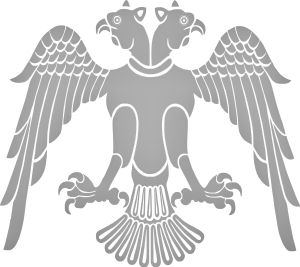


Characteristics and institutions
The Seljuks combined Turkic steppe leadership with a Persian court culture. They retained and expanded administrative systems in Persian and supported scholars, jurists and theologians. A key figure was the vizier Nizam al-Mulk, who organized a network of madrasas and wrote on governance. Seljuk patronage helped solidify Persian as a literary and administrative language across their territories, even as Arabic remained central for religious scholarship. Their style of rule fused tribal cavalry-based military organization with settled urban administration.
History and development
Beginning with conquests in the mid-11th century, the Seljuks overcame regional dynasties and asserted authority over the Abbasid caliphs in Baghdad, where the caliph recognized Seljuk sultans as protectors of Sunni Islam. A watershed moment came at the Battle of Manzikert (1071), after which Turkic influence in Anatolia increased and the Anatolian offshoot, the Sultanate of Rum, emerged. Over time the Seljuk confederation fragmented into competing dynasties and regional rulers; the main line lost coherence by the late 12th century and was succeeded in many lands by the Khwarezmian rulers around 1194.
Military and the Crusades
The arrival of the Seljuks on the Levantine and Anatolian stages coincided with the First and later Crusades. Seljuk forces and their successor states contested Crusader principalities, and Seljuk politics influenced the shifting alliances and hostilities of the period. Their military reputation rested on horse archery and mobile cavalry, but they also defended and administered fortified cities, caravan routes and frontier provinces.
Culture, architecture, and legacy
Seljuk patronage left enduring traces in architecture, coinage, and literature. They sponsored urban building projects, caravanserais, mosques and madrasas that became models for later Islamic polities. The promotion of Persian for courtly literature and administrative record-keeping accelerated the Persianate character of large parts of the region, even as centers of Arabic religious learning remained important — and in some regions other cities, like Cairo, grew in cultural prominence. The political fragmentation that followed the Seljuk period helped create the conditions for later dynasties and the rise of new powers.
Notable facts and distinctions
- The Seljuks were ethnically Turkic but adopted Persianate statecraft and Islamic learning.
- They established educational institutions (madrasas) that influenced Sunni orthodoxy and training of administrators.
- The Sultanate of Rum in Anatolia developed from Seljuk expansion and created a distinct regional culture.
- Their decline in the late 12th century led to successors such as the Khwarezmian rulers and various local dynasties.
For further reading on political structure, cultural policies and regional impact, see introductions and specialized studies available online and in academic collections. Related entries and resources are often linked under topics such as medieval Islamic history, Persian literature, and the Crusades (see references such as eastern Islamic world overviews and surveys of Arabic cultural developments).
Related articles
Author
AlegsaOnline.com Seljuk Empire — Medieval Turkic-Persian State (11th–12th centuries) Leandro Alegsa
URL: https://en.alegsaonline.com/art/88697
Sources
- archive.org : Introduction to Islamic Civilisation
- doi.org : 10.1017/s0041977x00113710 · archive.org
- jwsr.pitt.edu : "East-West Orientation of Historical Empires"
- worldcat.org : 1076-156X
- escholarship.org : "Expansion and Contraction Patterns of Large Polities: Context for Russia"
- doi.org : 10.1111/0020-8833.00053
- jstor.org : 2600793
- iranicaonline.org : Šahrbānu
- doi.org : 10.1093/jis/13.1.75