
Selenocysteine
Selenocysteine is a naturally occurring amino acid similar to cysteine but containing selenium. It is co-translationally incorporated into proteins and plays key roles in redox enzymes and thyroid hormone metabolism.
Overview
Selenocysteine is an uncommon amino acid that is incorporated into certain proteins during their synthesis. Chemically it resembles cysteine, but a selenium atom replaces the sulfur atom found in cysteine. Because of this substitution, selenocysteine imparts distinct chemical and catalytic properties to the proteins that contain it. It is often described as the 21st proteinogenic amino acid because it is encoded in the genetic code and inserted into growing polypeptide chains by the translation machinery rather than being formed by post-translational modification.
Image gallery
5 Images


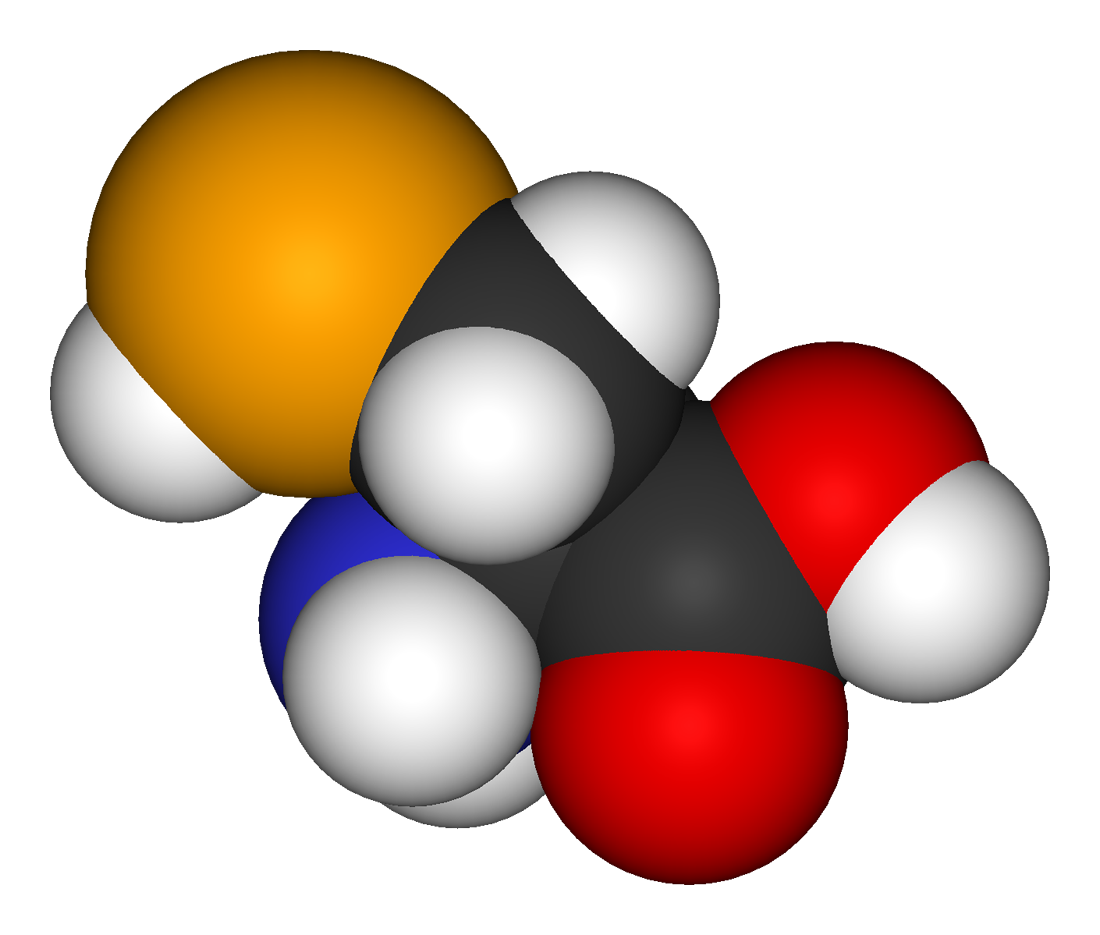

Structure and biosynthesis
Selenocysteine is built on a dedicated transfer RNA (tRNA[Sec]) and is inserted into proteins when the ribosome encounters a specific codon context. In many organisms a UGA stop codon is reinterpreted to code for selenocysteine when accompanied by a downstream mRNA structural signal called a SECIS element. This recoding requires specialized protein factors and a unique biosynthetic pathway that first charges the tRNA with serine and then converts it to selenocysteine before delivery to the ribosome.
Characteristics and chemical properties
- Selenocysteine contains selenium, which makes its selenium–hydrogen bond and selenium–carbon chemistry different from sulfur analogs.
- Compared with cysteine, selenocysteine is generally more nucleophilic and can participate in redox reactions with different potentials and kinetics.
- Its presence often increases an enzyme's catalytic efficiency in reactions involving electron transfer, reduction, or peroxidation.
Biological roles and examples
Selenocysteine occurs in a variety of enzymes across bacteria, archaea, and eukaryotes. It is especially common in proteins involved in oxidative stress defense, redox regulation, and thyroid hormone metabolism. Representative classes of selenoproteins include:
- Glutathione peroxidases and peroxiredoxin-like enzymes that reduce peroxides.
- Thioredoxin reductases that maintain redox balance.
- Deiodinases that activate or deactivate thyroid hormones.
Because of these functions, selenocysteine-containing proteins are important for cellular antioxidant defenses and metabolic regulation. Their absence or malfunction can affect physiological processes and is a focus of biomedical research.
History and notable facts
Selenocysteine was recognized as a distinct amino acid after researchers found selenium atoms integrated into defined protein sites rather than appearing only as nonspecific contaminants. Its mode of incorporation—reinterpreting a stop codon—was an unexpected expansion of how the genetic code can operate. Modern genomic and proteomic studies have since cataloged selenoproteins in many lineages, although the number and identity of selenoproteins vary widely among species.
Distinctions and further reading
Selenocysteine should not be confused with selenomethionine, another selenium-containing amino acid that can be used nonspecifically in proteins. The unique biological handling of selenocysteine—dedicated tRNA, SECIS elements, and specialized factors—distinguishes it from standard amino acids. For basic background on amino acids and protein translation see general resources, for details on tRNA and recoding mechanisms see translation references, and for enzyme examples and physiological roles consult reviews at biochemistry sources or databases cataloging selenoproteins here.
Related articles
Author
AlegsaOnline.com Selenocysteine Leandro Alegsa
URL: https://en.alegsaonline.com/art/88663
Sources
- science.sciencemag.org : science.sciencemag.org/content/183/4128/915