
Sensory receptor: how organisms detect and convert stimuli
Overview of sensory receptors: definition, transduction, main types, adaptation, organization, examples, medical relevance and research approaches in sensory biology.
Overview
A sensory receptor, often called a sense organ or receptor cell, is any biological structure that detects changes in an organism's internal or external surroundings and initiates a physiological response. A stimulus is any physical or chemical event that affects a receptor; receptors convert such stimuli into electrical signals that provide input to the broader sensory system. Information from receptors typically travels along nerves toward integration centers such as the central nervous system, enabling perception and coordinated responses.
Image gallery
10 Images
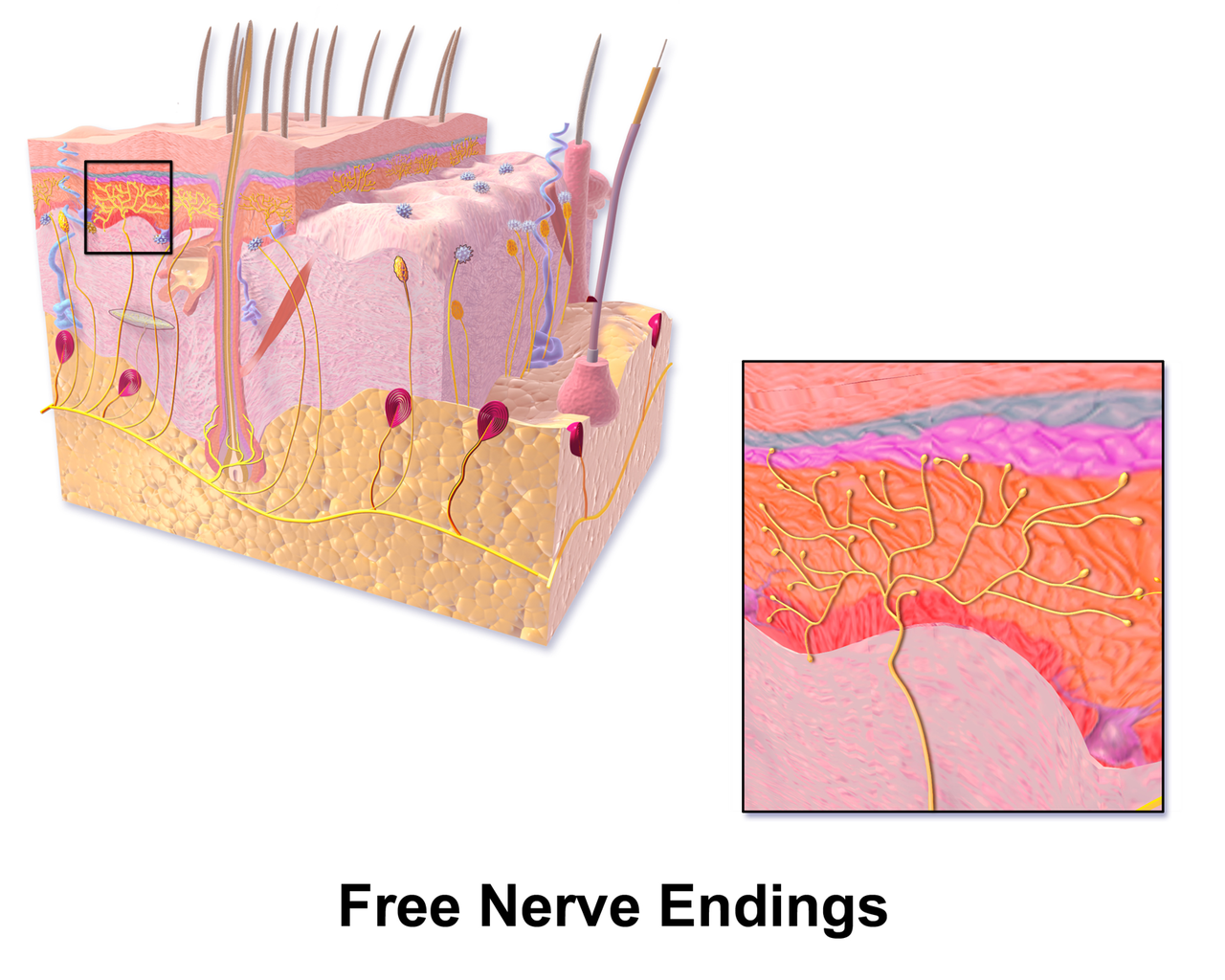



Transduction and signalling
Receptors perform sensory transduction: they convert energy from a stimulus into a change in membrane potential. This change, called a receptor or generator potential, may trigger action potentials in an associated sensory neuron when it reaches threshold. Receptor responses can be graded and are subject to adaptation; some receptors respond transiently to changes (rapidly adapting), while others maintain activity for sustained stimuli (slowly adapting). Important functional properties include threshold, sensitivity, dynamic range and the size of the receptive field.
Major receptor classes and examples
- Photoreceptors — detect light (for example, rods and cones in vertebrate eyes; simple photoreceptive cells in many invertebrates).
- Mechanoreceptors — respond to pressure, stretch, vibration or sound (skin touch receptors, hair cells in the inner ear, stretch receptors in muscle).
- Chemoreceptors — sensitive to chemical molecules (olfactory receptor neurons, taste receptor cells, internal chemoreceptors that monitor blood gases).
- Thermoreceptors — detect temperature changes at the body surface and internally.
- Nociceptors — signal potentially damaging stimuli interpreted as pain; they respond to extremes of mechanical, thermal or chemical input.
- Proprioceptors — inform the nervous system about body position and movement (muscle spindles, Golgi tendon organs, joint receptors).
Organization and diversity
Receptors occur as single sensory cells, specialized nerve endings, or as part of complex organs such as the eye or ear. The term "sense organ" commonly denotes a structure rich in receptor elements, while "sensory receptor" may refer to an individual cell or ending. Where receptors are located and how narrowly they are tuned influence perceptual acuity. Some systems use labeled lines—dedicated pathways for a modality—while others encode information across populations of receptors.
Ecological, clinical and research aspects
Sensory receptors are central to survival: they guide feeding, predator avoidance, social communication and homeostatic regulation. Dysfunction of receptors or their pathways underlies sensory disorders such as blindness, deafness, chronic pain and taste or smell loss. Applied research draws on receptor biology for diagnostic tools, prosthetic sensors, sensory substitution devices and interface technologies. Experimental study employs electrophysiology, imaging and molecular biology to characterize receptor properties and their development across species.
For background on stimulus types and environmental context see general entries on stimulus and the internal or external environment of the organism. Additional resources include comparative surveys of receptor systems and technical reviews on sensory transduction mechanisms.
Further reading and authoritative summaries are available through standard texts and reviews in sensory physiology and neuroscience; these resources discuss experimental methods, clinical implications of receptor deficits, and ongoing advances in bioengineering that draw on receptor principles.
Related articles
Author
AlegsaOnline.com Sensory receptor: how organisms detect and convert stimuli Leandro Alegsa
URL: https://en.alegsaonline.com/art/88867
Sources
- encyclopedia.com : "sensory receptors - Encyclopedia.com"