
Self-replication: biological, molecular, digital and cultural processes
Self-replication is the process by which a system makes a copy of itself. This article explains biological and nonbiological forms, key requirements, history, applications, and important distinctions.
Self-replication refers to any process in which an entity produces a new instance of itself. The term applies across disciplines: living cells replicate, certain molecules catalyse their own production, software can copy itself, and ideas can spread by being reproduced in minds and media. Self-replication may be autonomous or require external resources and conditions; it is best understood as a functional relationship between an informational template and the mechanisms that read and copy that template.
Image gallery
1 Image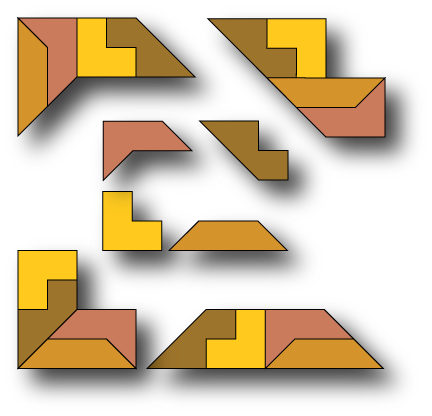
Biological and molecular replication
In biology, self-replication is central to life. Many single-celled and multicellular organisms reproduce through processes such as cell division that distribute copies of genetic material to descendants. The molecule that carries much of that information is DNA, which is duplicated during the cell cycle so that sequence information can be transmitted to offspring and contribute to organismal reproduction. At a smaller scale, certain RNA sequences can act both as information and as catalysts for their own replication, a concept important in origin-of-life research.
Viruses and molecular parasites
Some biological entities, notably viruses, do not replicate independently but rely on host cells. RNA viruses carry genomes that are copied inside infected cells and that direct the production of new viral particles. Among these, retroviruses reverse-transcribe RNA into DNA and can integrate into host genomes, demonstrating diverse molecular strategies for persistence and propagation. Such agents illustrate replication that is dependent on hijacking another system's machinery rather than fully autonomous self-manufacture.
Digital and cultural replication
Outside biology, self-replication appears in software and ideas. Computer viruses and other self-reproducing programs exploit existing hardware and software to create copies, spread through networks, and sometimes mutate their code. In human culture, memes — concepts, practices, or symbols — reproduce by being copied between minds and media; scholars use the term meme metaphorically to describe cultural transmission and evolution. These nonbiological examples underscore that replication requires both an information-bearing form and a medium or mechanism for copying.
Key characteristics and requirements
- Template: an informational pattern (e.g., DNA, program code, an idea).
- Machinery or process: the physical or abstract mechanisms that copy the template.
- Energy and materials: resources required to construct copies.
- Fidelity and variation: accuracy of copying and sources of change (mutations, errors, reinterpretation).
- Context: environmental conditions or substrates that permit replication.
These elements determine whether replication is rapid or slow, accurate or error-prone, and whether it results in stable inheritance or continual innovation.
History, significance and distinctions
Ideas about self-replicating systems have shaped fields from evolutionary biology to computer science. Early theoretical work on self-reproducing automata helped clarify what it would mean for a machine to copy itself, and studies of molecular self-assembly inform synthetic biology and nanotechnology. Practical concerns range from understanding the origin of life to preventing the spread of malware and managing cultural change. Important distinctions include autonomous versus dependent replication (for example, free-living cells versus viruses), informational versus structural replication, and replication that preserves identity versus replication that permits variation and evolution.
Understanding self-replication thus unites concepts of information, thermodynamics, and control: it explains how complex systems persist and diversify, and it highlights both opportunities and risks when replication processes are engineered or disrupted.
Questions and answers
Q: What is replication?
A: Replication is a term used for creating a copy of something.
Q: What is self-replication?
A: Self-replication is the process where an object or organism produces a copy of itself.
Q: How do cells reproduce?
A: Cells reproduce by the process of cell division, where the DNA is replicated and passed on to the offspring.
Q: What are RNA viruses?
A: RNA viruses are viruses that use the mechanism of a cell to replicate their own RNA strand.
Q: How do viruses reproduce?
A: Viruses reproduce by taking over the reproductive machinery of cells through a process of infection.
Q: What is a computer virus?
A: A computer virus is a type of virus that reproduces using the existing hardware and software on computers.
Q: What are memes?
A: Memes are cultural ideas, symbols, or practices that reproduce their copies in the human mind and culture.
Related articles
Author
AlegsaOnline.com Self-replication: biological, molecular, digital and cultural processes Leandro Alegsa
URL: https://en.alegsaonline.com/art/88681
Sources
- cs.bgu.ac.il : cs.bgu.ac.il/~sipper/selfrep/