
Saffarid dynasty: rulers of Sistan in the 9th–10th centuries
A concise overview of the Saffarid dynasty: origins in Sistan, rise under Ya'qub al‑Saffar, territorial expansion in the late 9th century, administration, and cultural and historical legacy.
The Saffarid dynasty was a regional Persianate ruling house that established control in Sistan and parts of eastern Iran in the late 9th and 10th centuries. Often identified by its Persian name سلسله صفاریان, the dynasty is noted for its rapid military rise from local power to a state that challenged the existing caliphal and regional authorities. They governed primarily in Sistan from about 861–1002, in a period of political fragmentation across the Islamic world.
Image gallery
10 Images





Origins and principal figures
The dynasty was founded by Ya'qub ibn al‑Layth, commonly called Ya'qub al‑Saffar — a name referring to his early profession as a coppersmith — who emerged as a military leader and unified local forces. His successors, most notably Amr ibn al‑Layth, continued rule and at times extended influence into neighboring provinces. These leaders promoted a Sunni Muslim identity (Sunni Islam) and ruled in a Persian cultural environment (Persian), while interacting with larger powers such as the Abbasid caliphate and other regional dynasties.
Territory and capital
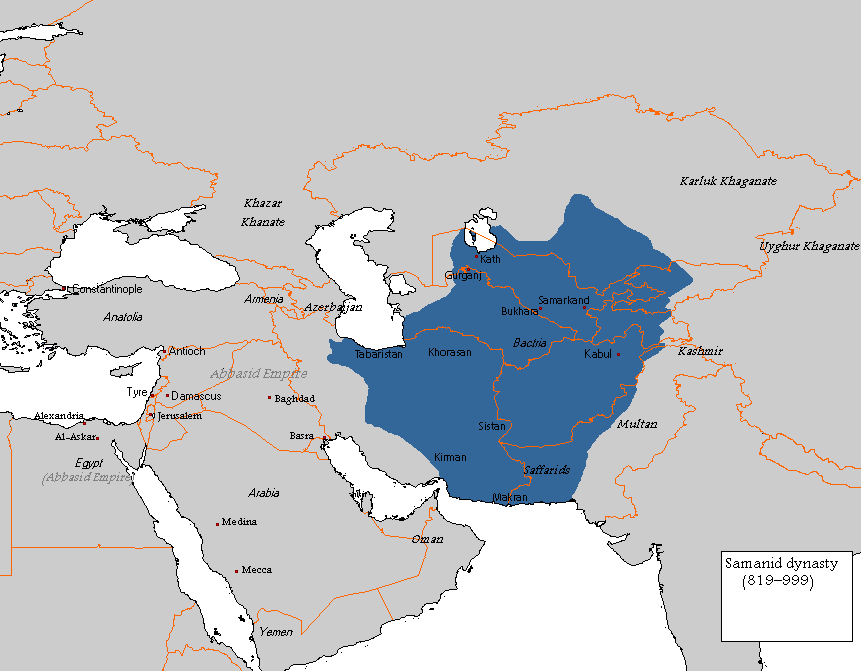
The core territory of the Saffarids was the historical region of Sistan, a borderland that today overlaps southeastern Iran, southwestern Afghanistan, and northwestern Pakistan. Their principal seat was the city of Zaranj, an important oasis town and commercial center that served as the dynasty's administrative and military base.
Expansion, administration and conflicts
Under Ya'qub the Saffarids expanded rapidly in the late 9th century, carrying campaigns into Khorasan and other eastern provinces. Their military organization relied on local levies and mounted troops rather than elaborate bureaucratic structures. Administratively, the Saffarids governed a patchwork of urban centers, frontier districts and trade routes, negotiating both autonomy and conflict with neighboring rulers. Their confrontations with rival powers shaped the political map of eastern Iran for decades.
Legacy and historical significance
The Saffarids are often remembered for restoring an indigenous dynastic presence in eastern Iran after generations of Arab caliphal dominance. While their state did not survive as a major power beyond the 10th century, their rise signaled changing power dynamics and helped set the stage for later Persianate dynasties. The dynasty's story illustrates important themes of the era: military entrepreneurship, regionalism, and the revival of local identities within an Islamic context.
- Founding period: late 9th century, with strong military leadership.
- Core region: Sistan, with capital at Zaranj.
- Religion and language: Sunni Islam and Persian cultural milieu.
- Historical role: early native Iranian dynasty after the Arab conquests, influential in eastern Iranian history.
Related articles
Author
AlegsaOnline.com Saffarid dynasty: rulers of Sistan in the 9th–10th centuries Leandro Alegsa
URL: https://en.alegsaonline.com/art/85217
Sources
- zharov.com : zharov.com/index.html