
Darkness: scientific, cultural, and practical perspectives
Overview of darkness as the absence or reduction of visible light, its physical causes, measurement, biological effects, cultural meanings, and practical implications.
Darkness is commonly described as the absence or very low levels of visible light. In practical settings, true absolute darkness is rare; even a nominally dark space usually contains faint natural or artificial illumination, thermal radiation, or scattered skyglow. In astronomy the perceived quality of a night sky is often graded on the nine-level Bortle scale, which compares local sky brightness and the visibility of celestial objects.
Image gallery
3 Images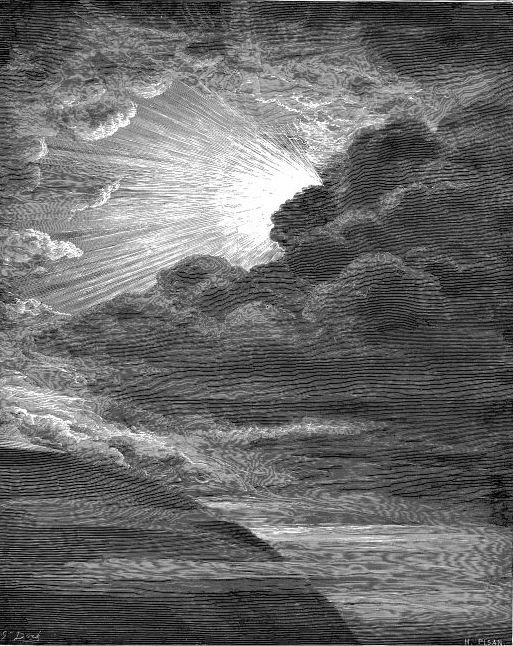


Physical causes and measurement
At the simplest level, darkness results when a light source is blocked, reduced or distant enough that its photons do not stimulate the eye or a detector. Blocking a source creates a shadow, while the regular cycle of day and night arises because the rotating Earth periodically places a region in the portion of space not illuminated by the sun. Darkness can be quantified by instruments that measure illuminance (lux) or radiometric quantities, or in astronomy by magnitude limits and sky brightness indices.
Biological and perceptual effects
The human visual system adapts to low light through a process called dark adaptation: photoreceptor sensitivity shifts from cone-dominated (color) vision to rod-dominated (monochrome) vision over minutes. Many animals are nocturnal or crepuscular and have specialized eyes or sensory systems optimized for low-light conditions. Extended darkness affects circadian rhythms, hormonal cycles and sleep quality in humans, which is why controlled darkness is used therapeutically and in sleep hygiene.
History, symbolism and culture
Darkness has long carried symbolic meanings in art, literature and belief systems. In various traditions and mythology it is associated with concealment, the unknown, or the primordial state before creation; in some moral frameworks darkness is linked with evil or ignorance. Religious texts and ceremonies frequently contrast light and darkness to express moral or cosmological transitions, such as passages that describe a world before light appeared or narratives that recount a period of deep gloom like the ninth plague in Exodus.
Practical uses and concerns
- Science and industry: Dark rooms are essential for photographic development and certain laboratory procedures; low-light environments are required for sensitive astronomical observations.
- Ecology and safety: Artificial light at night can disrupt wildlife and migratory patterns, while poor lighting conditions can create hazards in transportation and urban settings.
- Cultural practice: Darkened theaters, ritual spaces, and art installations use controlled darkness for aesthetic or spiritual effects; darkness also provides privacy and respite from sensory stimulation.
Notable distinctions and facts
- Absolute darkness in a physical sense is constrained by background radiation and quantum effects; practically, darkness is treated as conditions below a threshold of perceptible light.
- Light pollution has reduced access to naturally dark skies in many populated regions, making astronomical observation and appreciation of the Milky Way more difficult.
- Darkness is both a physical condition and a cultural concept: its scientific description differs from metaphorical uses in literature, religion and psychology.
Understanding darkness therefore requires integrating physics, biology and cultural history. It remains a useful concept across disciplines—from astronomy and ecology to art and theology—because it highlights the role of light as both a measurable phenomenon and a symbolic resource.
Related articles
Author
AlegsaOnline.com Darkness: scientific, cultural, and practical perspectives Leandro Alegsa
URL: https://en.alegsaonline.com/art/25541