
Bast (Bastet) — Egyptian goddess of cats, protection, and domestic life
Bast, also known as Bastet, is an ancient Egyptian goddess associated with protection, cats, domesticity, music and fertility. She evolved from a lioness warrior into a household guardian revered across millennia.
Overview
Bast, commonly called Bastet in later periods, is an ancient Egyptian deity whose character shifted over time from a fierce lioness to a domestic cat figure. As a protective deity she was linked to the sun god and the pharaoh, and in myth acted as a defender against chaotic forces such as the serpent enemy of the sun. Modern discussions of Bast draw on archaeological evidence, tomb inscriptions and temple records recorded by ancient authors and later scholars cats and domestic cults.
Image gallery
4 Images


Names and visual characteristics
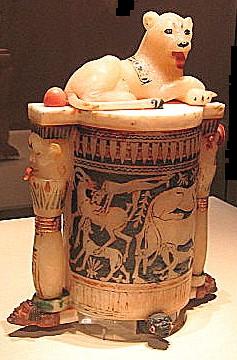
The goddess appears in Egyptian sources under several names, including Bast, Bastet, Ubasti and Pasch. Early depictions emphasize a lioness or a woman with a lioness head; by the Middle Kingdom the image softens to a seated domestic cat or a woman with a cat’s head. Iconography often shows her with kittens, musical instruments or the sistrum, reflecting associations with home, joy and ritual music. Visual and textual evidence from temple art helps trace these changes over centuries solar and protective roles.
Cult centres, temples and festivals
The principal cult centre of Bast was the city of Per-Bast (Greek Bubastis), where an important temple complex and annual festival drew large crowds. Archaeological remains and ancient accounts describe processions, music and offerings at her shrines. Her worship had a particularly strong presence in the Nile Delta and regions traditionally identified with Lower Egypt Per-Bast (Bubastis) and Lower Egypt, and she appears in records linked to royal ideology and regional identity.
Roles, relationships and symbolism
Bast served multiple functions: she was a guardian of the king and the nation, a protector against malevolent creatures, and a patron of household welfare, fertility and childbirth. In some mythic contexts she is described as a daughter or warrior of the sun god who opposes chaotic forces such as the serpent Apep Apep. Texts and later interpretations also connect her to other deities; for example, she is sometimes associated with or paired to Anubis in funerary contexts and appears within broader family-like relationships among Egyptian gods Anubis and Nephthys.
Practices, amulets and daily life
In daily religion Bast’s protective aspect made her a common focus of household devotion. Amulets showing a cat or a goddess with kittens were used by women seeking childbirth or protection for children. Her nurturing image also extended to perfumes, ointments and music—domains that tied domestic comfort to religious well-being. These gentler attributes grew more prominent after political shifts that altered regional cult emphasis, particularly during the Middle Kingdom era Middle Kingdom and later periods where she is noted for associations with perfumes and pleasant rites perfumes and ointments.
Notable facts and legacy
Bast’s transformation from martial lioness to household cat illustrates how Egyptian deities adapted to changing social and political contexts. Her cult left material traces in temple ruins, votive objects and cemetery inscriptions; domesticated cats also gained special cultural status and legal protections in later eras. Scholarly study of Bast continues to draw on a mix of art historical, textual and archaeological sources to understand how one goddess could embody both fierce protection and intimate domestic care royal protection narratives.
- Common epithets and functions: protector, motherly guardian, patron of music and childbirth.
- Primary cult centres and artifacts found at Per-Bast and Delta sites Per-Bast.
- Mythic connections to solar conflict and funerary practice solar myths.
Questions and answers
Q: Who was Bastet?
A: Bastet was the ancient Egyptian goddess of protection and cats. She was the warrior daughter and defender of Ra, who sent her to fight his archenemy Apep. As protectress, she was seen as defender of the pharaoh, after Sekhet, the lioness, and consequently of the chief god Ra.
Q: What other names is Bastet known by?
A: Bastet is also known as Bast, Ubasti, and Pasch.
Q: When did people start worshipping Bastet?
A: People started worshipping Bastet at least since the Second Dynasty in Ancient Egypt.
Q: Where was the center of her cult located?
A: The center of her cult was located in Per-Bast (Bubastis in Greek), which was named after her.
Q: How did people view her originally?
A: Originally she was seen as the protector goddess of Lower Egypt and her image was that of a fierce lion.
Q: What does "Bast" mean?
A: The name "Bast" means '(female) devourer'.
Q: What roles did she take on later in time?
A: Later in time she became known as a goddess of protection and blessing and became a protectress for women, children and domestic cats. She also became associated with sunrise, music, dance pleasure family fertility and birth.
Related articles
Author
AlegsaOnline.com Bast (Bastet) — Egyptian goddess of cats, protection, and domestic life Leandro Alegsa
URL: https://en.alegsaonline.com/art/9321