
Nanna (Norse goddess)
Nanna is a minor Norse goddess best known as the wife of Baldr. She appears in the Baldr cycle, dies of grief after his death, and is represented sparsely in the surviving Old Norse sources.
Overview
Nanna is an Old Norse goddess who appears chiefly as the wife of Baldr in sources that recount his death. In surviving texts she is associated with love, joy, and peaceful domestic ties rather than war or fertility. Her role in the myths is compact but emotionally central: her fate is tied to Baldr's loss and to the moral consequences of his slaying within the divine community.
Image gallery
4 Images


Attestations and central story
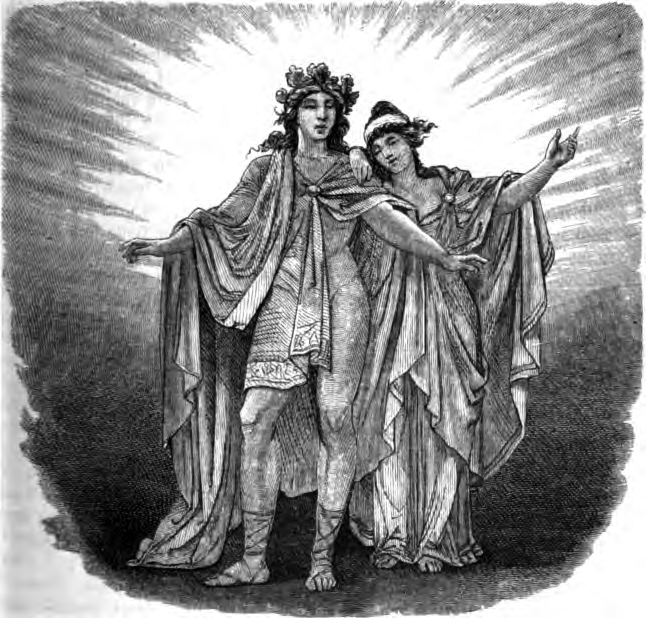
The principal accounts of Nanna are found in the Poetic Edda and the Prose Edda, where the narrative of Baldr's death is told. After Baldr is slain through trickery involving Loki and the blind god Höðr, Nanna reportedly dies of grief. She is placed aboard Baldr's funeral ship and burned with him; later traditions say her image or spirit accompanies him to the realm of the dead. These episodes are brief but important for the themes of loss and reconciliation in Norse mythology.
Characteristics and interpretation
- Role: Companion and consort of Baldr, symbolic of affection and domestic harmony.
- Function in the myths: Her death underlines the sorrow caused by Baldr's murder and helps motivate attempts to recover him from Hel.
- Attestation: Only a few references survive, so many details are uncertain and debated by scholars.
Clarifications and name issues
Although some modern summaries confuse her with lunar deities, the Norse personification of the moon is Máni; Nanna is not attested as a moon goddess in the Old Norse corpus. The similarity of her name to deities in other cultures (for example, Mesopotamian "Nanna/Sin") is coincidental and should not be taken as evidence of identical functions.
Legacy and cultural notes
Nanna has been used as a poetic and artistic figure in later literature and art, often as an emblem of mourning and conjugal fidelity. Because the original material is limited, modern portrayals vary: some emphasize tenderness and loss, others explore the tragic consequences of Loki's deception in the wider mythic cycle.
For the fuller narrative of Baldr and Nanna and their place in the mythic chronology, see accounts of Baldr's death and the inquiry into the gods' response to that crime, including references to the failure to recover him from Hel and the consequences for the Æsir pantheon. Additional background on these episodes can be found in summaries of Norse myth topics and related studies.
Related articles
Author
AlegsaOnline.com Nanna (Norse goddess) Leandro Alegsa
URL: https://en.alegsaonline.com/art/68261