
Rugops — a small abelisaurid theropod of the mid‑Cretaceous
Rugops was a modestly sized abelisaurid theropod from mid‑Cretaceous Africa, noted for a wrinkled snout and debated feeding habits; it lived alongside much larger predators and is known from fragmentary remains.
Overview
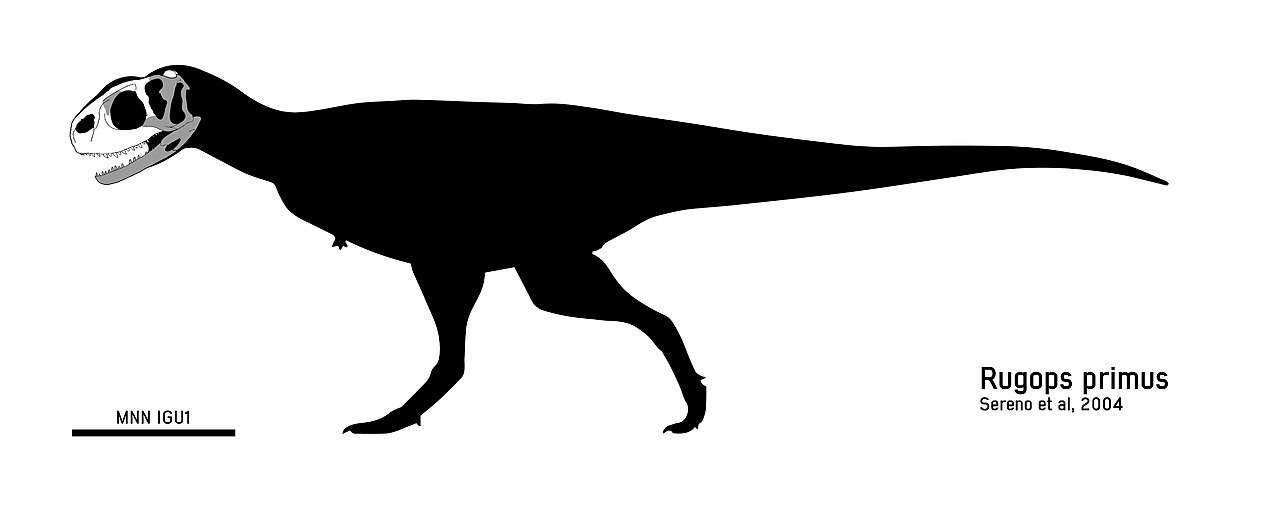
Rugops is a genus of theropod dinosaur usually placed among the abelisaurids, a group of short‑faced carnivorous dinosaurs known from Gondwana. The generic name means "wrinkled face," referring to a distinctive rugose texture on the bones of the upper snout. Known from limited and fragmentary material recovered in North and West Africa, Rugops is commonly reconstructed as a modestly built predator of the mid‑Cretaceous; adult length estimates typically fall in the range of about 4–6 metres (roughly 14–20 feet). It lived during the Cenomanian stage of the Late Cretaceous, about 95 million years ago, and is broadly treated in both popular and scientific sources as a small to medium‑sized dinosaur that occupied a specific ecological niche within its fauna.
Image gallery
10 Images




Anatomy and appearance
The most informative remains of Rugops come from skull fragments. The snout is relatively short, broad and marked by a pitted, rugose (wrinkled) surface on the nasal and premaxillary bones. This textured bone has been interpreted as an attachment area for specialised soft tissues — for example a keratinous pad, crest or fleshy display structure such as a wattle — comparable in concept to the external ornament of a turkey or rooster, though the exact form is unknown. The preserved teeth and jaws appear less robust than those of the largest contemporary theropods, suggesting a different feeding style or dietary emphasis.
Discovery and classification
Rugops was described from fossils found in mid‑Cretaceous deposits of Africa and is generally assigned to Abelisauridae, a clade of ceratosaurian theropods prominent in southern continents. Because the type material is fragmentary, detailed aspects of its anatomy and precise relationships within Abelisauridae remain uncertain. Comparisons are commonly made with better‑known abelisaurids such as Carnotaurus, though Rugops is usually reconstructed as less robust and less specialised for powerful cranial biting.
Size estimates and variation
Length estimates for Rugops vary among authors because of the incomplete skeleton. Conservative reconstructions place it at approximately 4–6 metres long, and body mass estimates are correspondingly modest compared with giant Cretaceous predators. The fragmentary state of the fossils means proportions of the limbs, torso and tail are inferred from related abelisaurids, and therefore subject to revision if new material is discovered.
Feeding and behavior
Rugops is considered a carnivore but there is debate about how it obtained food. The relatively delicate jaws and smallish teeth compared with apex predators of the same deposits have led some researchers to suggest it was an opportunistic feeder: scavenging large carcasses, preying on smaller vertebrates, or targeting juveniles rather than tackling very large adult prey. Alternatively, it may have specialised on particular prey types unavailable to larger competitors. These hypotheses remain tentative because direct evidence, such as tooth marks confidently attributable to Rugops, is limited.
Paleoecology
Rugops lived in a diverse ecosystem that also included very large predators and a range of herbivores. It shared its environment with enormous theropods like Spinosaurus and Carcharodontosaurus, as well as faster, more gracile carnivores such as Deltadromeus. Herbivorous dinosaurs present in the same assemblages included large sauropods and ornithopods; potential prey or scavenged animals may have included taxa such as Paralititan and Aegyptosaurus and ornithopods like Ouranosaurus. The coexistence of multiple theropod species of different sizes and presumably different hunting strategies illustrates niche partitioning in mid‑Cretaceous African ecosystems.
Significance and open questions
Rugops is significant because it highlights the diversity of medium‑sized predators on Gondwanan landmasses and contributes to understanding of ecological relationships among Cretaceous theropods. Key distinguishing features include its rugose snout texture and relatively small dental elements compared with larger contemporaries. Major questions remain: the exact nature of any soft‑tissue display structures, the full body proportions, and how Rugops exactly partitioned resources with larger carnivores. Additional fossil discoveries would be required to resolve many uncertainties and refine its placement within abelisaurid evolution.
Further reading
- General overview of Cretaceous African faunas and faunal interactions: Upper Cretaceous summaries and regional studies.
- Comparative studies of abelisaurid anatomy and ecology: see reviews comparing Rugops with taxa such as Carnotaurus.
- Reports on associated fauna, including apex predators like Spinosaurus and Carcharodontosaurus, and large herbivores such as Paralititan and Ouranosaurus.
- Discussion of feeding modes and the scavenging hypothesis in medium‑sized theropods: general treatments of theropod dietary ecology and opportunistic behaviour can provide context (dinosaur ecology overviews).
Related articles
Author
AlegsaOnline.com Rugops — a small abelisaurid theropod of the mid‑Cretaceous Leandro Alegsa
URL: https://en.alegsaonline.com/art/84667