
Rusty-spotted cat (Prionailurus rubiginosus)
A compact article on the rusty-spotted cat, one of the world's smallest wild felids: appearance, behavior, range in South Asia, threats, and conservation status.
Overview
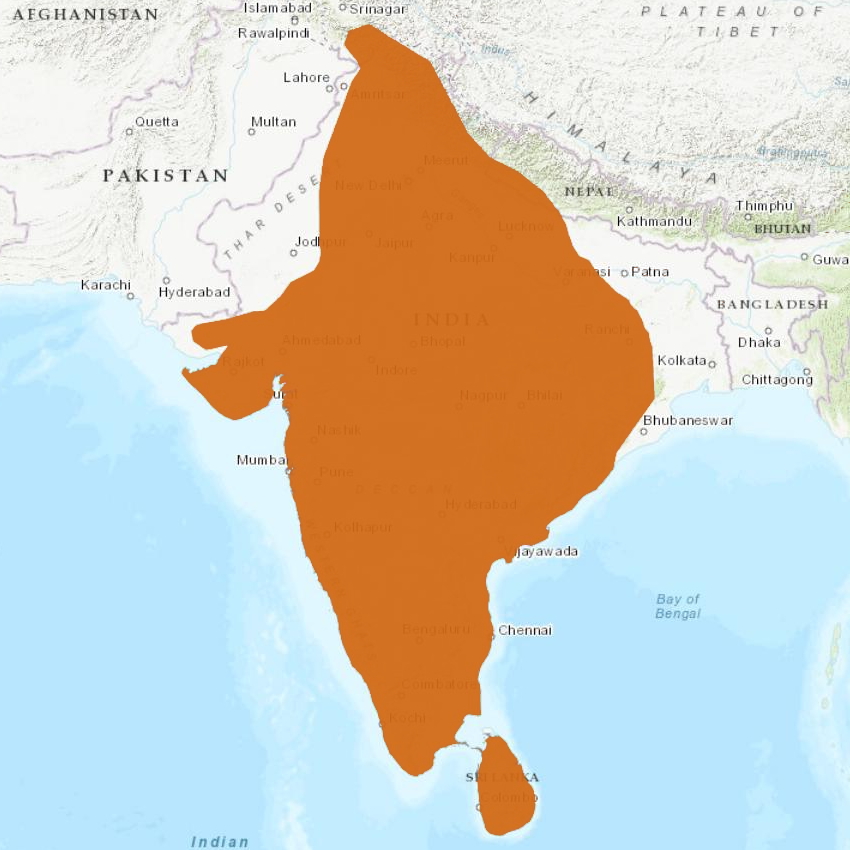
The rusty-spotted cat (Prionailurus rubiginosus) is a diminutive wild felid native to parts of South Asia. As a member of the Felidae, it is notable for its very small body size, patterned coat and secretive habits. Historically it was known from populations in India and Sri Lanka, and more recently records from the western Terai region of Nepal extended its documented range.
Image gallery
7 Images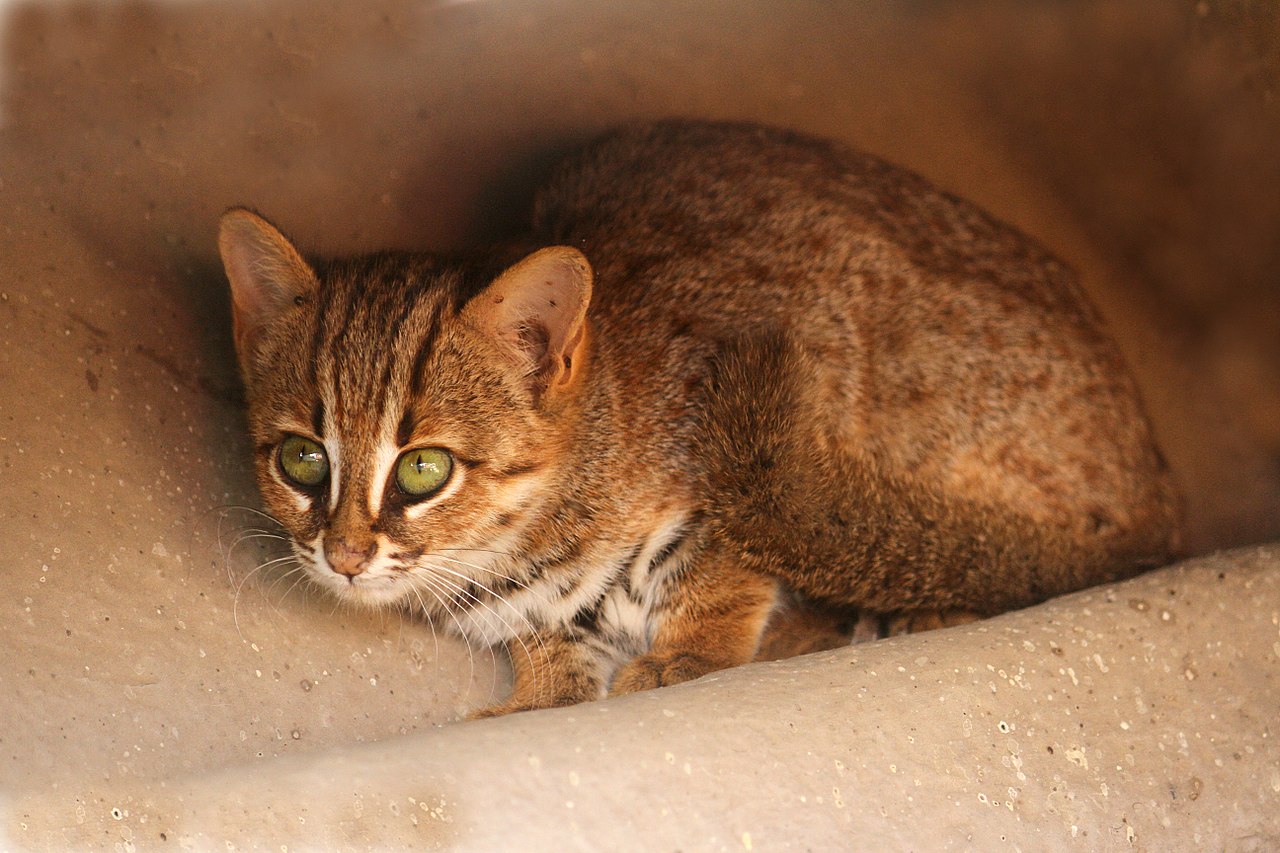


Appearance and behavior
This species has a rusty or tawny base color with darker rosettes or spots that give it its common name. It is slender, with proportionally long legs and a short tail compared with many other small cats. The rusty-spotted cat is primarily nocturnal and solitary. It is an adept climber and hunts small vertebrate prey such as rodents, birds and lizards, using stalking and ambush techniques. Like most small wild cats, it tends to avoid people and is rarely seen without camera traps or specialized surveys.
Distribution and habitat
Populations occur in a range of dry deciduous forests, scrub, grassy patches, and mosaic landscapes that include agricultural fields and plantations. While core historic records come from locations in India and Sri Lanka, targeted surveys and camera-trap records have confirmed presence beyond those areas, including the Terai of Nepal. Habitat fragmentation has left many populations isolated, and suitable habitat patches are often discontinuous.
Conservation status and threats
The IUCN assessed the species as Near Threatened in recent years, noting population fragmentation and ongoing habitat loss as principal concerns. The assessment appears on the IUCN Red List. Major threats include conversion of native woodland to agriculture, infrastructural development, capture in snares set for other species, and local declines in prey. Because the species is small and elusive, population trends are difficult to estimate accurately without sustained monitoring.
Management, research and notable facts
Conservation actions emphasize protecting remaining habitat fragments, creating or maintaining corridors between patches, reducing indiscriminate snaring, and promoting coexistence with local communities. Researchers rely heavily on camera traps and genetic sampling from hair or scat to detect and study these cats. Notable facts include their extreme smallness relative to most wild cats and their ability to occupy human-modified landscapes when sufficient cover and prey are present.
Key points
- One of the smallest wild cat species, recognizable by a rusty background and dark spots.
- Found in parts of South Asia, with records from India, Sri Lanka, and the Terai of Nepal.
- Listed as Near Threatened on the IUCN Red List; main threats are habitat loss and fragmentation.
- Best detected through targeted surveys, camera traps and community-based monitoring.
Questions and answers
Q: What is the rusty-spotted cat?
A: The rusty-spotted cat is one of the smallest members of the cat family.
Q: Where are historical records of the rusty-spotted cat known from?
A: Historical records of the rusty-spotted cat are known only from India and Sri Lanka.
Q: Where was the rusty-spotted cat also recorded in 2012?
A: In 2012, the rusty-spotted cat was also recorded in the western Terai of Nepal.
Q: What is the current conservation status of the rusty-spotted cat?
A: The global wild population of the rusty-spotted cat is listed as Near Threatened on the IUCN Red List.
Q: What factors are affecting the rusty-spotted cat population?
A: The rusty-spotted cat population is affected by the loss and destruction of its prime habitat, deciduous forest.
Q: Why is the rusty-spotted cat listed as Near Threatened?
A: The rusty-spotted cat is listed as Near Threatened due to its fragmented population and the loss and destruction of its habitat.
Q: In what year was the rusty-spotted cat recorded in the western Terai of Nepal?
A: The rusty-spotted cat was recorded in the western Terai of Nepal in 2012.
Related articles
Author
AlegsaOnline.com Rusty-spotted cat (Prionailurus rubiginosus) Leandro Alegsa
URL: https://en.alegsaonline.com/art/84879
Sources
- bucknell.edu : "Species Prionailurus rubiginosus"
- google.com : Mammal Species of the World
- worldcat.org : 62265494
- iucnredlist.org : "Prionailurus rubiginosus" · archive.org
- dropbox.com : "The first records of Rusty-spotted Cat in Nepal"