
New France: French colonial presence in North America
New France was the collective name for French colonial territories in North America from early 17th century expansion through their transfer to other powers in the 18th–19th centuries.
New France was the name given to the European colonial territories established by France in North America. Initially formed as a trading and settlement enterprise, the polity is often described as a colony whose administrative and economic centers developed along the St. Lawrence River and in other parts of eastern and central North America. The city of Quebec City became a principal seat of government after its founding and served as a focal point for exploration, military operations, and missionary work.
Image gallery
10 Images




Geography and political divisions
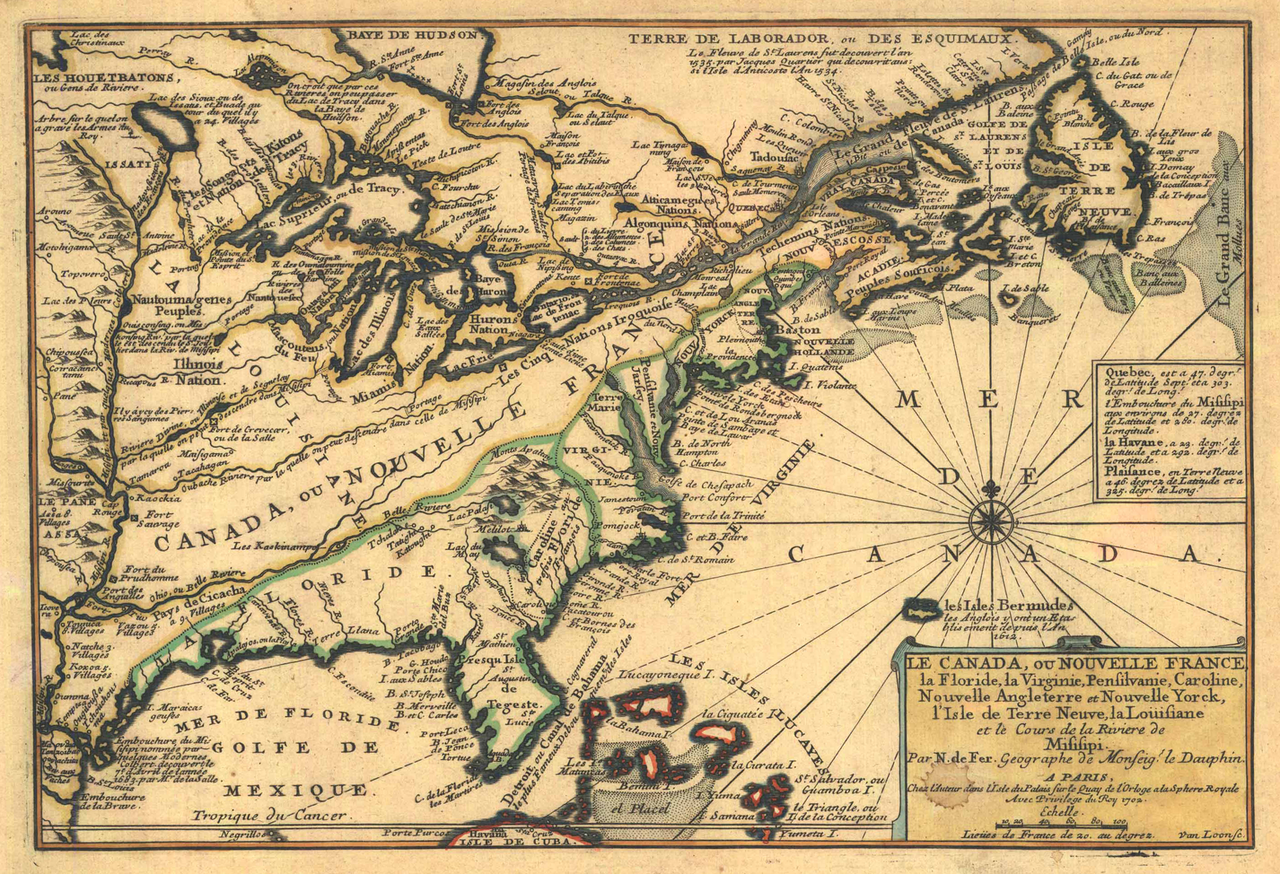
New France was not a single compact territory but a collection of regions with different characters and purposes. Broadly recognized components included:
- Quebec (the heartland along the St. Lawrence),
- Louisiana (the vast Mississippi basin and its tributaries),
- Acadia (maritime areas on the Atlantic coast), and
- outposts and trading posts spread across the Great Lakes and interior river systems.
Economy and society
Fur trading was the core economic driver, linking Indigenous trappers, French merchants, and European markets; the region's importance for the fur trade shaped its settlement pattern and diplomacy. Agriculture took root in the St. Lawrence valley under the seigneurial system, while fisheries and timber complemented local economies. Social life combined French settler institutions—parish churches, military garrisons, and rural manorial arrangements—with diverse Indigenous nations, who were essential partners in trade, alliance building, and cultural exchange. Groups of voyageurs, coureurs des bois, missionaries, and soldiers formed the human networks of the colony.
History and transfer of control
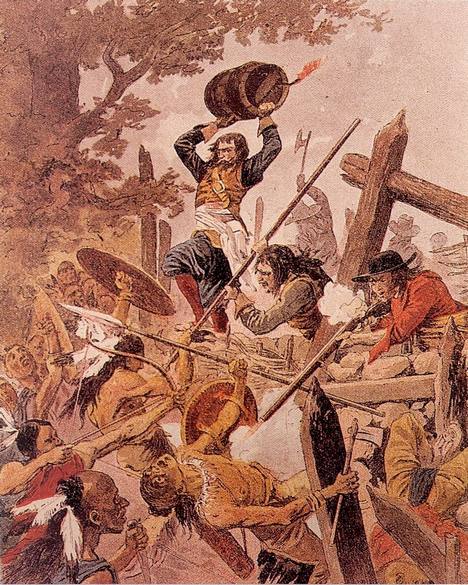
Exploration and settlement accelerated in the early 1600s, and New France expanded through a mix of mission work, trading alliances, and forts. During the mid-18th century New France became contested terrain in a wider imperial struggle. After major fighting between Britain and France in North America, culminating in the conflict often called the French and Indian War, most of New France east of the Mississippi passed into British hands and was incorporated into British North America under peace arrangements. The western portion of the Mississippi basin had already been secretly ceded to the Spanish Empire in the early 1760s. That territory was later returned to Napoleon's France at the turn of the 19th century and subsequently sold to the United States in the Louisiana Purchase, dramatically reshaping the political map of the continent.
Legacy and distinctions
New France left enduring marks on language, law, and culture. In parts of present-day Canada, French language and civil-law traditions persist; place names, legal practices, and religious heritage trace back to the colony. In the United States the French colonial period influenced settlement patterns in the Mississippi basin and the cultural mix of several regions. Historians note that New France was distinctive for its reliance on trade networks and alliances with Indigenous peoples, its relatively sparse settler population compared with British colonies, and institutional features such as seigneurial landholding and a strong role for the Catholic Church.
Examples and further reading
To study New France is to examine encounters between European empires and Indigenous nations, the environmental economics of the fur trade, and the geopolitical contests of the 18th century. For concise introductions or archival documents consult national and regional resources that specialize in colonial North American history and the specific regions named above. This complex colonial experience set patterns that continue to shape North American societies today.
colony • France • North America • Quebec • Louisiana • Quebec City • fur trade • French and Indian War • British North America • Spanish Empire • Napoleon • United States
Related articles
Author
AlegsaOnline.com New France: French colonial presence in North America Leandro Alegsa
URL: https://en.alegsaonline.com/art/69513