
Russian Revolution: collapse of the Tsarist regime and rise of the Soviet state
The Russian Revolution (1905–1917) was a sequence of political upheavals that ended imperial rule, brought the Bolsheviks to power in 1917, and led to the creation of the Soviet Union.
The Russian Revolution refers to a series of political and social upheavals that took place in the final years of the Russian Empire and culminated in 1917. These events weakened and ultimately overthrew the Tsarist autocracy, toppled the Romanov monarchy, and opened the path to the creation of the Soviet Union. Historians treat the revolution as a sequence of crises—mass protests, strikes, military mutinies and political maneuvers—rather than a single momentary outbreak; in that sense it was a series of revolutions that unfolded over more than a decade.
Image gallery
10 Images


Background and causes
Long-term causes included rapid industrialization, social inequality, and limited political reform under autocratic rule. Short-term pressures—military defeats, food shortages and the strains of World War I—intensified popular discontent. Earlier unrest in 1905 had produced a partial political opening but did not resolve fundamental problems. That 1905 upheaval is widely viewed as a rehearsal for later events and demonstrated how mass action could force concessions from the regime.
Key events and turning points
- 1905 Revolution: A wave of strikes, protests and armed uprisings including the massacre of demonstrators known as Bloody Sunday prompted reforms but left the monarchy weakened.
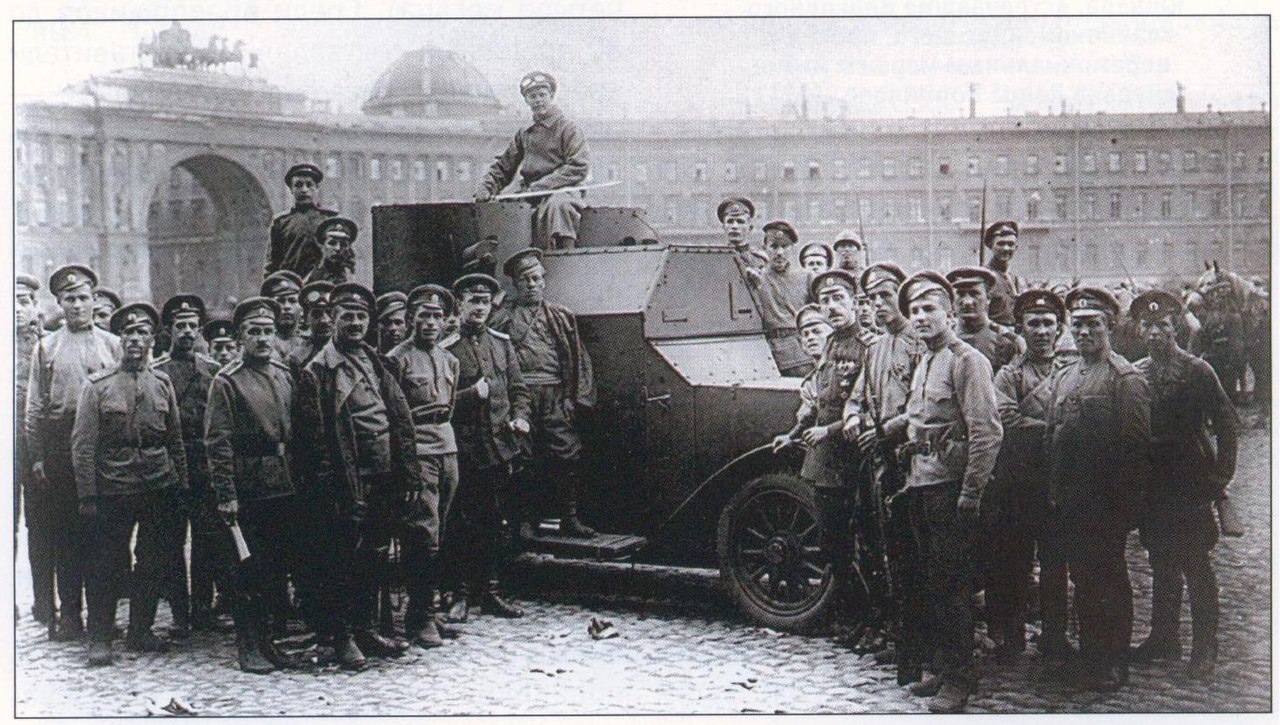
- February Revolution (1917): Often dated 8 March on the modern calendar but recorded as 28 February in Russia because the country still used the Julian calendar. Mass demonstrations, worker strikes and the defection of soldiers forced Tsar Nicholas II to abdicate and led to the formation of a provisional administration.
- Provisional government and dual power: A temporary provisional government composed of liberal and moderate socialist figures shared authority with local councils of workers and soldiers (soviets). Some leaders described the provisional body as socialist in composition, but it lacked full control.
- October Revolution (1917): Referred to as the October Revolution within Russia because it took place in October under the Julian calendar; on the Gregorian calendar it occurred in early November. The Bolsheviks—a faction of the broader communist movement led by figures who had returned from exile—seized key points in Petrograd and moved to replace the provisional authorities.
- Aftermath for the monarchy: The imperial royal family had been placed under house arrest after the February events and were later executed during the civil conflict that followed.
Consequences and significance
The revolutions ended centuries of autocratic rule and set in motion a civil war between Bolshevik-led forces and various anti-Bolshevik groups. By 1922 the victorious Bolsheviks had consolidated power and organized a federal communist state that became the Soviet Union. The transformation reshaped global politics in the twentieth century, inspiring communist movements abroad while prompting new international opposition and intervention.
Distinctive features and debates
Scholars emphasize several distinctive features: the importance of urban workers and soldiers organized into soviets; the interaction between mass movements and disciplined political parties; and the role of crisis (especially wartime hardship) in accelerating change. Debates continue about whether the outcome represented a popular social revolution, a coup by a determined party, or a complex mixture of both. Calendar differences between the Julian and Gregorian systems explain why the February and October events are often dated differently in contemporary accounts.
Further reading and resources
For concise introductions and archival material see general histories and primary documents, and consult reputable collections that treat the 1905 disturbances, the February crisis, the Bolshevik seizure in October and the subsequent civil war. Useful starting points include surveys that address social, political and military dimensions of the upheaval and the varied experiences of peasants, workers and soldiers across the former empire. For overviews and timelines use resources labeled as series of revolutions, condition summaries of the Russian Empire, and specific entries on the February Revolution and the October Revolution.
Additional topic links: communist movement, Bolsheviks, socialist groups, provisional government, and the fate of the royal family who were held under house arrest.
Questions and answers
Q: What was the Russian Revolution?
A: The Russian Revolution was a series of revolutions that took place in the Russian Empire between 1905 and 1917.
Q: What was the impact of the Russian Revolution?
A: The event destroyed the Tsarist autocracy and played a critical role in the creation of the Soviet Union.
Q: When did the first revolution happen according to the Russian calendar?
A: The first revolution happened on 28 February 1917 according to the Russian calendar.
Q: Why is there a discrepancy in the date of the revolution?
A: There is a discrepancy in the date of the revolution because Russia still used the Julian calendar instead of the Gregorian calendar used today.
Q: Who replaced Tsar Nicholas II after the February Revolution?
A: A socialist provisional government replaced Tsar Nicholas II after the February Revolution.
Q: What is the October Revolution?
A: The October Revolution was the second revolution that occurred in October on the Julian calendar. Bolsheviks replaced the provisional government to create the Soviet Union.
Q: What happened to the royal family after the October Revolution?
A: The royal family was put under house arrest, and they were later shot and killed.
Related articles
Author
AlegsaOnline.com Russian Revolution: collapse of the Tsarist regime and rise of the Soviet state Leandro Alegsa
URL: https://en.alegsaonline.com/art/84843
Sources
- history.com : "Russian Revolution - Facts & Summary"