
Router (network device)
A router directs data between computer networks, using hardware and software to forward packets, apply policies, and connect local networks to the Internet.
Overview
A router is a dedicated computer-class device whose software and hardware are designed to receive, examine and forward data packets between different networks. Routers determine where packets should go and move network traffic along the most appropriate path. They are fundamental building blocks of the Internet and private networks, and exist in forms ranging from small consumer units to large carrier-grade chassis.
Image gallery
8 Images




Main components and design
Most routers combine a tailored operating system with specialized components to support high-speed forwarding and management. Typical parts include:
- CPU(s) and processors for control tasks and management;
- volatile memory (RAM) and nonvolatile storage such as flash memory or NVRAM for configuration and software images;
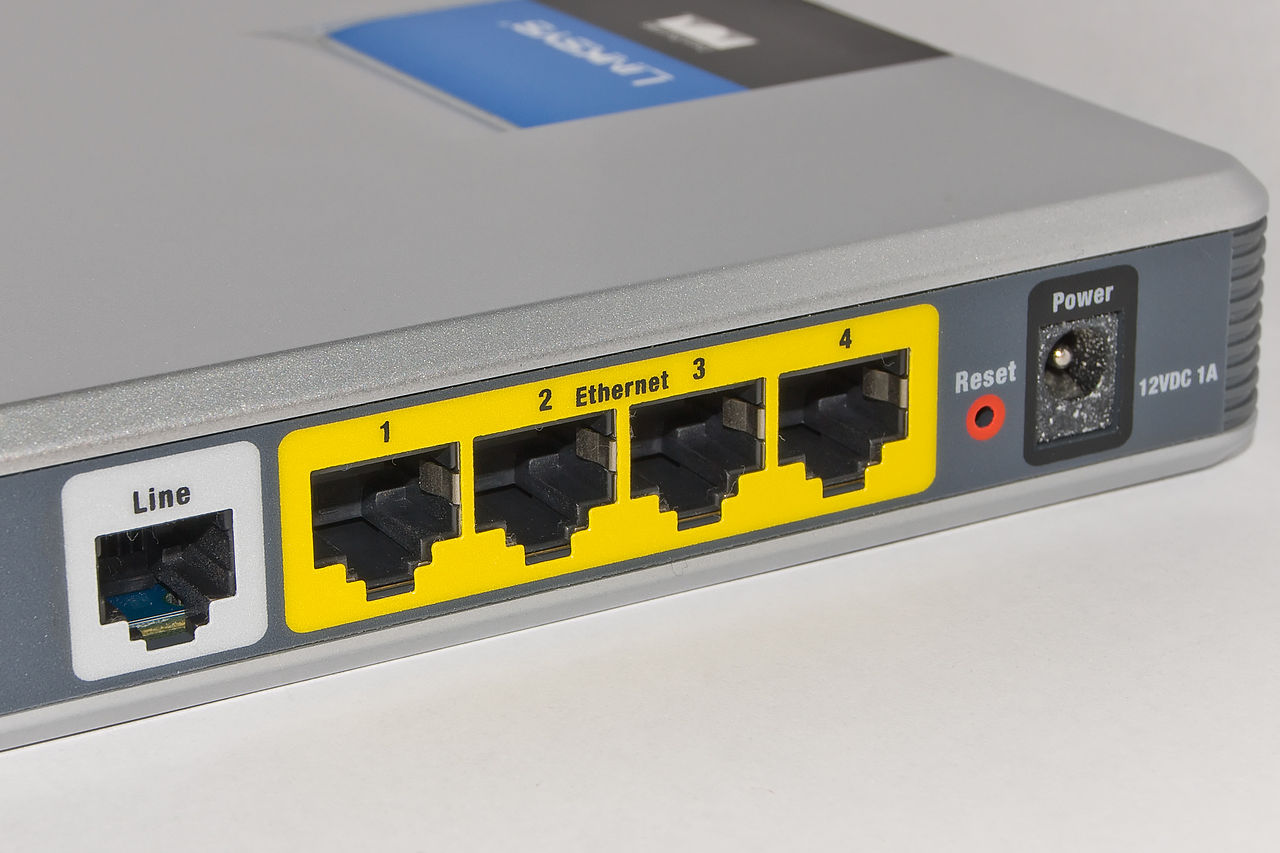
- two or more network interfaces—copper, fiber, or wireless—to connect separate network segments;
- firmware and protocol implementations that implement forwarding and routing policies.
How routing works
When a host needs to send data outside its local segment, it forwards packets to a nearby router, commonly called the default gateway. Routers consult routing information—either configured statically or learned dynamically via routing protocols—to decide the next hop. Address resolution and name lookup typically involve services such as DNS, and packets destined for the wider Internet are passed from a home or enterprise router to an upstream ISP router and onward across many intermediate routers until they reach their destination.
Functions in small and large networks
In small deployments (homes, small offices and places like internet cafés) a single device often provides routing plus additional services: network address translation (NAT), DHCP, basic firewalling and Wi‑Fi. NAT allows multiple internal devices to share one public IP address, making outbound connections appear to come from a single host and restricting unsolicited inbound traffic. In enterprise and carrier environments routers implement policy routing, traffic engineering and high-availability features at much larger scale.
Types, distinctions and notable facts
Routers are classified by role: consumer/home routers, branch routers, edge routers, core routers, and provider or carrier routers. Virtual routers implement the same functions as software instances on general-purpose servers. A related term, the "layer 3 switch," describes devices optimized to route between Ethernet-based LANs; it combines switching hardware with routing features and is often used interchangeably with router in local networks, especially where Ethernet is predominant.
Software architecture and evolution
Modern router operating systems are commonly separated into a control plane that runs routing protocols and management processes, and a forwarding (data) plane that handles packet switching at line rate. This separation allows routers to scale: control tasks run on general-purpose processors while the forwarding plane uses specialized hardware or optimized paths. Over time, routing has evolved from simple static tables to sophisticated protocol suites that support redundancy, multicast, and policy-based routing, enabling the complex, resilient fabric that underpins today’s networks.
For further technical reading and vendor documentation see device basics, software models, hardware platforms, network concepts, OS architecture, storage options, processing units, interface types, Internet structure, gateway roles, addressing, DNS, ISP networks, small network examples, NAT, and Ethernet switching.
Related articles
Author
AlegsaOnline.com Router (network device) Leandro Alegsa
URL: https://en.alegsaonline.com/art/84362