
Roman villa: architecture, types, and social role
Comprehensive summary of the Roman villa: definition, principal spaces (atrium, peristyle), types (urbana, rustica), features (hypocaust, mosaics), historical development and legacy.
A Roman villa was a countryside residence or mansion built and occupied during the Roman Republic and the Roman Empire. The term covers a wide range of buildings from luxurious suburban estates to working agricultural complexes. Many villas combined private living quarters with spaces for administration, production and leisure; a common organizing element was an open internal courtyard that connected or oriented the main rooms.
Image gallery
7 Images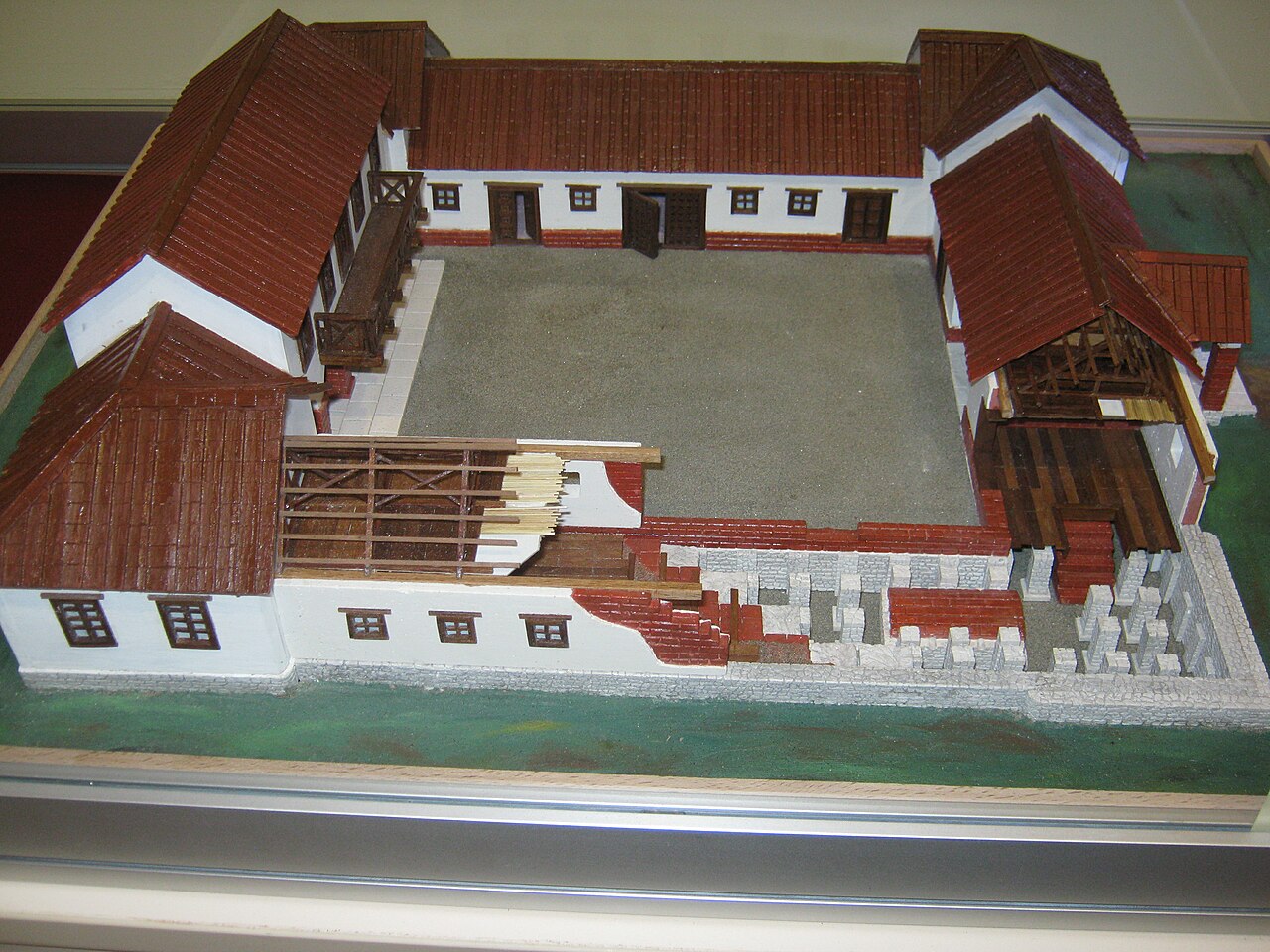


Layout and principal parts
Although forms varied by region and period, several recurring spaces appear across villa plans. The atrium (central hall) and the peristyle (columned garden court) were focal points in elite houses. Ancillary rooms often included the tablinum (reception/office), triclinium (dining room), cubicula (bedrooms) and baths. Villas with thermal suites could have private bathing rooms linked to a hypocaust — an underfloor heating system.
- Vestibulum or entrance area: transitional space leading to the main courtyard.
- Peristyle: garden court providing light and views to surrounding rooms.
- Baths and service areas: caldarium, tepidarium, frigidarium and furnace rooms.
- Work buildings (villa rustica): granaries, presses, barns and housing for workers or slaves.
Types and functions
Scholars distinguish several broad categories. A villa urbana functioned as a country house close to a city and emphasized comfort and display. A villa rustica served as the headquarters of an agricultural estate, combining residence with production. Some coastal or seaside villas (sometimes called villae maritimae) were used for recreation and seasonal occupation. Villas could therefore be homes, workplaces, status symbols and administrative centres all at once.
History and geographic spread
The villa tradition evolved from earlier Italic and Hellenistic domestic models and expanded with Rome's territorial growth. Wealthy Romans built impressive villas in Italy, on Mediterranean islands, and throughout provinces in Gaul, Hispania, North Africa and the eastern Mediterranean. Archaeological examples — from suburban villas near Rome to large complexes such as Hadrian's Villa — illustrate regional adaptations in plan, decoration and construction techniques.
Decoration included painted wall plaster and elaborate floor mosaics; surviving examples document varied artistic programs and daily activities. Many villas contained mosaics and decorative schemes that linked local tastes with broader Roman fashions, and some of these ornamental floors are studied for both their imagery and craftsmanship. For more on decorative programs see mosaic and decorative arts.
Technology, maintenance and hygiene
Roman villas often incorporated advanced engineering: aqueduct-fed water supplies, drainage, latrines and the hypocaust for underfloor heating. Private and public bathing relied on regular maintenance; archaeological and textual evidence indicates that baths were cleaned and managed, though practices varied by location and period. Ventilation, sewage connections and the layout of service spaces all influenced how villas functioned as hygienic and comfortable dwellings.
Importance and legacy
Beyond housing, villas were economic engines that produced olive oil, wine, grain and other goods, often using resident labour or tenant farmers. They were also social stages where landowners displayed status, entertained guests and administered local affairs. The Roman villa influenced later European country houses and estate planning. Archaeology continues to refine our picture of villa life, and many excavated sites provide key evidence about rural economy, architectural technology and everyday habits of the Roman world. For a general introduction to the concept of the Roman villa as a country house or mansion see country house or mansion.
Scholars studying villas draw on plans, material remains and literary references to understand regional diversity, economic roles and the experience of inhabitants. Continuing fieldwork and conservation efforts make villas important resources for reconstructing Roman social and economic history.
Related articles
Author
AlegsaOnline.com Roman villa: architecture, types, and social role Leandro Alegsa
URL: https://en.alegsaonline.com/art/83872