
Ronald Reagan Building and International Trade Center
Federal building and mixed-use international trade center in Washington, D.C., opened in 1998 and named for President Ronald Reagan; combines government offices, public spaces, trade facilities and cultural venues.
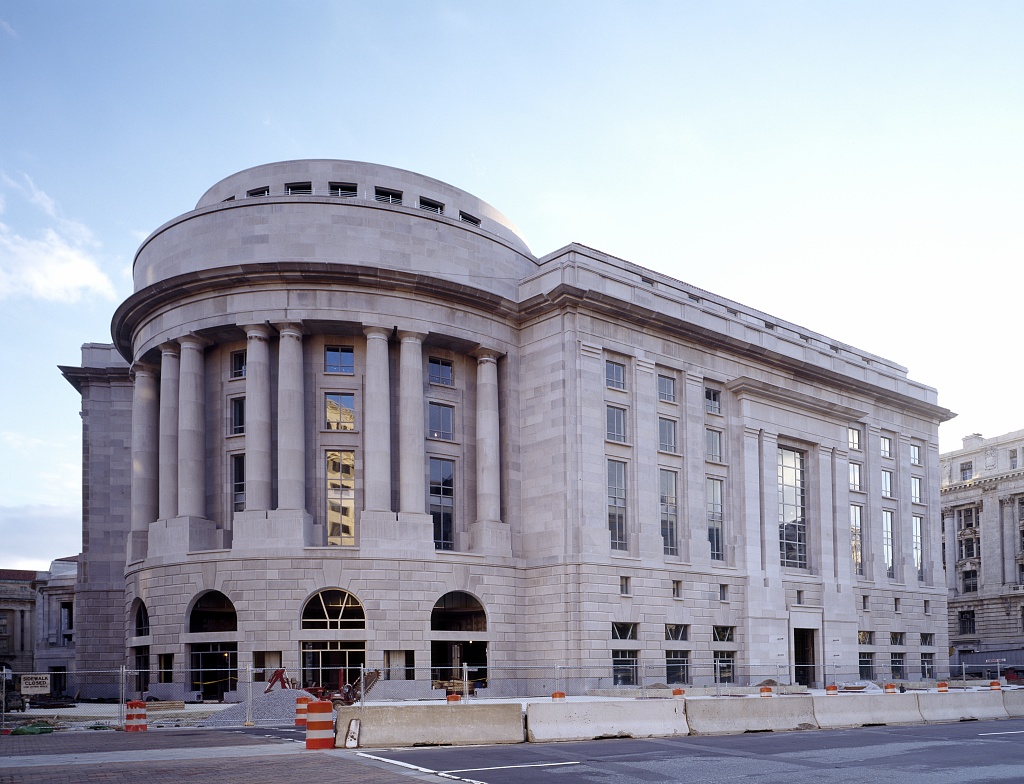
The Ronald Reagan Building and International Trade Center is a major federal and civic complex in downtown Washington, D.C., completed and opened to the public on May 8, 1998. It was created as a mixed-use facility intended to host a combination of federal offices, international trade organizations, exhibition space, meeting venues and public amenities. The project was promoted as a way to consolidate government functions while providing room for private-sector events and cultural programming. See the building's official information page: official building page.
Image gallery
10 Images


Overview and purpose
Unlike many federal structures designed solely for office use, this complex was planned from the outset to support both governmental activity and international commerce. It contains conference facilities intended to host trade delegations, nonprofit and business groups, and cultural exhibits. The center has public lobbies, retail dining, and spaces used for conferences, temporary exhibitions and receptions.
Design and notable features
The building is known for a large central atrium, connected plazas and an architectural approach that blends monumental federal scale with areas designed for public access. Interior spaces were arranged to accommodate large meetings and exhibitions while offering galleries and restaurants that are open to visitors. Key features frequently noted by observers include expansive meeting halls, accessible public circulation, and a location intended to link government offices with civic and cultural activity.
History and naming
The complex was named in honor of President Ronald Reagan, reflecting the decision to associate the center with a recent president at the time of its dedication. The opening in 1998 marked the culmination of planning that aimed to provide a federal building with significant public and international-facing functions. For background about the building's namesake and related historical context, see a biographical reference: Ronald Reagan — biography reference.
Uses, events and cultural role
The facility routinely hosts trade meetings, diplomatic receptions, nonprofit forums, and public exhibits. Its meeting rooms and exhibition halls have been used by trade promotion agencies, educational organizations and cultural groups for temporary displays and conferences. Visitors can often find culinary and retail offerings in the complex as well as occasional public programming and art installations.
Notable facts and public exhibits
Among the items on display in and around the complex is a piece of the Berlin Wall, a physical reminder of Cold War history and international relations; information about that artifact is available through institutional references: Berlin Wall fragment information. The building is frequently cited as one of the larger federal complexes in the Washington metropolitan area and as an example of a federal project designed with combined governmental and private-sector uses in mind.
Practical information
- Functions: federal offices, international trade and conference facilities, public exhibition space.
- Access: located in central Washington, intended to be accessible to visitors attending events or exhibitions.
- Significance: notable as a late-20th-century federal complex emphasizing mixed use and public engagement.
Related articles
Author
AlegsaOnline.com Ronald Reagan Building and International Trade Center Leandro Alegsa
URL: https://en.alegsaonline.com/art/83994
Sources
- pqasb.pqarchiver.com : "Reagan Building Nears Its Debut; Five Years in the Making, Federal Offices to Begin Opening Next Month"
- itcdc.com : Attractions