
Bahá'í Faith
A concise encyclopedia overview of the Bahá'í Faith: its origins, core beliefs (unity of God, religion, and humanity), history, social teachings, practices, and distinctive institutions.
Overview
The Bahá'í Faith is a global, independent religious tradition that emerged in the mid-19th century in Persia. Its principal prophet-founder, Bahá'u'lláh, is central to Bahá'í belief and teaching; he was born in Tehran in what is today Iran and is commonly identified by followers as the channel of a new divine message Bahá'u'lláh. The community of adherents is known as Bahá'ís.
Image gallery
10 Images

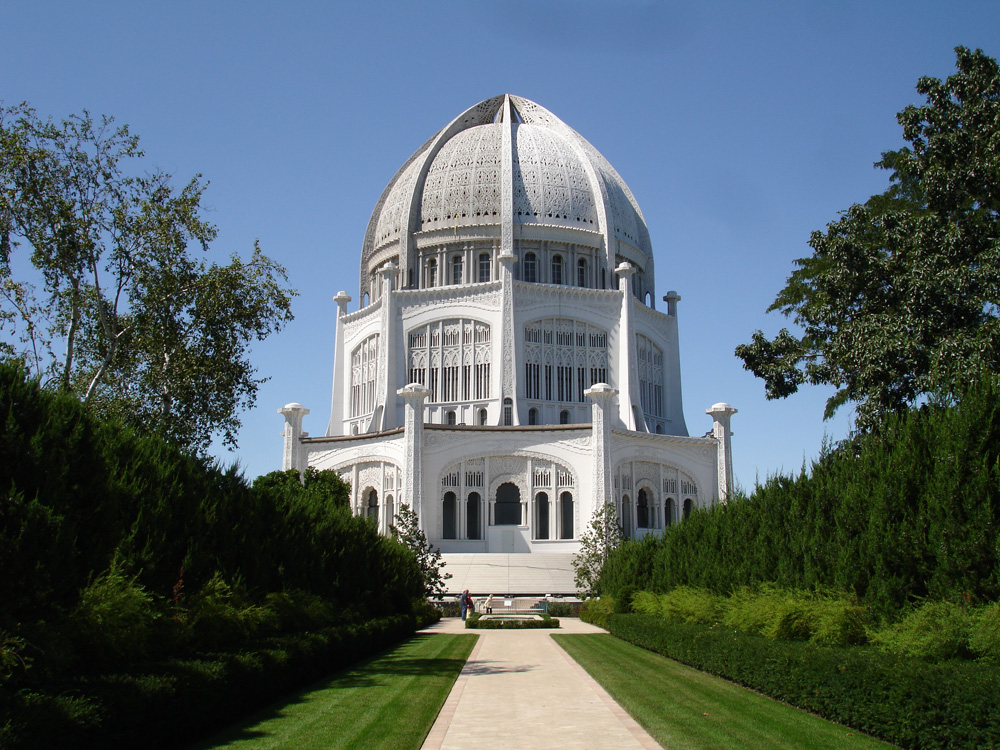





Core beliefs and terminology
Bahá'ís are monotheists and affirm belief in a single, transcendent God one God, expressed through successive divine educators. The name Bahá'u'lláh is an Arabic phrase meaning "The Glory of God" and its linguistic background is noted in Arabic studies (Arabic). Central doctrinal concepts include the unity of God, the unity of religion, and the unity of humankind. Religious teachers who reveal God's guidance at different ages are called "Manifestations of God;" examples commonly cited are Jesus, Moses, Muhammad, the Buddha, Krishna, and Abraham. Bahá'ís emphasize that revelation is progressive: later Manifestations bring teachings appropriate to the needs of their age.
Historical development
The Bahá'í Faith grew out of a religious movement in 19th-century Persia. The Báb, who announced a new spiritual era and prepared the way for Bahá'u'lláh, is an important forerunner the Báb. Bahá'u'lláh proclaimed his mission during a period of social and political change and experienced exile and imprisonment before his teachings spread beyond the region. Over decades the community established administrative institutions and expanded internationally through conversion, migration, and organized teaching efforts.
Teachings, ethics, and social principles
Bahá'í scripture and writings emphasize practical social principles intended to promote unity and justice. Key themes include the elimination of prejudice, equality of women and men, universal compulsory education, the harmony of science and religion, the independent investigation of truth, the elimination of extremes of wealth and poverty, and the adoption of an auxiliary international language. These principles are presented as means to build cohesive societies and address global problems.
Practice, worship and institutions
Personal practice often includes daily prayer, study of Bahá'í writings, and participation in community life. The Bahá'í calendar has specific holy days and a period of fasting observed annually. Community governance is distinctive: there is no clergy; instead, administrative affairs are handled by elected councils at the local and national levels (Local Spiritual Assemblies and National Spiritual Assemblies) and by an international body elected by national institutions. The global governing body, based at the Bahá'í World Centre, offers guidance for the worldwide community.
Distinctive features and contemporary presence
Notable features of the Bahá'í Faith include its strong emphasis on unity in diversity, an organized non-clerical administrative order, and an extensive corpus of authoritative writings. Bahá'ís have established communities in many countries and have raised visibility through social and educational projects. The faith has also faced persecution in some places, particularly where its teachings were seen as socially or politically challenging. For further general information and primary texts, readers may consult introductory resources and community materials monotheists, historical, or specific biographical pages on Bahá'u'lláh, the Báb, and other Manifestations such as Jesus and Muhammad.
Questions and answers
Q: Who started the Bahá'í Faith?
A: The Bahá'í Faith was started in the 1800s by an Iranian person called Bahá'u'lláh.
Q: What does the name Bahá'u'lláh mean?
A: The name Bahá'u'lláh is Arabic for "The Glory of God".
Q: What do Bahá'ís believe about God?
A: Bahá'ís are monotheists, which means that they believe in one God. They believe that God sends special people to manifest (show) himself to ordinary humans and that without these Manifestations of God we could not know Him.
Q: How do followers of this religion refer to themselves?
A: Followers of this religion call themselves Bahá'ís.
Q: Are all followers of the Baha’i faith Muslims?
A: No, although since Baha’u’llah was born in a Muslim family, some people mistakenly think all followers are Muslims.
Q: Is Baha’u’llah considered the last prophet/manifestation of God?
A: No, according to Baha’is there will not be another prophet for 1,000 years after Baha’u’llah's death.
Tags
Related articles
Author
AlegsaOnline.com Bahá'í Faith Leandro Alegsa
URL: https://en.alegsaonline.com/art/8312
Sources
- education.yahoo.com : Definition: "Glory"
- www-personal.umich.edu : "A Brief Biography of Baha'u'llah"
- reference.bahai.org : Bahai.org
- bahai.com : "Principles of the Bahá'í Faith"
- adherents.com : "Baha'i Houses of Worship"