
Kitáb-i-Aqdas (The Aqdas) — The Most Holy Book of the Bahá'í Faith
The Kitáb-i-Aqdas, commonly called the Aqdas, is the central book of laws and guidance in the Bahá'í Faith, written by Bahá'u'lláh and foundational to Bahá'í belief, community life, and moral teaching.
The Kitáb-i-Aqdas, often shortened to the Aqdas, is regarded by Bahá'ís as the central book of laws and guidance for the Bahá'í community. Its Arabic title is al-Kitābu l-Aqdas and in Persian it appears as Kitáb-i-Aqdas. It was revealed by Bahá'u'lláh, the founder of the Bahá'í Faith, and is treated as the primary canonical text that sets out core precepts, obligations, and principles for individual conduct and communal order.
Image gallery
1 Image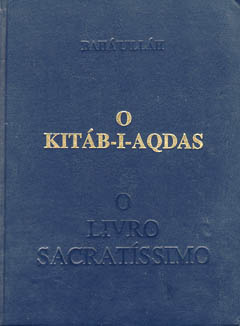
Nature and structure
The Aqdas is relatively concise compared with many religious scriptures and comprises a combination of legal provisions, exhortations, prayers, and pronouncements on social and spiritual subjects. Rather than presenting a single continuous narrative, the work collects directives and guidance on a range of matters. Its tone alternates between legislative instruction and poetic or devotional language, reflecting its dual role as law and scripture.
Main themes and provisions
- Ethical guidance: moral imperatives, virtues, and personal conduct intended to shape believers' inner life and social behavior.
- Social principles: teachings that address family life, justice, the rights of individuals, and the importance of education and unity.
- Religious practice: provisions concerning prayer, fasting, pilgrimage, and other devotional observances.
- Community order: guidance for organizing communal affairs and institutions in accordance with spiritual principles.
History and compilation
The text was composed by Bahá'u'lláh in the latter half of the 19th century. Over time it has been transmitted, translated, and interpreted by Bahá'í institutions and scholars. While originally written in Arabic and Persian, the Aqdas is now available in many languages through authorized translations that aim to convey both its legal content and spiritual expressions.
Significance and use
For Bahá'ís the Aqdas functions as a central reference for personal conduct and community life. Its laws and principles are applied in the context of evolving community institutions and consultative processes. Many adherents draw on the Aqdas for guidance in areas of worship, social interaction, and ethical decision-making, while administrative bodies interpret and provide application in contemporary circumstances.
Notable facts and distinctions
The Aqdas is distinctive among world scriptures for combining legal directives with explicit statements about social reform and spiritual transformation. It emphasizes the unity of humanity and the need to harmonize spiritual values with practical arrangements. Readers are encouraged to approach the text as both a source of devotional inspiration and a framework for communal life, with ongoing interpretation by the faith's institutions to address new contexts and questions.
Tags
Related articles
Author
AlegsaOnline.com Kitáb-i-Aqdas (The Aqdas) — The Most Holy Book of the Bahá'í Faith Leandro Alegsa
URL: https://en.alegsaonline.com/art/5075