
Ravioli: Overview, Forms, History and Culinary Uses
Ravioli are filled pasta parcels from Italian cuisine, made from two layers of dough enclosing a stuffing. This article covers their shapes, fillings, history, cooking methods and notable regional variations.
Overview
Ravioli are small parcels of filled pasta that form an important part of Italian cuisine. Each piece typically consists of two sheets of unleavened pasta dough enclosing a filling; the edges are sealed and portions are cut or stamped into squares, rounds or other shapes. They are commonly boiled and served with a sauce or simply tossed with butter and herbs. For a general context see Italian cuisine and for details on the dough itself see pasta dough.
Image gallery
4 Images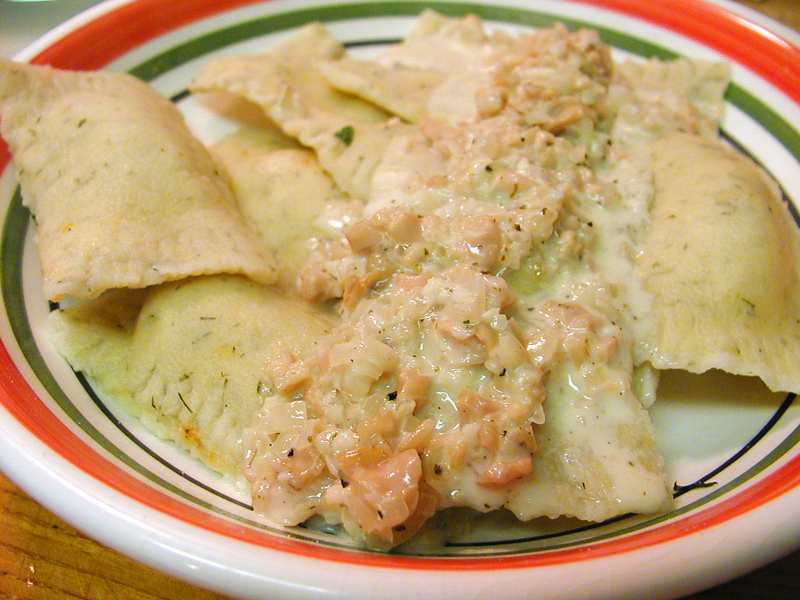


Characteristics and common fillings
Ravioli vary widely in size, shape and ingredients but share the basic element of a casing of pasta around a stuffing. Traditional fillings include:
- Cheese: soft ricotta blended with hard cheeses or herbs.
- Meat: ground or chopped meat mixtures often combined with cheese and seasoning — see meat examples.
- Vegetables: spinach, beet greens, mushrooms or other vegetables — see vegetables.
- Seafood and seasonal varieties: used in coastal and modern interpretations.
History and development
The precise origin of ravioli is diffuse and regional; filled pastas appear in medieval and Renaissance Italian cookery and became formalized in many local traditions. Regional names and shapes reflect local ingredients and customs. Over time ravioli spread beyond Italy and were adapted by home cooks and the food industry, leading to fresh, frozen and canned versions.
Cooking methods and typical sauces
Ravioli are most often boiled until the pasta is tender and the filling is heated through. They may be served in a light broth, with a tomato-based sauce, a cream or cheese sauce, or simply with melted butter and aromatic herbs. Popular simple pairings include sage and browned butter, or a light tomato and basil sauce; see related serving ideas at sauces and melted butter.
Variations and notable facts
Different regions have distinct forms: squares and rounds are common, while similar filled pastas include tortellini, agnolotti and mezzaluna. Internationally, ravioli have been reinvented — for example, deep-fried "toasted" ravioli in some American cities — and chefs often experiment with nontraditional fillings and presentations. Whether made by hand, with a stamp or by machine, ravioli remain a versatile dish that balances simple technique with wide culinary creativity.
Related articles
Author
AlegsaOnline.com Ravioli: Overview, Forms, History and Culinary Uses Leandro Alegsa
URL: https://en.alegsaonline.com/art/81323