
Quill pen: history, construction, and modern use
A quill is a writing instrument made from a bird feather. This article explains its parts, how it was made and used, its historical role, and why it remains popular in calligraphy and ceremonies.
Overview
A quill is a traditional writing implement fashioned from the flight feather of a large bird. As a simple, durable instrument it served for centuries as the principal means of writing with ink. The hollow base of the feather functions as a reservoir, and ink is drawn to the tip by capillary action. Quills are often described in basic tool guides as a classic writing tool, and they remain in use today for decorative writing and ceremonial signatures.
Image gallery
8 Images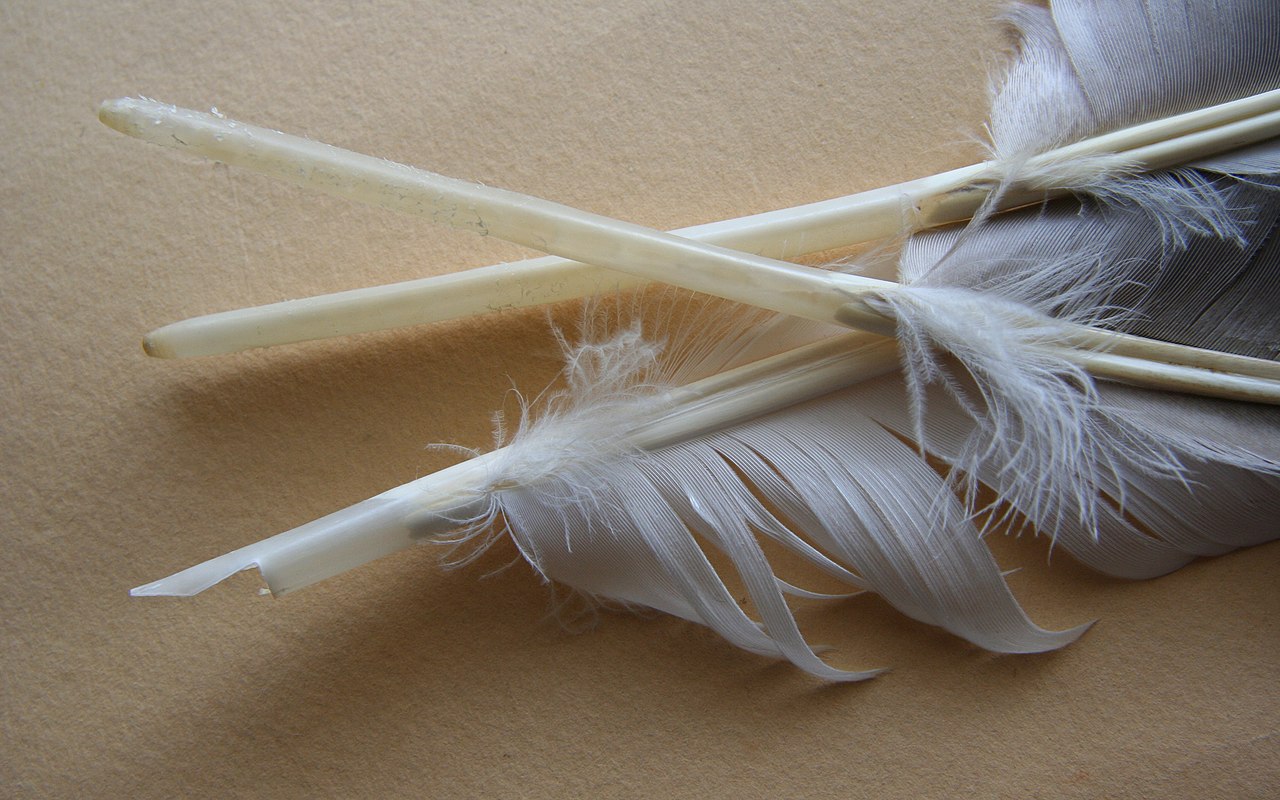



Parts and construction
The main structural elements of a quill include the calamus (the hollow shaft), the rachis (central spine), and the barbs that form the vane. To become a pen the tip of the calamus is cut and shaped into a nib; a slit is introduced to control ink flow. Traditionally feathers from geese, swans, and turkeys were preferred for their size and stiffness, though birds vary in feather quality.
- Calamus: hollow reservoir that holds ink.
- Nib: cut tip where the ink meets the paper.
- Vane and barbs: give the feather its shape and handling balance.
Making and preparing quills
Quill preparation typically involved selecting mature flight feathers, cleaning and curing them (sometimes by hardening in hot sand or by drying), and then cutting the nib to the desired width and point. Different cuts create broad or fine strokes; scribes and calligraphers learned how to maintain and reshape nibs as they wore. Modern hobbyists follow similar steps when reproducing historical methods.
History and decline
Quills were dominant in Europe and other regions from late antiquity through the early modern period. Scribes, clerks and letter-writers used quills for manuscripts, legal documents, and everyday correspondence. The arrival of mass-produced steel nib pens in the 19th century gradually replaced quills for general use, though quills remained culturally symbolic—appearing in portraits, seals, and ceremonial contexts.
Uses, techniques and notable facts
Today quills are appreciated by calligraphers and historical reenactors; they are also used for illustrative demonstrations of historical writing techniques. Users learn to manage ink loading, angle, and pressure to get consistent lines. Quills respond differently to modern wood-pulp papers, which can be more abrasive than older rag papers and wear the nib more quickly. For more on tools and techniques see general references on pens and writing instruments: metal nibs and pens, feather sources, and specialist calligraphy resources like calligraphy guides and craft manuals covering writing. For scientific explanation of ink movement in narrow channels, consult materials that discuss capillarity and fluid flow in small reservoirs. Additional background and tool comparisons are available in overview collections of writing implements and ink studies here.
Related articles
Author
AlegsaOnline.com Quill pen: history, construction, and modern use Leandro Alegsa
URL: https://en.alegsaonline.com/art/80555