
Queen Anne's Revenge — Blackbeard's flagship
The flagship of the pirate Blackbeard, Queen Anne's Revenge was a former French merchant/slave vessel captured in the early 18th century and lost off the North Carolina coast; its wreck has been archaeologically investigated.
Overview
Queen Anne's Revenge was the best-known ship associated with the pirate Edward Teach (often recorded as Blackbeard). The vessel served briefly as his flagship and became a powerful symbol of early 18th‑century Atlantic piracy. Its story connects transatlantic trade, privateering and pirate activity during what is often called the Golden Age of Piracy.
Image gallery
2 Images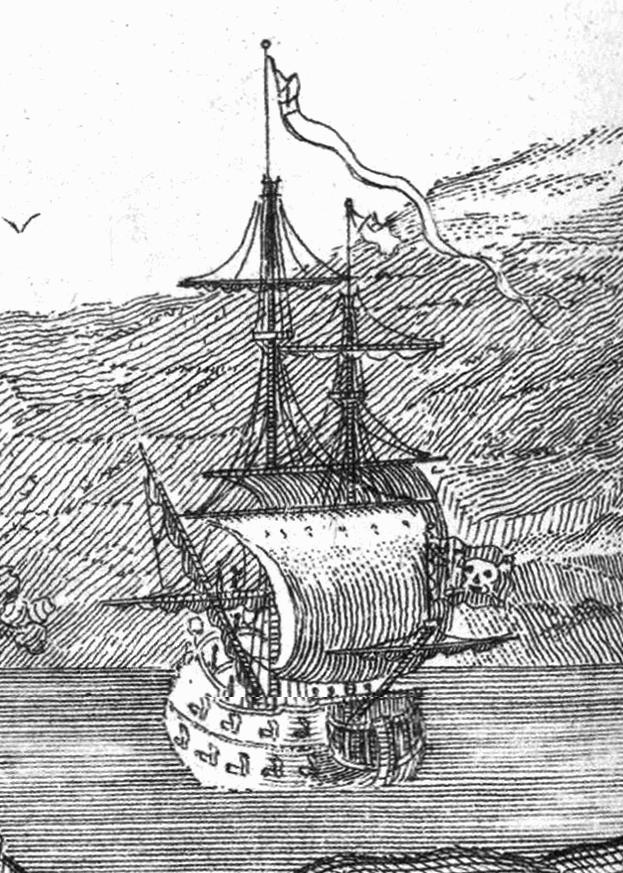

Construction and characteristics
The ship began life in the early 1700s as a merchant vessel, commonly identified in period records as Concord or La Concorde, built for Atlantic service and the transport of goods and captives. After capture and refitting for piracy it was heavily armed; contemporary accounts and later historians report it carried numerous cannon and a large crew, making it one of the most formidable pirate ships in the region.
History and voyages
The vessel's recorded career includes capture from its original owners in the early 1710s and a change of hands in the mid 1710s. Sources indicate it was taken by French interests around the time of its construction (built in 1710) and later seized by other forces (captured by the French in 1711) before being appropriated by pirates in the years that followed (captured by pirates in 1717). Under Blackbeard the ship was used to blockade ports, intimidate merchantmen and, for a short period, to project his power along the American southeast seaboard.
Sinking and loss
In 1718 the ship ran aground near what is now the North Carolina coast. Contemporary reports and later research describe the vessel as having been stranded and abandoned near a coastal inlet (run aground on an island near North Carolina), after which Blackbeard dispersed or traded ships and soon met his own violent end. Whether the grounding was accidental, the result of navigational hazard, or a deliberate tactic remains debated among historians.
Archaeology, finds and legacy
A wreck discovered off the coast of North Carolina in the late 20th century is widely believed to be the remains of this ship, and systematic archaeological work has recovered cannon, anchors, tableware, ballast and other artifacts associated with early 18th‑century seafaring and piracy. Conservation and display of these items have added substantially to popular and scholarly understanding of maritime material culture from the era.
Notable facts and cultural impact
The story of the ship endures in literature, museum exhibits and popular media as an emblem of pirate life. It illustrates connections between colonial trade, warfare and piracy and remains one of the best-documented pirate ship histories because of the combination of contemporary accounts and archaeological evidence. Ongoing research continues to refine what is known about the vessel and its final voyage.
- Former name: Concord / La Concorde
- Associated figure: Edward Teach (Blackbeard)
- Significance: Prominent example of armed merchant conversion and pirate flagship
Related articles
Author
AlegsaOnline.com Queen Anne's Revenge — Blackbeard's flagship Leandro Alegsa
URL: https://en.alegsaonline.com/art/80448