
Reconstruction era (United States, 1865–1877)
Period after the American Civil War when the federal government sought to rebuild the Southern states, integrate formerly enslaved people into civic life, and resolve questions of political control and citizenship.
Overview
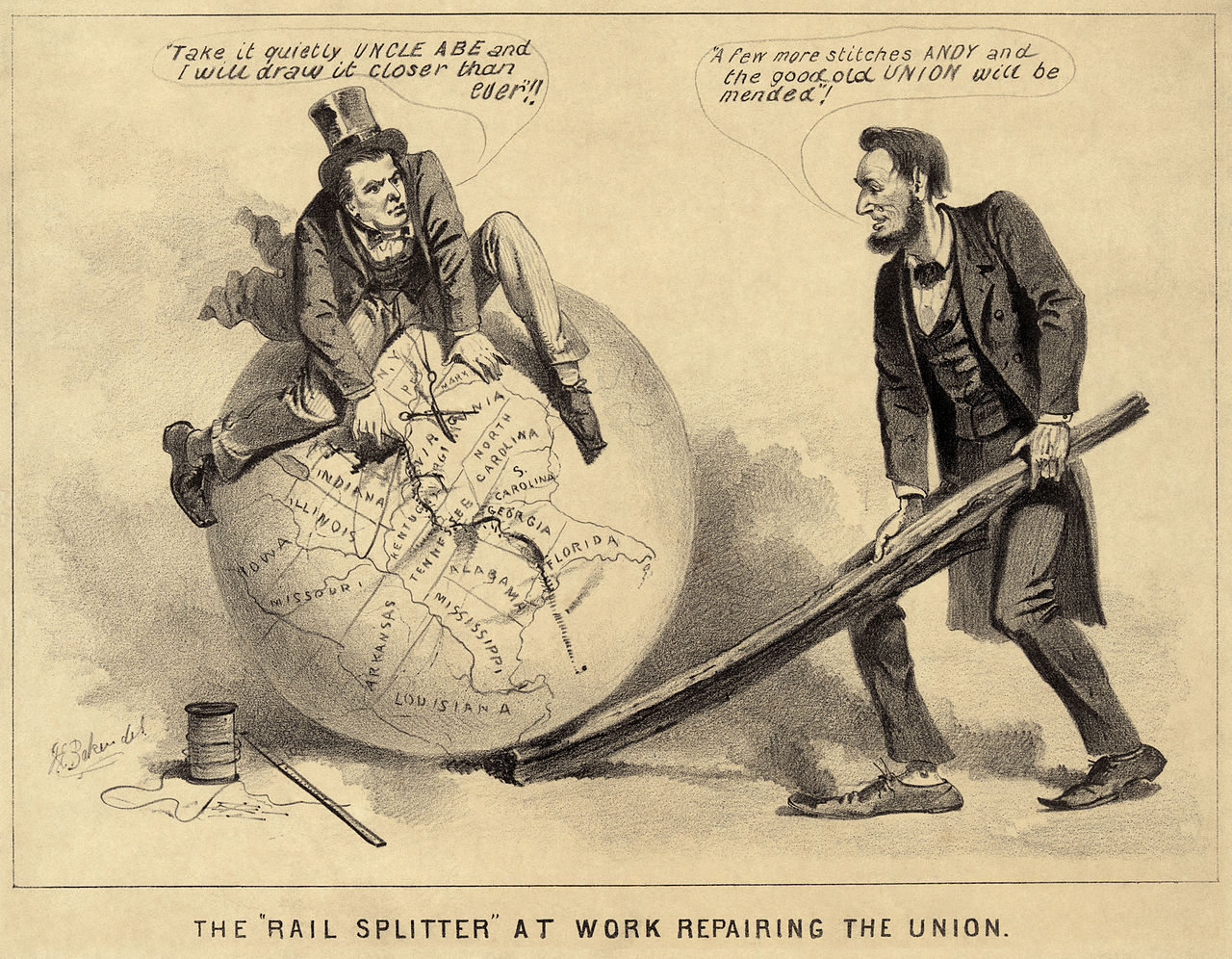
Reconstruction refers to the period after the American Civil War when the federal government undertook the political, legal and social reintegration of the Southern United States. The conflict had ended slavery (slavery) and defeated the states that had formed the Confederate States of America, leaving much of the region in military occupation (occupied territory) and economic ruin. The era began in 1865 after the assassination of Abraham Lincoln and the accession of Andrew Johnson, and it is commonly dated through the withdrawal of federal troops in 1877.
Image gallery
10 Images



Key aims and measures
The central aims of Reconstruction were to restore functioning state governments, to define the civil and political status of formerly enslaved people, and to determine who should govern the defeated Southern states. Federal legislation and constitutional amendments addressed those goals. Important measures included:
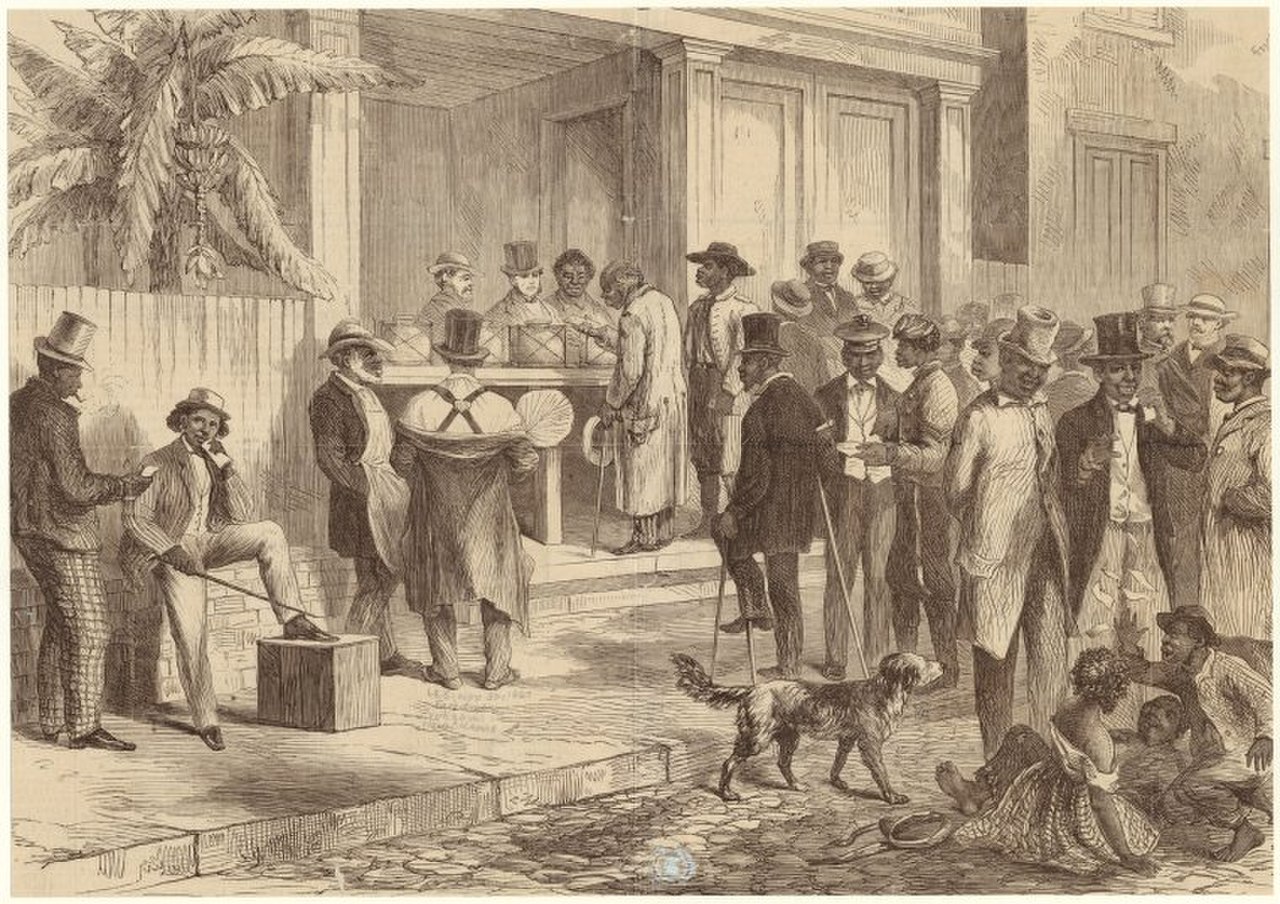
- Three constitutional amendments that abolished slavery, established birthright citizenship and due process, and extended voting rights regardless of race.
- Reconstruction Acts and military oversight that divided the South into districts to supervise election rules and protect newly enfranchised citizens.
- Programs such as the Freedmen's Bureau to provide schooling, legal help, and limited economic assistance to freed people.
Political conflict and social change
The era featured a sharp struggle between presidential and congressional plans for readmission. Many in the Republican Party in Congress resisted quick restoration of local rule and sought to prevent former Confederate leaders from regaining power in the United States Congress. Southern white Democrats (Democrats) pushed back against federal requirements and against expanded political rights for Black citizens, including the right to vote (suffrage). Northern migrants sometimes called carpetbaggers arrived in the South to participate in politics and business, and a modest number of formerly enslaved people and their allies won local and state offices.
Resistance, violence, and economic forces
Conservative and white supremacist resistance took many forms. Terrorist organizations such as the Ku Klux Klan used intimidation and violence to remove Black and Republican influence. Systems of labor and credit — including sharecropping and tenant farming — created continued economic dependency for many freed people despite legal freedom. Efforts to protect civil rights faced persistent local opposition and intermittent federal enforcement.
End of Reconstruction and long-term consequences
Federal resolve to enforce Reconstruction declined in the 1870s. The Compromise that resolved the controversial 1876 presidential contest effectively ended federal military supervision, and white Southern "Redeemers" re-established control of state governments. Over the following decades these regimes enacted Jim Crow Laws mandating racial segregation, and they adopted voting restrictions and other measures that disenfranchised many African Americans. Southern politics shifted toward one-party Democratic dominance for much of the late 19th and early 20th centuries.
Legacy and interpretation
Reconstruction left a mixed and contested legacy. It secured constitutional promises of citizenship and equal protection, created space for Black political participation, and transformed national authority over civil rights. Yet its achievements were limited by violence, economic constraints, and later legal and political rollbacks. Historians continue to debate Reconstruction's successes and failures and its lasting influence on American race relations, federalism, and civil rights. For additional context and primary sources, see related topics such as the American Civil War, the Andrew Johnson presidency, and the formation of the Republican Party.
Further reading and online resources are available through archival collections and specialized studies that examine legislation, court decisions, and local experiences across different Southern states. See also discussions of political reintegration, Reconstruction-era elections, and the transition to Jim Crow governance.
Related articles
Author
AlegsaOnline.com Reconstruction era (United States, 1865–1877) Leandro Alegsa
URL: https://en.alegsaonline.com/art/81580