
Quartz clock: principles, history, accuracy and common uses
A quartz clock uses a quartz crystal oscillator to regulate electronic timekeeping. This article explains how it works, its development, accuracy, variants, and common applications.
Overview
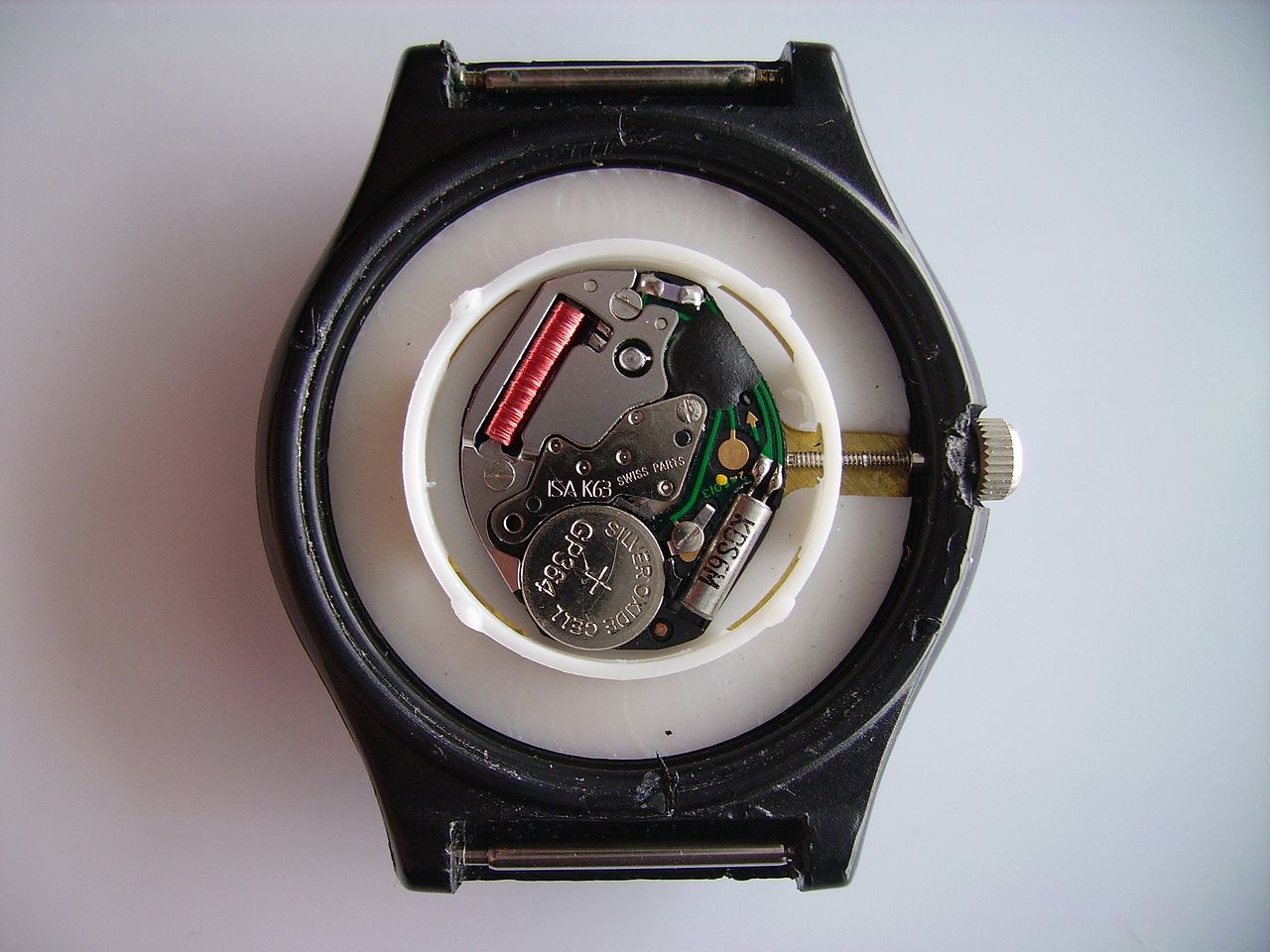
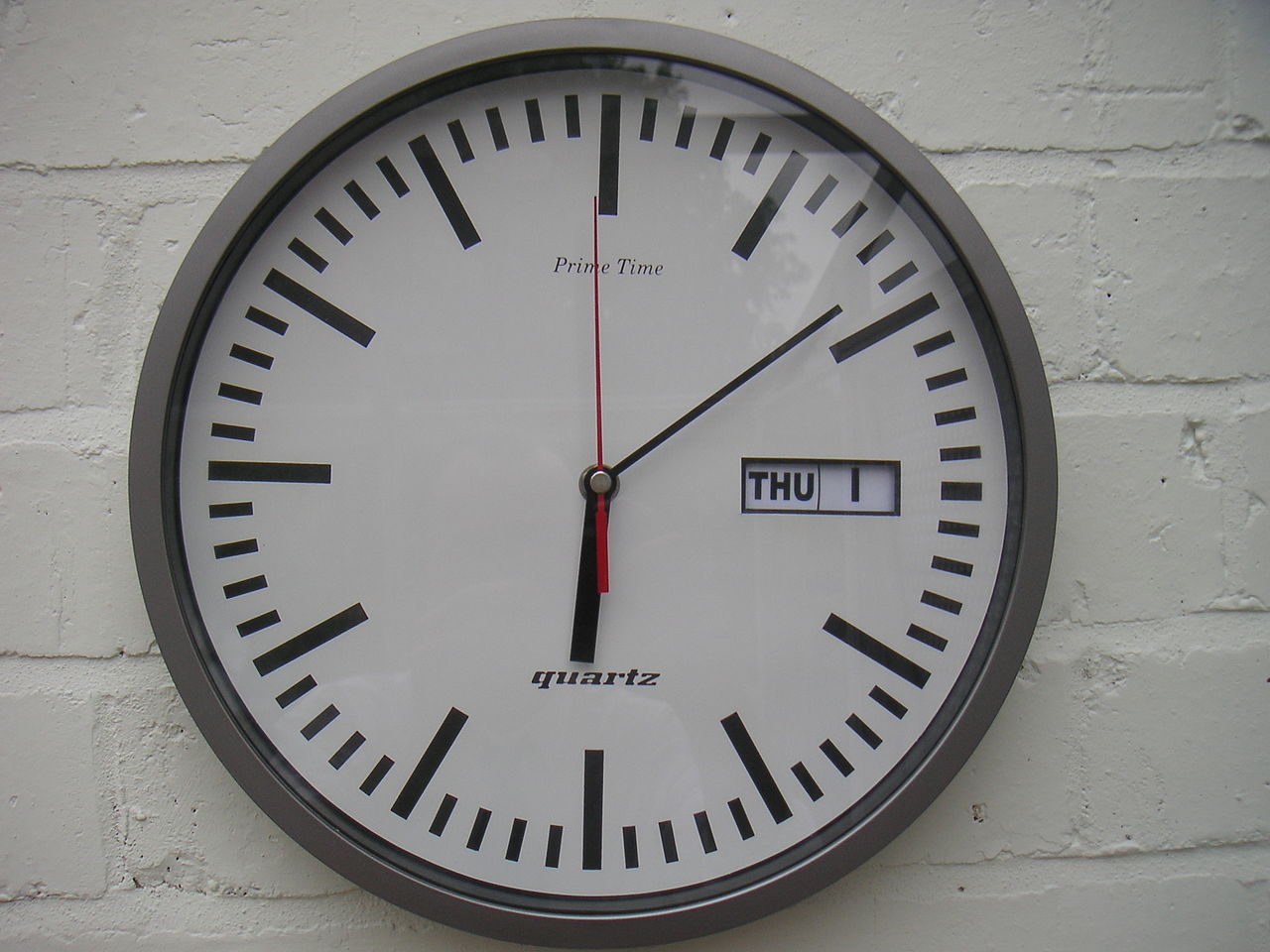
A quartz clock is a timekeeping device that uses the stable vibration of a quartz crystal to control an electronic oscillator. In these instruments an electronic oscillator is regulated by a shaped piece of quartz; the result is a steady electrical signal that digital logic counts to present time in hours, minutes and seconds. Quartz-based designs displaced most mechanical clocks and became the dominant consumer technology from the 1970s onward.
Image gallery
10 Images




How it works
The fundamental element is a cut quartz crystal that exploits the piezoelectric effect: when an electric field is applied the crystal vibrates at a characteristic rate, and when it vibrates it generates an electric signal. A tuned electronic circuit amplifies and sustains those vibrations so the crystal acts as an oscillator. The oscillator produces a precise periodic waveform with an agreed frequency, which a divider circuit reduces to one pulse per second or another convenient timing interval.
Typical components and characteristics
- Quartz crystal resonator: the frequency-determining element, often cut in the AT orientation for stability.
- Oscillator circuit: maintains the crystal's vibration and shapes the output waveform.
- Frequency divider and logic: counts cycles and drives a display or motor for hands.
- Power source and optional temperature compensation to improve long-term accuracy.
History and development
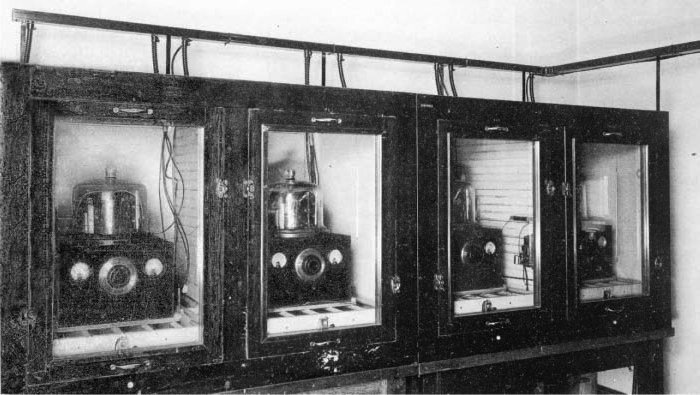
Quartz timekeepers arose in the early 20th century as electronic techniques advanced. Practical quartz clocks and watches became widely available after the mid-20th century, and by the 1970s they were common in consumer products. Their affordability and superior short-term stability compared with mechanical escapements led to rapid adoption in wristwatches, wall clocks and electronic instruments.
Accuracy, limitations and variants
Quartz clocks are generally much more accurate than ordinary mechanical clocks because the crystal's resonance is very stable. Typical consumer quartz devices keep time to within a few seconds per month under normal conditions. Accuracy can be affected by temperature, aging of the crystal, and supply voltage; improved types use temperature compensation or oven-controlled crystals to reach better stability. For the highest precision, quartz devices are disciplined by radio or satellite signals or compared with atomic standards.
Uses and importance
Quartz timing is ubiquitous: from household wall clocks and wristwatches to laboratory instruments, telecommunications equipment and computer systems. Their low cost, small size and reliability made possible precise synchronization in electronics and widespread personal timekeeping. Beyond clocks, quartz resonators are used in filters, frequency references and many electronic timing applications.
Notable facts and distinctions
- Quartz clocks rely on an oscillator-based approach rather than a mechanical escapement.
- Many designs use a 32,768 Hz crystal because it divides down easily to one-second intervals.
- Higher-precision variants include temperature-compensated (TCXO) and oven-controlled (OCXO) designs.
- Despite their accuracy, quartz clocks are distinct from atomic clocks, which offer much finer long-term stability.
For further technical details and implementation examples consult specialist references and engineering guides that cover crystal cuts, oscillator topologies and compensation methods. See also resources on time dissemination standards and digital clock design (crystal applications).
Additional introductory material and historical context can be found through educational and technical links (frequency concepts, timekeeping basics).
Related articles
Author
AlegsaOnline.com Quartz clock: principles, history, accuracy and common uses Leandro Alegsa
URL: https://en.alegsaonline.com/art/80410