
Progesterone
Progesterone is a natural steroid hormone important for the menstrual cycle, pregnancy maintenance, and reproductive medicine; it is produced from cholesterol and has clinical and physiological roles across sexes and ages.
Overview
Progesterone is a naturally occurring steroid molecule that functions as a key reproductive hormone in mammals. Chemically derived from cholesterol, progesterone serves as a metabolic precursor for other sex steroids such as estrogens and androgens. It plays central roles in preparing the uterus for implantation, supporting early pregnancy and modulating the menstrual cycle.
Image gallery
10 Images



Characteristics and biological role
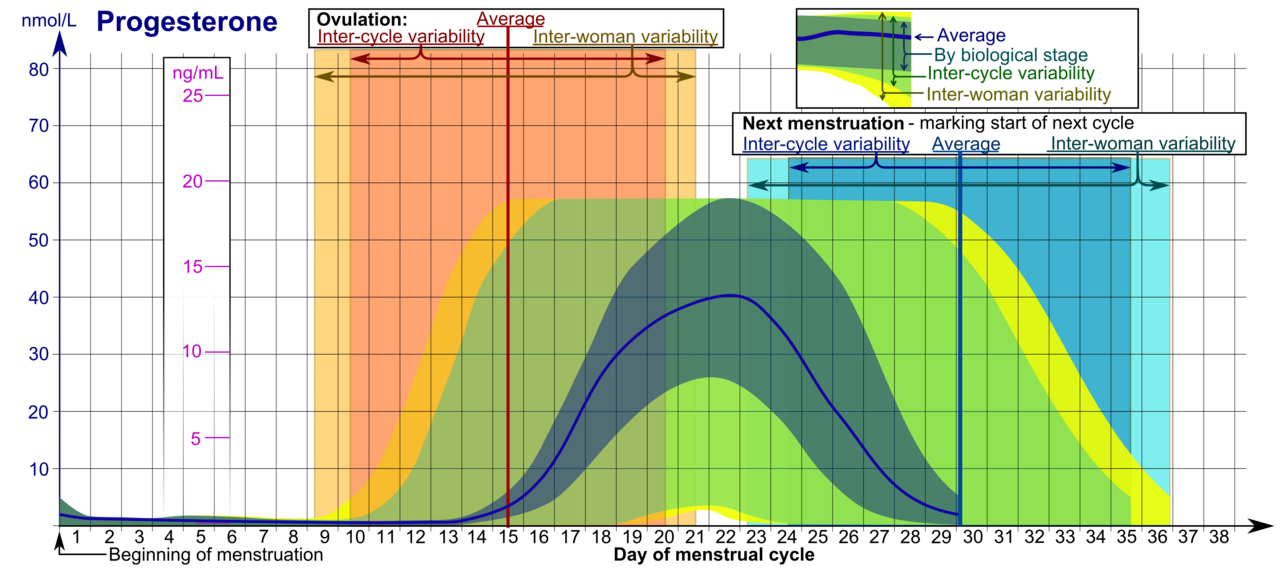
Progesterone is produced primarily in the corpus luteum of the ovary during the second half of the menstrual cycle (the luteal phase) and in larger amounts by the placenta during pregnancy. Smaller amounts are synthesized by the adrenal glands and in other tissues. Levels are generally low in children and in postmenopausal women. The hormone acts through intracellular progesterone receptors to regulate gene expression, and it also has faster non-genomic effects on cells.
Synthesis, chemistry and natural occurrence
Biologically, progesterone is formed from cholesterol by a series of enzymatic steps. Although it is principally an animal hormone, progesterone or progesterone-like steroids have been identified in some plants. For example, traces of progesterone have been reported in the common walnut (Juglans regia), and plant steroids such as diosgenin from Dioscorea species have been used as starting materials for semisynthetic production of steroid hormones.
History of discovery
The isolation and characterization of progesterone were accomplished in the early 1930s. American anatomist and researcher Willard Myron Allen, working with his professor Willard M. Allen and the anatomist George Washington Corner at the University of Rochester, described the compound in 1933. Allen determined physical properties such as melting point and molecular weight and proposed the name based on its role as a progestational, steroidal ketone (progestational steroidal ketone).
Medical uses and significance
Progesterone has several clinical applications. It is used in fertility treatments and for luteal support in assisted reproduction, in some hormone replacement therapy regimens, and in selected strategies to reduce the risk of preterm birth in high‑risk pregnancies. Progesterone and its synthetic analogs (progestins) are also used in contraceptives. Administration routes include oral, intramuscular and vaginal preparations; synthetic progestins differ from natural progesterone in chemical structure and some biological effects.
Practical distinctions and notable facts
- Natural progesterone and synthetic progestins are not identical: they can have different receptor affinities and side‑effect profiles.
- Because it is derived from cholesterol, progesterone is closely linked to broader steroid biosynthesis pathways and to the production of estrogens and androgens.
- Levels vary with age, sex and reproductive state: low in children and postmenopausal individuals, elevated during the luteal phase and pregnancy.
For more detailed chemical, clinical or historical information consult specialized sources and clinical guidelines; this article provides a concise summary of widely accepted features of progesterone and its roles in physiology and medicine. For introductory materials and primary literature, see curated resources listed by standard endocrine and gynecological references (steroid basics, hormone function, cholesterol metabolism, sex steroid pathways, menstrual cycle timing, pregnancy physiology, Allen biography, Corner biography, nomenclature note, menopause notes ).
Related articles
Author
AlegsaOnline.com Progesterone Leandro Alegsa
URL: https://en.alegsaonline.com/art/79368
Sources
- books.google.com : Handbook of Behavioral Neurobiology Volume 7 Reproduction
- ebi.ac.uk : "progesterone (CHEBI:17026)"
- chemsrc.com : "Progesterone_msds"
- doi.org : 10.1023/A:1020072325818
- pubmed.ncbi.nlm.nih.gov : 12215716
- doi.org : 10.1016/S0015-0282(16)56031-2
- pubmed.ncbi.nlm.nih.gov : 8513955
- books.google.com : Clinical Gynecologic Endocrinology and Infertility
- books.google.com : Clinical Chemistry
- doi.org : 10.1006/abbi.1997.0302
- pubmed.ncbi.nlm.nih.gov : 9328296
- books.google.com : Lecture Notes: Clinical Pharmacology and Therapeutics
- books.google.com : Hormones in Obstetrics and Gynaecology
- doi.org : 10.1111/aogs.12765
- pubmed.ncbi.nlm.nih.gov : 26342177