
Process: definition, types, characteristics and examples
Overview of processes: what they are, planned vs natural types, components and stages, cycles and feedback, historical perspective, and common examples across disciplines.
Overview
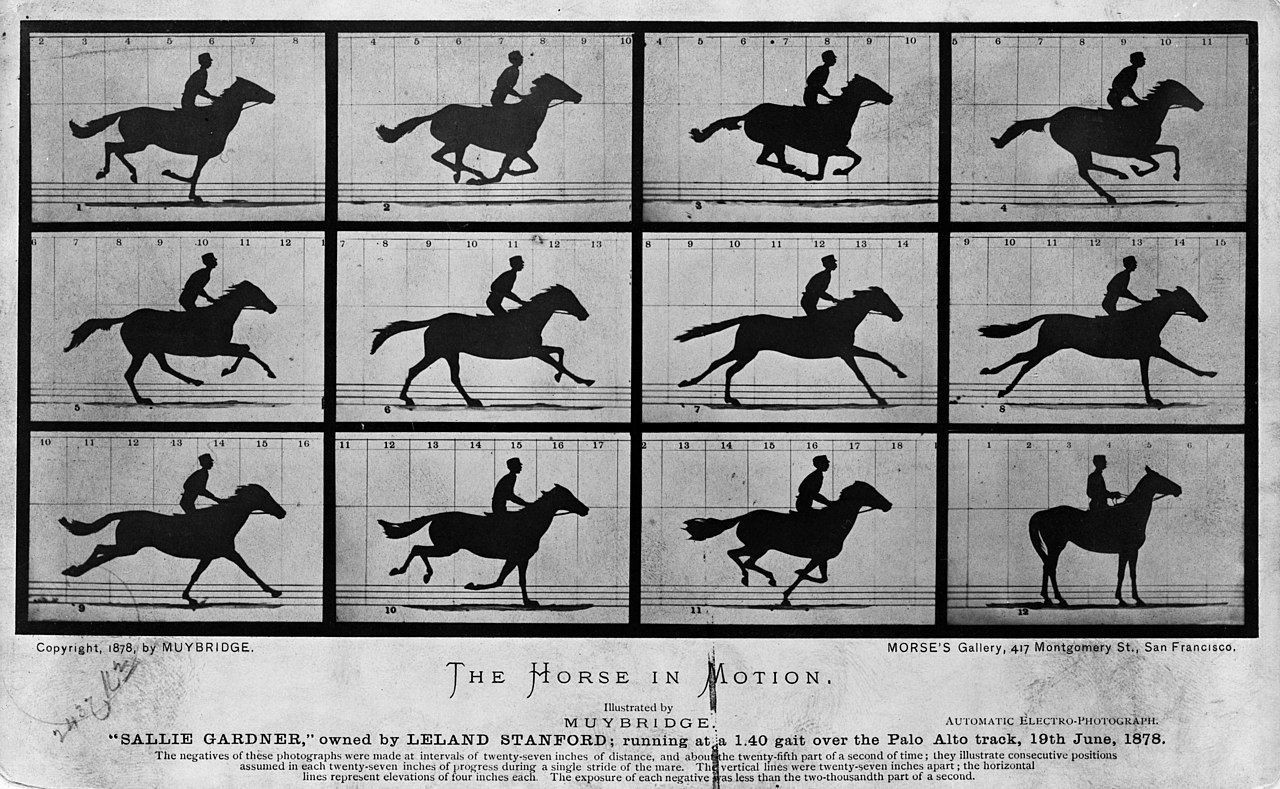
A process is a sequence of activities or stages that occur over time to produce a result, outcome, or end product. In its simplest sense a process links an initial state to a final state through ordered steps; this idea can be represented as a series of stages in time. Processes are a foundational concept in many fields, including engineering, business, natural science and computing.
Image gallery
4 Images

Types and characteristics
Processes are commonly divided into two broad categories: those intentionally designed by humans and those that occur without human planning. A human-designed process is usually created with a purpose and a plan — a defined course of action or procedure — and can be planned in detail. Plans may be documented on paper or digital media written, implemented as software programmed, or retained as mental models and routines held in the mind. Key characteristics include inputs, transformation steps, controls, and outputs.
Examples and uses
Planned processes appear in everyday and professional activities. For example:
- building a house involves design, permitting, site work, construction and finishing;
- agricultural cycles such as organising a wedding or sowing crops require scheduling, resources and coordination;
- industrial manufacturing, logistics and software development follow defined process stages to reduce risk and improve quality.
Development, cycles and feedback
Many processes are cyclical or iterative: they repeat while conditions persist or until a goal is reached. Biological development from embryo to mature organism illustrates ordered stages — the process of development from the egg to the adult. Environmental cycles such as precipitation involve water evaporating, flowing through rain into rivers, and returning to the atmosphere. Systems that repeat can include feedback loops: outputs are measured and used to adjust inputs. This concept of feedback is essential to control theory, biology and management, and is exemplified by a central heating thermostat which switches heat on or off to maintain temperature.
Historical and conceptual notes
The notion of a process predates modern terminology: artisans, farmers and strategists have always followed multi-step methods. The industrial revolution and later developments in systems thinking, cybernetics and computer science formalized processes, offering models for optimization, automation and quality control. Today the term applies equally to physical transformations, organizational workflows, and computational procedures.
Distinctions and practical importance
Important distinctions include linear versus cyclical processes, deterministic versus stochastic processes, and planned versus emergent processes. Recognizing which type applies helps choose appropriate tools: documentation and scheduling for planned workflows, statistical models for stochastic phenomena, and simulation and observation for natural processes. Clear definition and analysis of processes improve predictability, efficiency and the ability to troubleshoot when outcomes deviate from expectations.
Questions and answers
Q: What is a process?
A: A process is a series of stages in time where the last stage is the product, result or goal. Processes may be planned or unplanned and can involve activities such as building a house, fighting a battle, sowing crops, organising a wedding, etc.
Q: Are all processes planned by humans?
A: No, some processes are natural and not planned by humans. Examples include volcanic eruption, the evolution of the solar system; biological evolution; the melting of ice and other phase changes; the process of development from egg to adult.
Q: Can processes repeat?
A: Yes, many processes repeat whenever certain conditions hold. For example car low on petrol/gas requires you to visit garage and refill it. Most computer programs also follow this type of pattern.
Q: Are there any cyclical processes?
A: Yes, some processes are cyclical such as planets revolve around sun; eggs produce chickens, and chickens produce eggs. Rain water flows into rivers, evaporates, and returns as rain.
Q: Is feedback involved in some processes?
A: Yes, especially those which are cyclical may be subject to feedback such as with central heating systems where temperature sensors detect when heat needs to be increased or decreased accordingly.
Q: What are examples of natural processes that are not planned by humans?
A: Examples include volcanic eruption, the evolution of the solar system; biological evolution; the melting of ice and other phase changes; the process of development from egg to adult.
Related articles
Author
AlegsaOnline.com Process: definition, types, characteristics and examples Leandro Alegsa
URL: https://en.alegsaonline.com/art/79324