
Pulley (simple machine)
A pulley is a wheel and rope mechanism that changes the direction or magnitude of a force. Used for lifting, transmitting power, and redirecting motion, pulleys range from single sheaves to complex block-and-tackle systems.
A pulley is one of the classical simple machines: a wheel with a grooved rim (a sheave) that guides a rope, cable or belt. By changing the direction of a pull and, in many arrangements, multiplying force, pulleys enable people and machines to move heavy loads with less effort. Though the component is simple in form, pulley systems are integral to many mechanical applications from cranes to stage rigging to internal engine parts.
Image gallery
10 Images




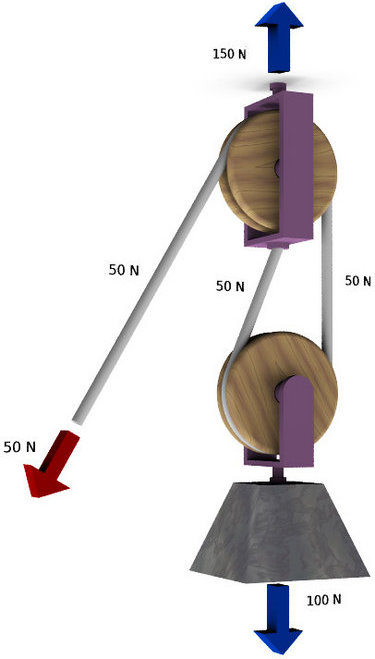
Types and components
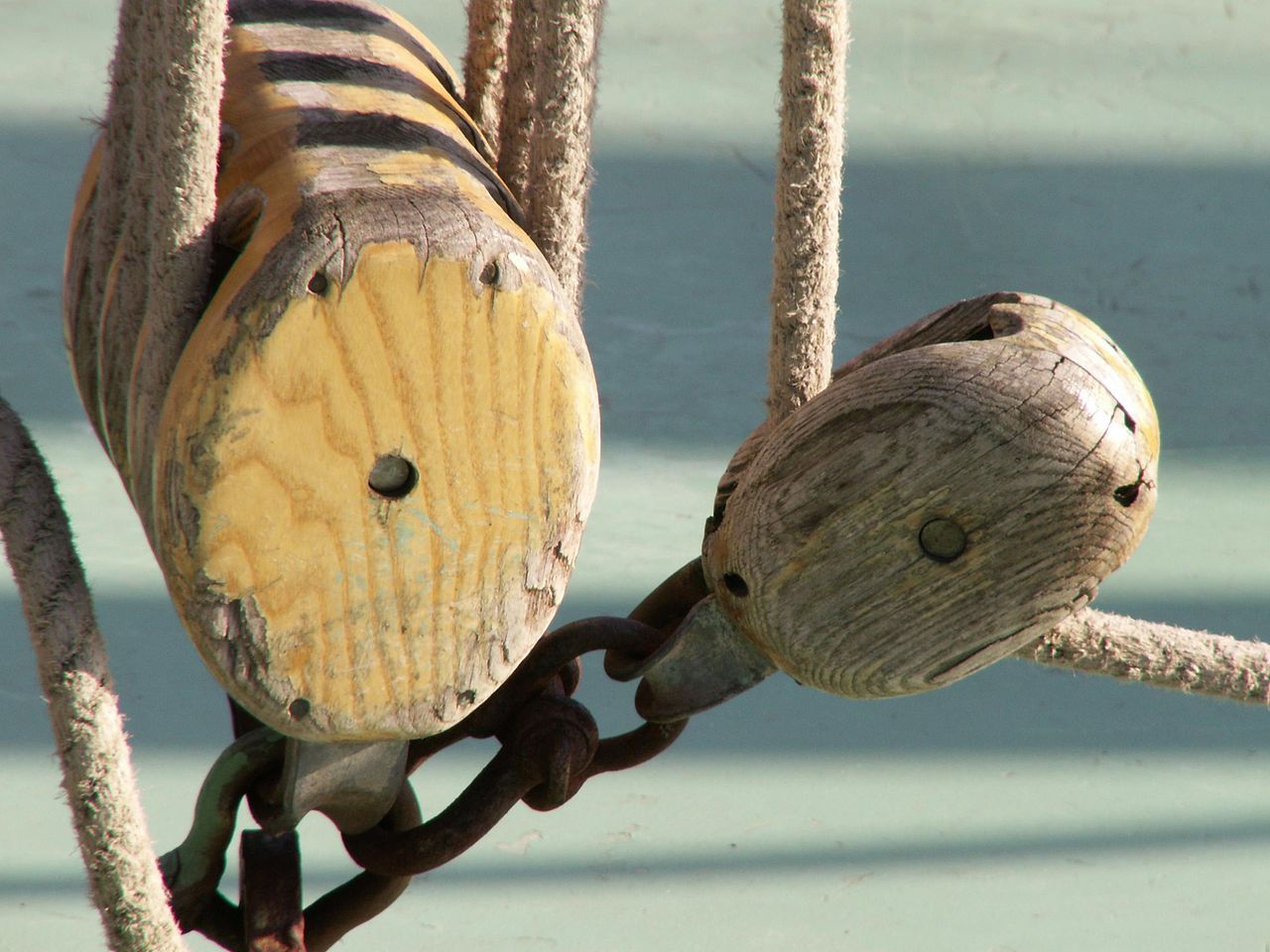
Key parts of a pulley assembly include the wheel or sheave, axle or bearing, housing (block), and the rope or belt that runs in the groove. Common types are:
- Fixed pulley: attached to a support; it changes the direction of force but does not provide mechanical advantage.
- Movable pulley: attached to the load; it reduces the amount of input force required.
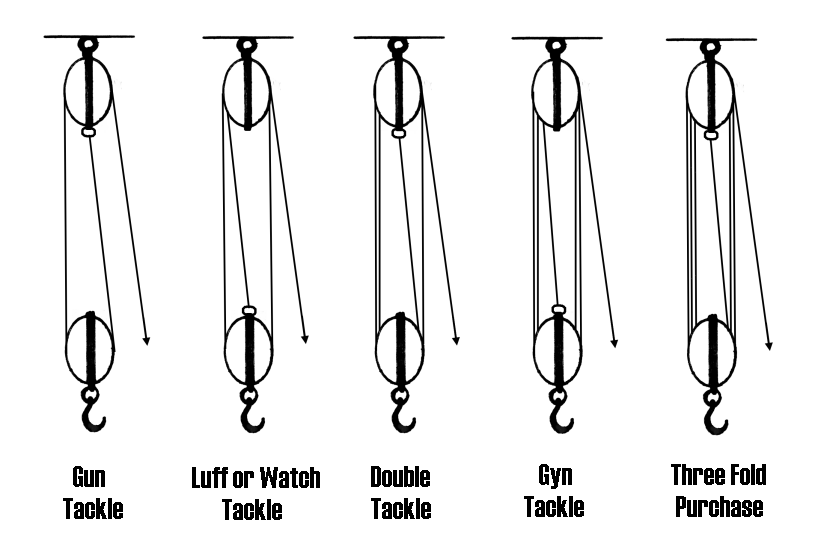
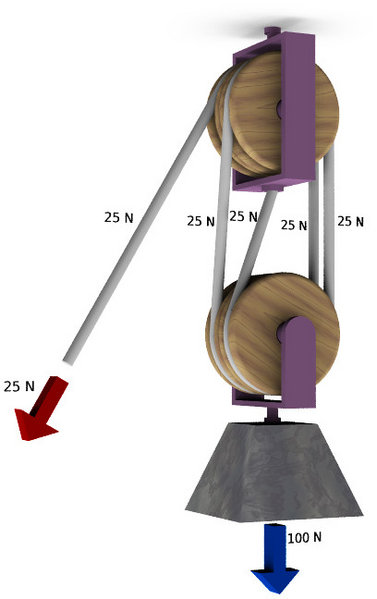
- Compound pulley or block and tackle: a combination of fixed and movable pulleys that increases mechanical advantage by distributing load across multiple rope segments.
Mechanical principles
Pulleys operate on simple force-balance principles. Mechanical advantage is commonly described as the ratio of load to effort and, in ideal frictionless systems, equals the number of rope segments supporting the load. Real systems must also account for friction in bearings and bending of rope, which reduce efficiency. Pulleys also redirect force, making it easier to apply effort from an ergonomically favorable direction.
History and development
Pulleys have ancient origins and were widely used in sailing, construction and material handling in antiquity. Thinkers and engineers studied their behavior as part of the broader exploration of simple machines. Over centuries the design evolved from wooden wheels and natural fibers to modern metal sheaves, sealed bearings, and synthetic ropes, expanding their reliability and load capacity.
Applications and examples
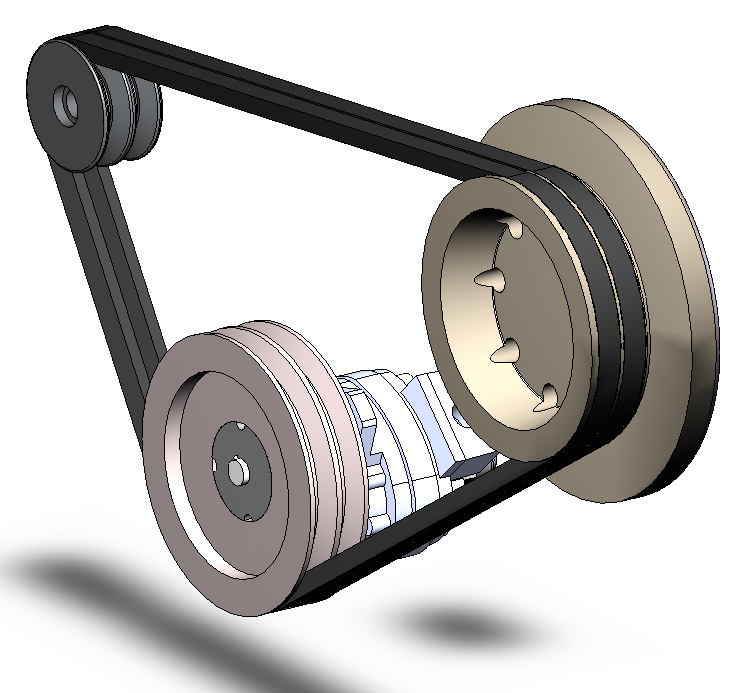
Pulleys appear wherever loads must be lifted, redirected, or where rotational motion needs transmission. Common examples include cranes, elevators, theatre fly systems, sailing rigging, window blinds, and belt drives on engines and factory machinery. In many engineering systems they are paired with brakes, clutches or motors to control motion precisely.
Notable distinctions
Although often described simply as a wheel and rope, pulleys differ from related devices like the wheel-and-axle in how they route flexible elements. Block-and-tackle arrangements emphasize mechanical advantage, while timing pulleys in power transmission focus on synchronization and traction rather than lifting. Understanding the trade-offs among mechanical advantage, speed, and efficiency guides appropriate selection in design.
Related articles
Author
AlegsaOnline.com Pulley (simple machine) Leandro Alegsa
URL: https://en.alegsaonline.com/art/80014