
Project management: principles, lifecycle, methods, and roles
Overview of project management: definition, core components, lifecycle stages, common methods, typical skills of project managers, industries, and notable distinctions between projects and operations.
Project management is the discipline of organizing, planning, directing and controlling resources to achieve specific objectives within a defined schedule and budget. A project is a temporary endeavor with a clear beginning and end, undertaken to create a unique product, service or result. Projects differ from routine operations because they are time‑bounded and goal‑oriented rather than ongoing or repetitive.
Image gallery
10 Images





Core components and lifecycle
Effective project management balances a set of interdependent elements that commonly include scope, time, cost, quality, resources, communication and risk. These are sometimes summarized as the "iron triangle" or triple constraint (scope, schedule and cost), although modern practice emphasizes quality, stakeholder satisfaction and benefits as equally important.
Most projects follow a lifecycle consisting of recognizable phases. A typical sequence is:
- Initiation — define objectives, stakeholders and high‑level feasibility;
- Planning — develop detailed scope, schedule, budget, resource allocations and risk responses;
- Execution — perform the work, manage teams and procure required goods or services;
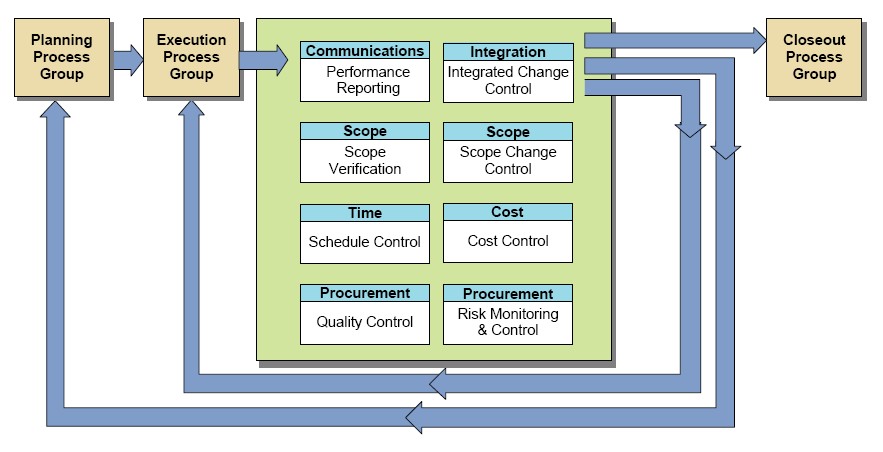
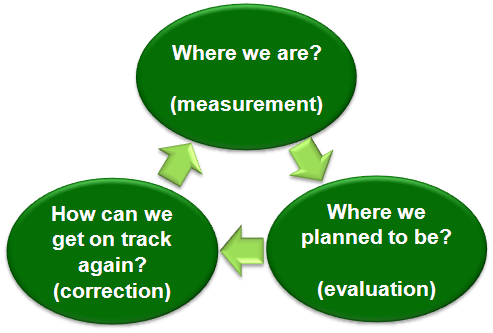
- Monitoring and controlling — track progress, manage changes and ensure objectives remain attainable;
- Closing — hand over deliverables, release resources and capture lessons learned.
Skills, role and responsibilities
A project manager is responsible for steering a project from start to finish. The role is primarily people‑centric: setting direction, motivating teams, resolving conflicts and communicating with stakeholders. Important skills include planning and scheduling, cost estimation, risk management, effective communication, negotiation and basic leadership. A project manager does not have to perform every technical task. For example, on a construction project the manager need not pour concrete personally, but must understand sequencing, costs, timing and the coordination required before and after pouring.
Methods, tools and standards
A variety of methods and tools support project delivery. Predictive or plan‑driven approaches (often called waterfall) emphasize upfront planning and linear progress. Adaptive approaches such as Agile and Scrum favor iterative delivery, frequent feedback and incremental value. Other practices — Lean, Six Sigma, earned value management and critical path analysis — address efficiency, quality and schedule control. Formal guidance and frameworks such as PMBOK®, PRINCE2 and industry‑specific standards codify terminology and good practice; many organizations adopt one or more frameworks to provide consistent governance and decision points. For authoritative guidance see management standards.
History, industries and practical importance
Project management evolved from the needs of large technical and engineering efforts in the 20th century, including infrastructure, defense and space programs. Tools such as Gantt charts and network scheduling techniques like PERT and CPM emerged to plan and coordinate complex work. Today, project management is applied across construction, information technology, telecommunications, healthcare, research and many other sectors where temporary teams deliver defined outcomes.
Well‑run projects increase the likelihood of delivering expected benefits on time and within budget. Distinctions worth noting include the difference between projects and operations (temporary versus ongoing), and between project management (delivery focus) and program or portfolio management (strategic alignment of multiple projects). Professional certifications, governance bodies and continuous improvement practices help organizations build consistent capability and reduce the risk of costly overruns and failures.
Related articles
Author
AlegsaOnline.com Project management: principles, lifecycle, methods, and roles Leandro Alegsa
URL: https://en.alegsaonline.com/art/79403