
Priapus: ancient Greek and Roman god of fertility, gardens, and protection
Priapus was a minor deity associated with fertility, garden and livestock protection, and apotropaic phallic imagery. Worship and representation changed from Greek myth to widespread Roman domestic and maritime use.
Overview
Priapus was a minor deity in ancient Greek religion who became widely represented in Roman popular culture. He is best known as a god connected with fertility and productive forces—often invoked as a guardian of gardens and fields—and as an apotropaic figure intended to ward off evil. In classical descriptions his most conspicuous attribute was a permanent, exaggerated erection, which symbolized virility, potency and protection of household abundance.
Image gallery
6 Images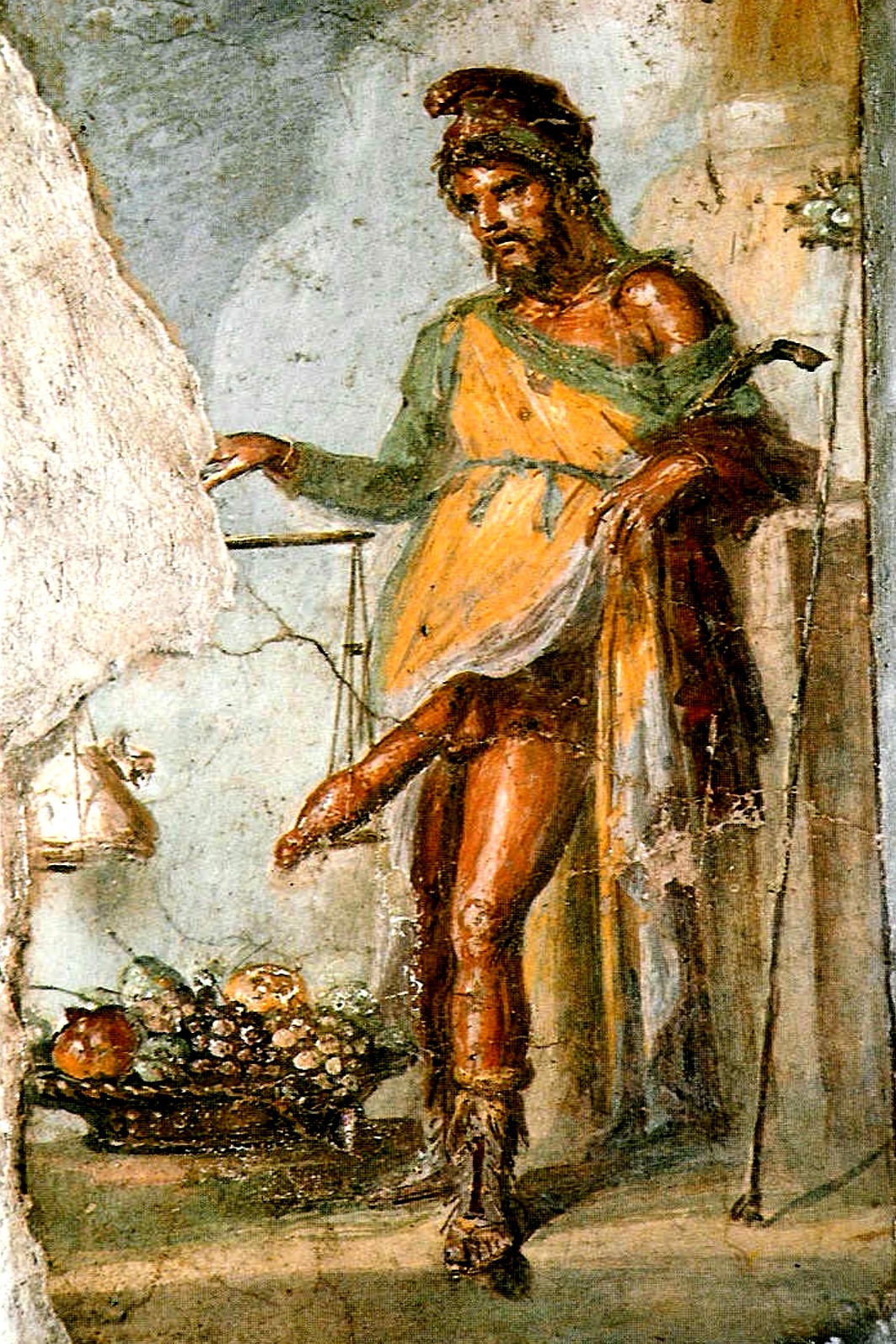


Attributes and iconography
In art and small-scale sculpture Priapus is commonly shown as a rustic, often grotesque figure with an oversized phallus. This feature made him an emblem of sexual fecundity and protection of property. He was associated with tending and safeguarding cultivated plants and animals: as protector of fertility, guardian of livestock and fruit plants, and a symbolic defender of male genitals. Representations might combine human and pastoral elements, reflecting his links with countryside life and agricultural prosperity.
Myths and parentage
Sources vary about Priapus's origin. Different traditions name several gods and goddesses as his parents, including Dionysus with Aphrodite, Dionysus with Chione, Hermes with Aphrodite, Zeus with Aphrodite, or Pan with Aphrodite. One common tale explains his deformity and comic ugliness as the result of a curse by Hera, who is said to have punished him in the womb because of jealousy over Aphrodite's favor in the Judgement of Paris. Rejected by the Olympian household, the infant god was reportedly exposed and raised by shepherds, growing into a rustic protector of flocks and fields. A well-known episode relates an attempted assault on the goddess Hestia that was interrupted by a donkey, an event told to account for both his comic misfortune and loss of potency.
Cult, uses and practices
Priapus had a practical and popular cultic role rather than a highly formalized temple worship on the model of the great Olympian gods. Small statuettes and reliefs of Priapus served as garden guardians and boundary markers, placed at entrances, fields and ships to encourage bounty and fend off thieves and bad luck. Merchants and sailors sometimes carried phallic charms invoking his protection at sea. In Roman domestic settings his image appears in frescoes, garden sculptures and household shrines where its crude humor and protective symbolism were part of everyday life.
Literary and cultural legacy
Priapus appears in a range of ancient literature and later art. Roman poets and satirists treated him both as a subject of ribald jokes and as a symbol of rural abundance; a body of short Latin poems and epigrams collectively known as the Priapea preserves many such pieces. Archaeology has recovered examples of Priapus imagery from villas, ports and tombs, attesting to the god’s dual role as comic figure and talisman. Modern scholarship tends to view Priapus as a complex cultural sign—at once a marker of fertility rites, a protector against the evil eye, and a vehicle for social attitudes toward sexuality and property.
Notable distinctions
- Greek origins and mythic narratives emphasize genealogy and comic mythic episodes.
- Roman adoption transformed Priapus into a common household and maritime emblem, increasing the frequency of visual representations.
- His imagery functions both as overt sexual symbolism and as an apotropaic device intended to secure prosperity and avert harm.
Together these strands make Priapus a useful example of how a minor mythological figure could be adapted across cultures to meet everyday religious, social and economic needs, blending humor, devotion and practical superstition.
Further reading on fertility cults | Rural gods and livestock | Gardens in antiquity
Sexual symbolism | Dionysian connections | Aphrodite and her myths
Chione references | Hermes and pastoral roles | Zeus in myth
Pan and rustic deities | Hera's mythology | Hestia and domestic cult
Related articles
Author
AlegsaOnline.com Priapus: ancient Greek and Roman god of fertility, gardens, and protection Leandro Alegsa
URL: https://en.alegsaonline.com/art/78992