
Polymerization — formation, mechanisms, and applications of polymers
Polymerization is the chemical process by which small molecules (monomers) link to form large chain-like or network macromolecules (polymers). Covers mechanisms, types, properties, history and applications.
Overview
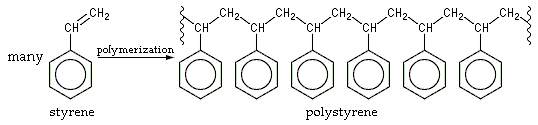
Polymerization is the set of chemical processes that join many small molecules into much larger macromolecules called polymers. The small starting molecules are monomers; when they become covalently bonded into long sequences or crosslinked networks, the resulting material can display properties — for example elasticity, high tensile strength, or the ability to form fibres — that differ qualitatively from the monomer units. In practice, a useful polymer often contains many tens or hundreds of repeating units, and industrial materials may contain many thousands.
Image gallery
4 Images


Basic mechanisms
Two broad classes of polymerization are commonly distinguished. In chain-growth (addition) polymerization, reactive sites such as free radicals, ions, or catalytic centers add monomers sequentially to one growing chain. In step-growth (condensation) polymerization, bifunctional or multifunctional monomers react with each other in many possible pairings, gradually forming longer and longer species and, eventually, high-molecular-weight chains or networks. Conditions such as temperature, pressure, and the presence of catalysts or inhibitors influence which mechanism predominates and control molecular weight and architecture.
Kinetic stages and control
Chain-growth processes typically proceed by initiation, propagation and termination steps; control over these stages yields polymers with different chain lengths and end groups. Step-growth systems require a high conversion of functional groups to reach large molecular weight. Modern techniques — including controlled/'living' radical polymerization and coordination catalysts — allow chemists to tune properties such as block structure, molecular weight distribution and stereochemistry, producing materials tailored for specific applications.
Structures and distinguishing features
Polymers range from simple linear chains (homopolymers) to alternating or random copolymers made from two or more monomer types, to highly crosslinked thermosets and three-dimensional networks. The formation of stable covalent chemical bonds between monomer units differentiates polymerization from physical aggregation processes such as crystallization, where weaker intermolecular forces hold molecules together without forming new covalent links.
History and development
The study of polymers developed during the 19th and 20th centuries as chemists identified natural macromolecules (like cellulose and rubber) and later synthesized entirely new materials. Breakthroughs in catalysts and in controlled polymerization methods during the 20th century enabled mass production of plastics and fibres with predictable performance, fueling widespread industrial and consumer use while also prompting environmental and recycling considerations.
Applications and examples
Polymers are central to plastics, fibres, rubbers, adhesives, coatings and composite materials. Examples include polyethylene (used for films and bottles), polypropylene, polyvinyl chloride (PVC), polystyrene, polyesters (such as PET), and polyamides (nylons). Elastomers like vulcanized natural rubber derive their properties from controlled crosslinking. Polymers also serve in biomedical devices, membranes, and electronic materials where specific molecular architectures provide required mechanical, thermal or chemical behaviour.
Notable distinctions and considerations
Polymerization should be distinguished from mere aggregation: true polymer formation involves making new covalent bonds that join monomers into macromolecules. The same monomer can yield different polymers depending on conditions and catalysts: for example, unsaturated hydrocarbons (alkenes) can undergo addition polymerization under radical initiation or coordination catalysis to produce diverse plastics. Environmental impact, recyclability and degradation are important modern considerations in polymer science and materials selection.
Related terms and further reading
Related articles
Author
AlegsaOnline.com Polymerization — formation, mechanisms, and applications of polymers Leandro Alegsa
URL: https://en.alegsaonline.com/art/77862