
Polymorphism (materials science): crystal forms, types, and significance
Polymorphism is the ability of a crystalline solid to adopt two or more crystal structures. This article explains types, mechanisms, characterization methods, practical consequences and common examples.
Overview
Polymorphism in materials science is the ability of a solid substance to exist in more than one crystal structure while retaining the same chemical composition. Different polymorphs are distinguished by their crystal structure, packing, symmetry and resulting physical properties such as density, hardness, optical behavior and solubility. Polymorphism occurs across many classes of solids, including polymers, minerals and metals. It is related to but not identical with allotropy, which applies to different structural forms of a single chemical element. The macroscopic appearance of a material is influenced by polymorphism together with factors such as crystal habit and the amorphous fraction.
Image gallery
4 Images

Types and mechanisms
Several distinct mechanisms produce polymorphism. Packing polymorphism arises when identical molecules arrange differently in the lattice. Conformational polymorphism occurs when a flexible molecule adopts alternate stable conformations that are incorporated into different crystal types. When crystals include solvent or water molecules their composition changes; this phenomenon, sometimes called pseudopolymorphism, is more accurately described as solvomorphism (different solvates have different stoichiometry). An analogous phenomenon for non‑crystalline solids is polyamorphism, where different disordered states coexist.
Thermodynamics and kinetics
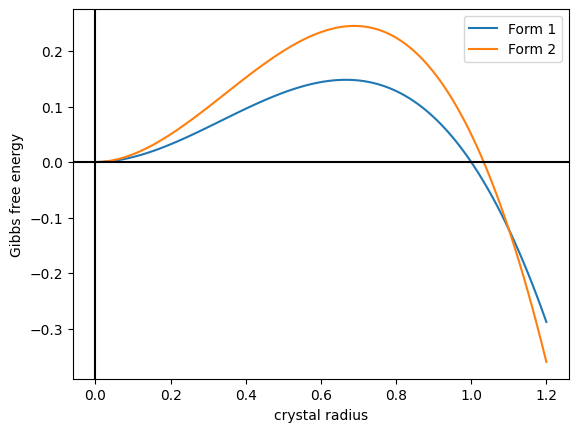
Which polymorph forms depends on the interplay of thermodynamics and kinetics. Thermodynamically, one form is most stable under a given set of conditions (temperature, pressure, composition). Kinetically, metastable forms may nucleate and grow faster and thus appear first. Ostwald's rule of stages is a commonly invoked guideline: systems often progress through metastable phases on the way to the most stable state. External variables — for example pressure, cooling rate or the presence of impurities — can alter both stability and nucleation pathways and thereby change which polymorph is obtained.
Characterization methods
Identification and study of polymorphs use techniques that probe long-range order, local structure and thermal behavior. Powder and single‑crystal X‑ray diffraction determine lattice geometry and are primary tools. Thermal methods such as differential scanning calorimetry (DSC) and thermogravimetric analysis (TGA) reveal transitions and decomposition. Spectroscopic methods (infrared, Raman, solid‑state NMR) provide information on local bonding and molecular conformation. Microscopy reveals crystal habit and morphology. Together these methods allow mapping of phase diagrams and pathways for interconversion.
Examples and notable cases
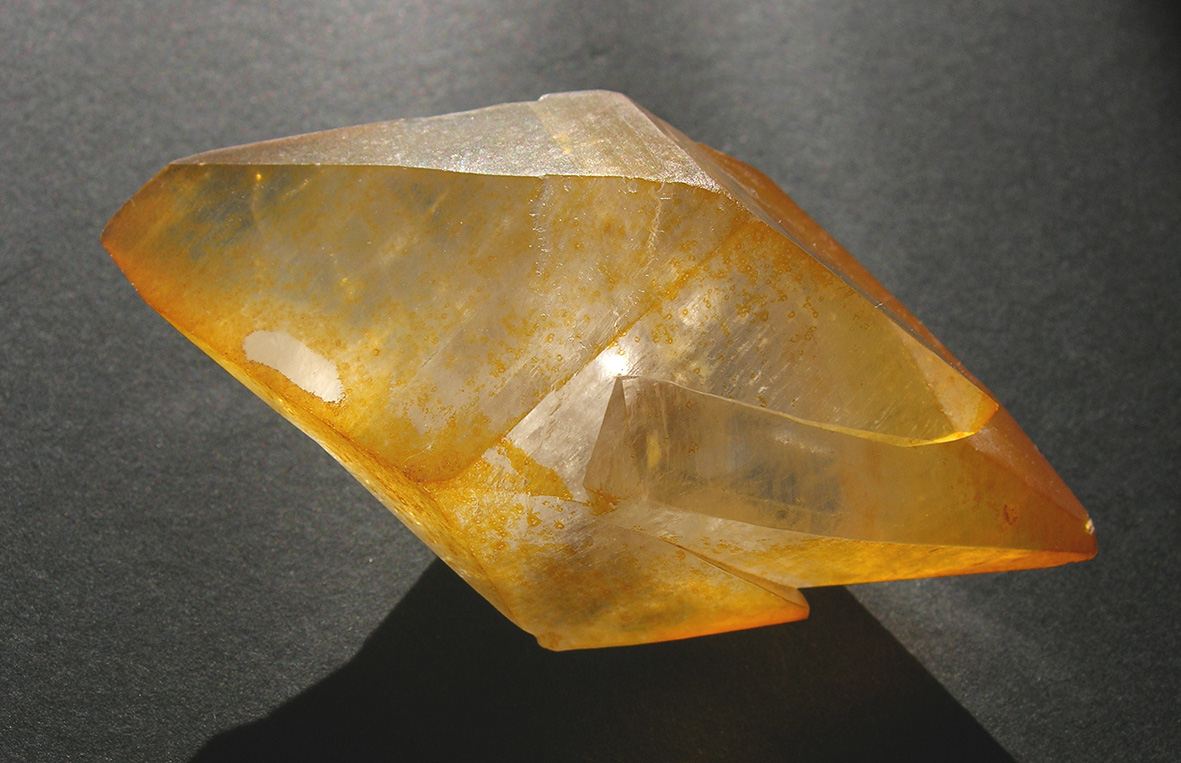
Classic examples illustrate the scope of polymorphism. The amino acid glycine forms more than one crystalline modification with different symmetries. Silicon dioxide (silica) exhibits numerous polymorphs including varieties associated with quartz and high‑pressure forms used to illustrate pressure‑dependent phase behavior. A widely cited mineral example is the pair calcite and aragonite, both composed of calcium carbonate but with distinct crystal systems and physical properties. Polymorphism is also present in many industrial organic compounds such as pigments and dyes and affects performance in foods and energetic materials.
Practical importance and control
Polymorphism has important consequences for manufacture, performance and regulation. Different polymorphs can show markedly different solubilities, dissolution rates, mechanical behavior and stability. In the pharmaceutical industry the crystalline form of an active ingredient can influence bioavailability, processing and shelf life, and crystalline form is commonly claimed in patents. Controlling polymorphism in production uses strategies such as solvent selection, crystallization temperature, supersaturation control, seeding with a desired polymorph and use of additives or templates to modify nucleation and growth.
Distinctions, interconversion and advanced topics
True polymorphism implies identical chemical composition; if the composition changes (for example by incorporation of solvent or water) the correct term is solvate or hydrate rather than polymorph. Interconversion between polymorphs can occur through solid‑state transitions, melting and recrystallization, or solvent‑mediated transformation; some transitions are reversible, others irreversible under ambient conditions. Advanced areas of study include pressure‑induced polymorphism, the role of extended defects and interfaces in stabilizing unusual forms, and computational prediction of possible low‑energy polymorphs.
Methods and resources for practitioners
Polymorph screening is a routine part of materials and drug development and combines experimental exploration (crystallization screening under varied solvents, temperatures, and additives) with analytical characterization. For practical protocols and in‑depth treatments consult textbooks and specialized reviews in crystallography, solid‑state chemistry and materials science. Additional perspectives on polymer crystallization are available through resources on polymer behavior, while mineralogical case studies are discussed in works on mineralogy and metallurgy.
- Key analytical tools: X‑ray diffraction, calorimetry, spectroscopy, microscopy
- Control approaches: solvent choice, temperature, seeding, additives, templating
- Impacts: solubility, stability, processing, patenting and product quality
For targeted information on specific topics, see materials focused discussions of crystallography, applied examples in pigments and case studies in formulation science. The relation to elemental forms (allotropy) is discussed under allotropy, while solvates and hydrates are treated through solvomorphism. Broader context on amorphous alternatives and disorder can be found in literature addressing the amorphous fraction and alloy or element behavior across phases.
Questions and answers
Q: What is polymorphism?
A: Polymorphism is the ability of a solid material to exist in more than one form or crystal structure.
Q: How is polymorphism related to allotropy?
A: Polymorphism is related to allotropy, which refers to chemical elements.
Q: What are some examples of polymorphism?
A: Examples of polymorphism include polymers, minerals, and metals. It can also be found in pharmaceuticals, agrochemicals, pigments, dyes, foods, and explosives.
Q: What is packing polymorphism?
A: Packing polymorphism occurs when different crystal types are the result of differences in crystal packing.
Q: What is conformational polymorphism?
A: Conformational polymorphism occurs when different crystal types are the result of different conformers of the same molecule.
Q: What is solvomorphism?
A: Solvomorphism occurs when different crystal types are the result of hydration or solvation and have different chemical formulas.
Q: Can you give an example of an organic polymer?
A: An example of an organic polymer is glycine which can form monoclinic and hexagonal crystals.
Related articles
Author
AlegsaOnline.com Polymorphism (materials science): crystal forms, types, and significance Leandro Alegsa
URL: https://en.alegsaonline.com/art/77864