
Potash: potassium-bearing salts, history, and uses
Potash refers to potassium-containing salts and compounds used chiefly as fertilizers and industrial feedstocks; historically derived from wood ashes and now produced by mining and evaporation.
Overview
Potash is a broad term for salts that contain potassium in water-soluble form and for products derived from them. The word originally described the lye or ash residues produced by leaching wood ashes in a pot, from which compounds such as potassium carbonate and potassium hydroxide were recovered. In modern commerce "potash" most often denotes mined or processed potassium salts used primarily in agriculture.
Image gallery
7 Images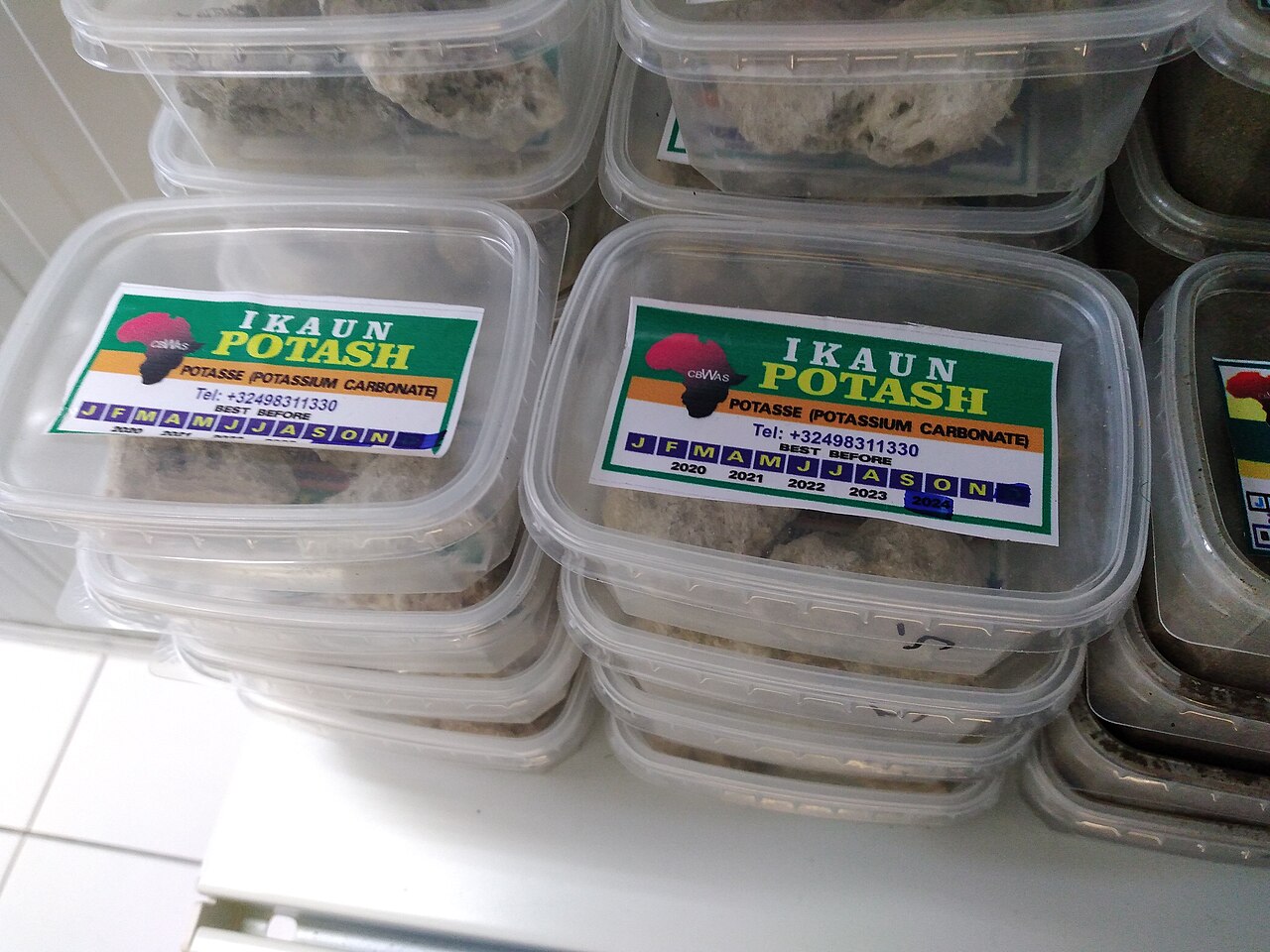


Composition and common forms
Commercial potash occurs in several chemical forms. The most widely traded fertilizer is potassium chloride (often called muriate of potash or MOP). Other important forms include potassium sulfate (sulfate of potash, SOP), potassium nitrate, and a range of refined compounds such as potassium carbonate and hydroxide for industrial uses. For more on the general chemistry, see chemical compound references.
History and development
Historically, potash was produced by burning wood and leaching the ashes to obtain alkaline solutions. These materials were essential in traditional soap-making, glass production, and textile processing. As demand grew, natural mineral deposits and evaporite sources became the principal supply, and modern extraction shifted toward large-scale mining and evaporation of brines.
Uses and importance
Potash is primarily used as a fertilizer because potassium is a macronutrient required for plant growth, affecting water regulation, disease resistance, and yield. Beyond agriculture, potash derivatives have roles in glass and ceramics manufacture, chemical synthesis, soap and detergent production, food processing, and some battery technologies. Typical commercial products are tailored to crop needs and soil chemistry.
Production, distribution and concerns
Modern potash is produced by underground mining of evaporite deposits and by evaporating saline brines. Global production and trade are concentrated where large deposits exist. Economic and policy factors influence supply, and the substance is important in global food security. Environmental and safety considerations include mine management, saline effluents, and appropriate fertilizer application to avoid soil or water quality problems.
Types and selection
- Muriate of potash (MOP): potassium chloride, common and cost-effective for many crops.
- Sulfate of potash (SOP): potassium sulfate, preferred where chloride-sensitive crops are grown.
- Refined potassium compounds: carbonates and hydroxides used in chemical industries and specialty applications.
Related articles
Author
AlegsaOnline.com Potash: potassium-bearing salts, history, and uses Leandro Alegsa
URL: https://en.alegsaonline.com/art/78405