
Poinsettia (Euphorbia pulcherrima): description, cultivation, and cultural significance
Poinsettia is a tropical shrub grown for its colorful bracts. Native to Mexico and Central America, it is associated with Christmas and widely produced by growers who control flowering with light treatments.
Overview
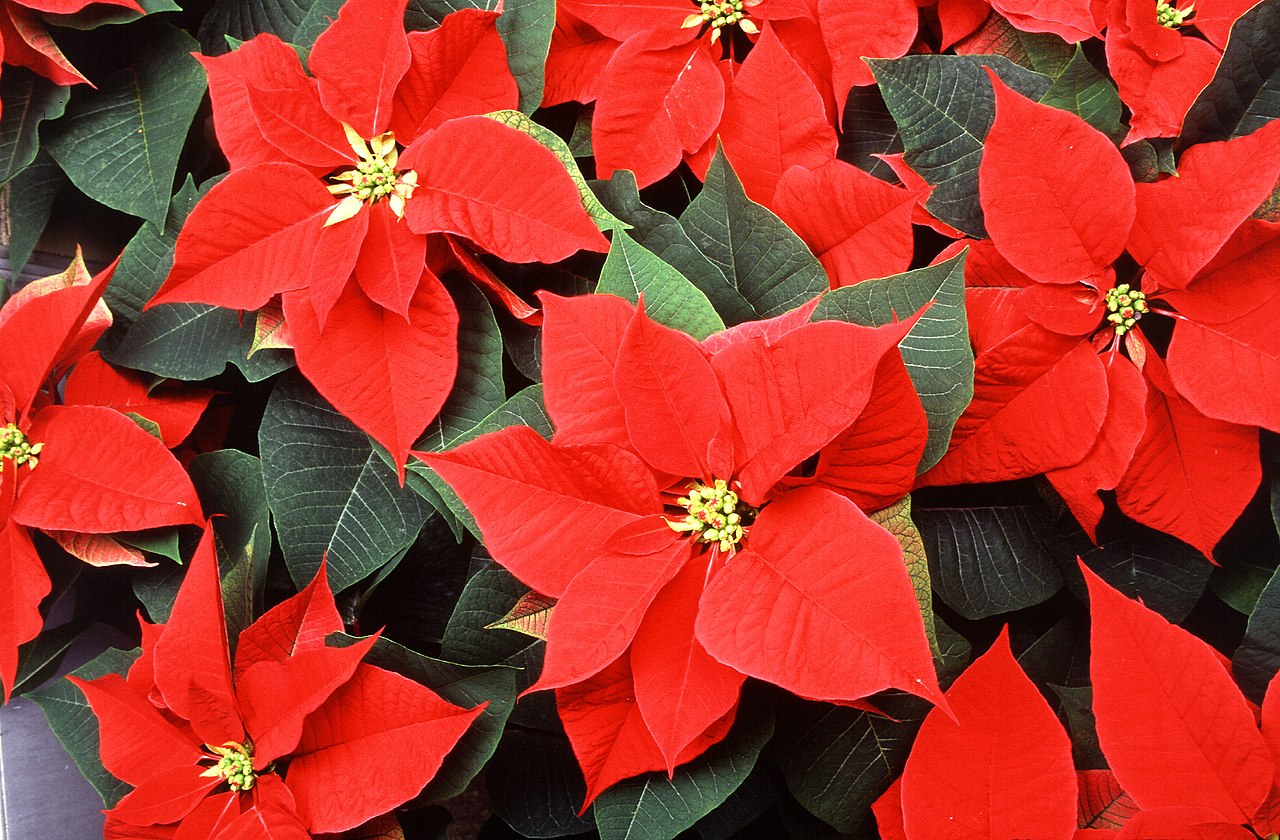
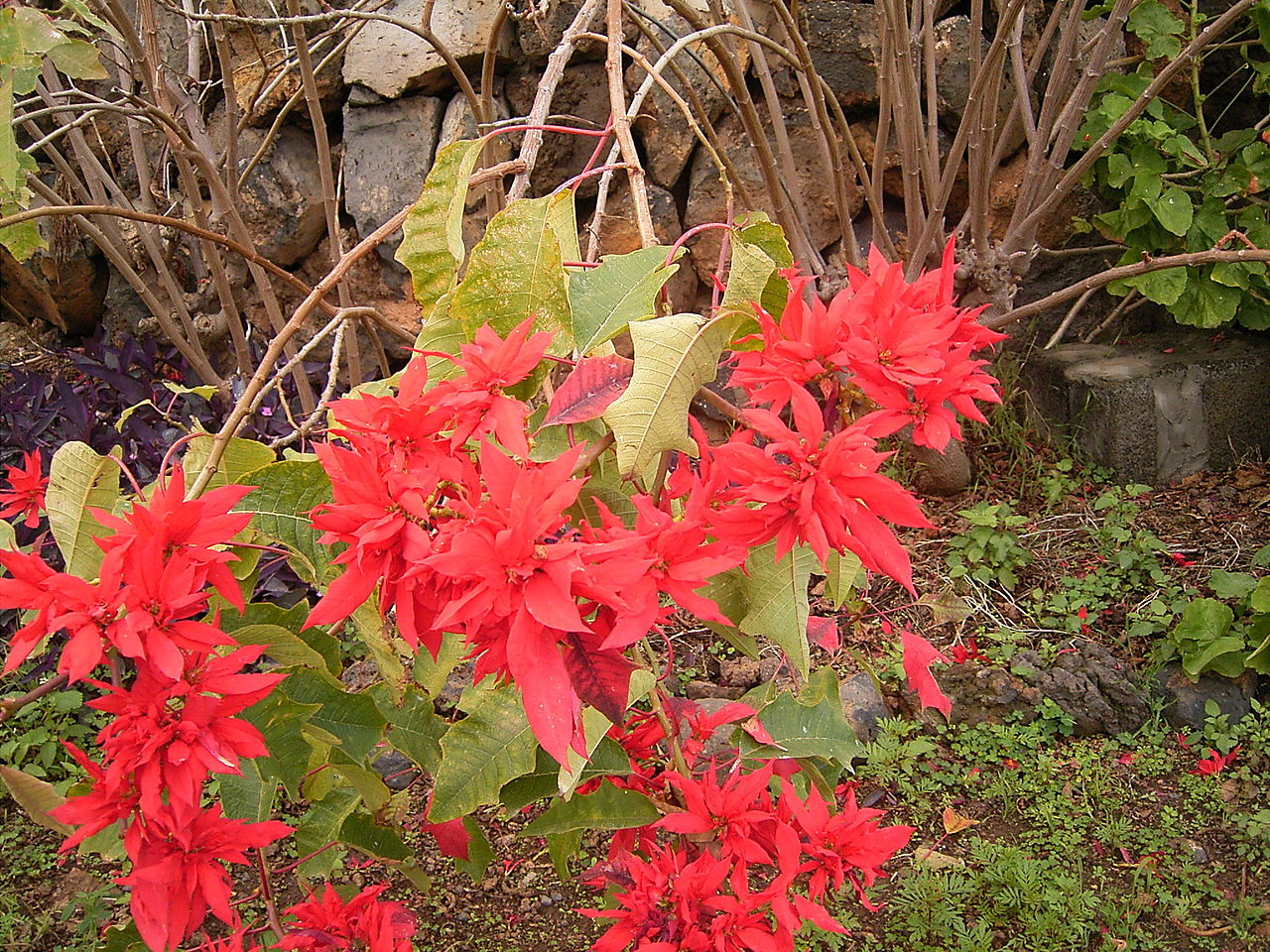
Poinsettia (Euphorbia pulcherrima) is a tropical ornamental plant valued for its showy colored bracts and seasonal display. Often seen in homes and stores during the winter holidays, the plant is botanically a member of the spurge family and is native to regions of Mexico and Central America. Popular commercial varieties display a range of bract colors beyond the familiar red, including pinks, creams and variegated forms alongside their characteristic green foliage.
Image gallery
10 Images




Morphology and biology
The colorful parts commonly called "flowers" are actually bracts — modified leaves that surround the plant’s true, small flowers (cyathia). These tiny yellowish structures are often inconspicuous, while the bracts provide the primary visual appeal. Poinsettia belongs to the family Euphorbiaceae within the order Malpighiales. Like many flowering plants, poinsettias use light-sensitive pigments to measure seasonal changes in day length and regulate the timing of bract coloration.
History and cultural importance
The association of poinsettias with winter celebrations grew after the plant was brought into wider horticultural attention by Joel Roberts Poinsett, an early 19th-century U.S. diplomat who sent specimens north from Mexico. By the late 19th and early 20th centuries it became a popular holiday symbol in the United States and other countries. Commercial production and selection have produced numerous cultivars with differing heights, leaf shapes, and bract colors.
Cultivation and flowering control
Poinsettias are short-day plants: they require relatively long uninterrupted nights for a sustained period to initiate the color change of bracts. Growers and florists — and many greenhouse gardeners — manipulate light exposure to force flowering out of season. Techniques include providing complete darkness each night for several weeks and controlling temperature and fertilization. Poinsettias are commonly propagated from cuttings; commercial operations also use growth regulation and pinching to shape plants for sale.
Uses, care, and notable facts
- Poinsettias are primarily used as decorative pot plants and landscape shrubs in warm climates where they can be grown year-round.
- Indoor care generally calls for bright, indirect light, moderate watering, and temperatures that avoid cold drafts and extremes.
- The milky sap (latex) can irritate skin and mucous membranes; ingestion can cause mild gastrointestinal upset in people and pets, though the plant is not highly poisonous.
Distinctions and common misconceptions
Two points often confused by the public are clarified by horticulture texts: the brightly colored bracts are not petals but modified leaves, and the plant’s association with winter stems from cultural adoption rather than an innate cold hardiness — poinsettias are sensitive to frost and are best treated as indoor pot plants in cool climates. For more on seasonal responses in horticulture and how growers manage flowering, see resources that explain photoperiodism and practical methods used by producers.
For further reading and horticultural guidance consult specialized gardening resources and suppliers: red varieties, green foliage, plant care, holiday traditions, Mexico origins, Central American wild forms, taxonomic placement, flowering plants overview, day length and light sensing, and greenhouse techniques.
Related articles
Author
AlegsaOnline.com Poinsettia (Euphorbia pulcherrima): description, cultivation, and cultural significance Leandro Alegsa
URL: https://en.alegsaonline.com/art/77620