
Pollen tube: formation, function, and role in plant fertilization
A pollen tube is a cellular extension that delivers sperm from a pollen grain to the ovule. This article explains its structure, growth, role in double fertilization, differences among plant groups, and importance.
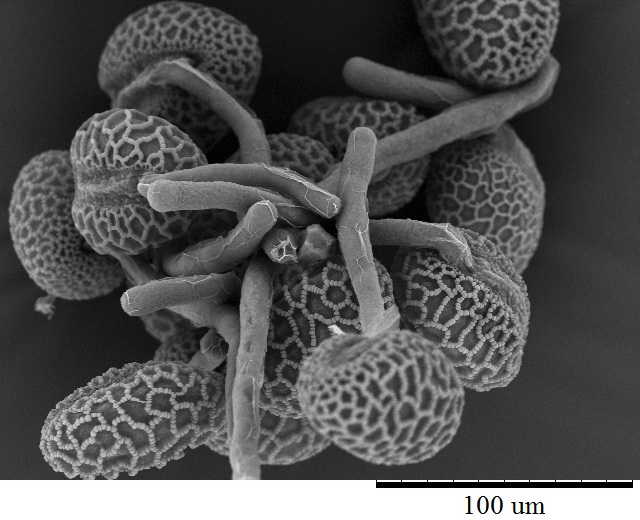
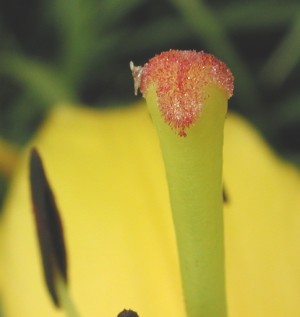
The pollen tube is a specialized cellular projection that transports the male gametes from a pollen grain to the female reproductive tissues so that seed development can occur. It is a central feature of sexual reproduction in seed plants, especially flowering plants (angiosperms), and is often studied as a model of rapid, tip-directed cell growth. The tube grows from the pollen grain after it lands on a receptive surface such as the stigma, extending through tissues toward the ovules that contain the egg.
Image gallery
6 Images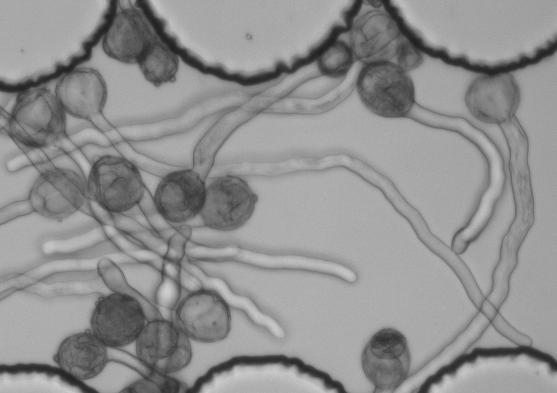



Structure and growth
A pollen tube is a single, elongated cell that lengthens by adding new membrane and cell wall material at its tip. Within the tube, cytoplasm, organelles and the non-motile sperm cells are conveyed toward the ovule. Growth is highly polarized: vesicles loaded with cell-wall components fuse at the apex, guided by an internal cytoskeleton and regulated by ion gradients and signaling molecules. Growth rates vary widely among species; in some crop species such as maize the tube may elongate many times the diameter of the parent grain to reach an ovule.
Guidance and physiology
The direction a pollen tube takes is influenced by chemical signals emitted by the ovule and by the tissues of the pistil. Small secreted peptides, sugars, ions and electrical fields contribute to navigation, while the tube’s tip responds through localized calcium changes and rearrangement of actin filaments. Because the sperm within are not flagellated in most angiosperms, the pollen tube is essential to deliver them; when the tip arrives it releases the sperm into the female gametophyte.
Fertilization and outcomes
In flowering plants arrival of the pollen tube triggers the release of two sperm cells and produces a characteristic double fertilization: one sperm fuses with the egg cells to form the embryo, while the other fuses with central-cell nuclei to form the endosperm. The endosperm develops into a nutrient-rich tissue that often contains starch, proteins and oils, making seeds of many grains a staple of human diets. Important food crops such as wheat, barley and rye owe their seed structure in part to this process.
Variations across plant groups
Not all land plants rely on a non-motile pollen-tube-delivered sperm. Some earlier-diverging plant lineages such as ferns and certain algae release flagellate sperm that swim through water. Among seed plants, many gymnosperms retain motile sperm or employ differing mechanisms: cycads and Ginkgo produce flagellate sperm, whereas conifers and angiosperms typically use pollen tubes. The pollen tube therefore represents an evolutionary innovation that reduced reliance on free water and enabled reproduction in drier habitats.
Importance and applications
- Biological model: pollen tubes are used to study cellular polarization, vesicle trafficking and signaling during rapid cell elongation.
- Agricultural relevance: successful pollen tube growth is essential for crop yields and is a focus of plant breeding and fertility research.
- Ecological and evolutionary significance: pollen tube adaptations underpin the diversity of reproductive strategies among seed plants.
Because the pollen tube mediates the final steps of plant fertilization, understanding its growth and guidance helps explain how seeds form and why many plants are adapted to terrestrial life. For further technical details see specialized reviews and experimental studies on pollen tube physiology and guidance (pollen, stigma, ovules).
Questions and answers
Q: What is a pollen tube?
A: A pollen tube is a passageway that transports sperm cells from the pollen grain to the ovules at the base of the pistil in seed plants.
Q: How does fertilization occur in angiosperms?
A: In angiosperms, the pollen tube germinates from the pollen grain and grows through the stigma, style, ovary and ovules to reach the eggs. As it reaches an egg, it bursts and releases two sperm cells which leads to double fertilization. One sperm unites with the egg cell to produce an embryo while a second sperm unites with the central cell (polar nuclei) to produce endosperm.
Q: What type of organisms have flagellate sperm?
A: Flagellate sperm are found in ferns, other basal land plants, many algae and some gymnosperms.
Q: How do flagellate sperms fertilize eggs?
A: Flagellate sperms swim through a watery fluid to fertilize egg cells.
Q: What is endosperm?
A: Endosperm is produced when one of two released sperms unite with polar nuclei during double fertilization process. It contains starch, proteins and oils and serves as major source of human food such as wheat, barley, rye oats or corn.
Q: How long can a single cell grow in maize plant?
A: In maize plant, single cell can grow longer than 12 inches to traverse length of pistil.
Related articles
Author
AlegsaOnline.com Pollen tube: formation, function, and role in plant fertilization Leandro Alegsa
URL: https://en.alegsaonline.com/art/77804