
Pike (weapon): long infantry spear, design, tactics and historical role
A pike is a very long, non‑throwing pole weapon used by infantry in dense formations to thrust at enemies and repel cavalry; central from ancient phalanxes through the pike‑and‑shot era until replaced by the bayonet.
For the freshwater fish of the same name see pike (fish). The pike is a type of pole weapon: a long, heavy thrusting spear carried by foot soldiers and not intended to be thrown. Employed in ordered formations, its primary function was to keep opponents at reach and to create a continuous hedge of points that could break cavalry charges or deny ground to enemy infantry. The pike’s military importance derives from collective use rather than individual skill.
Image gallery
10 Images


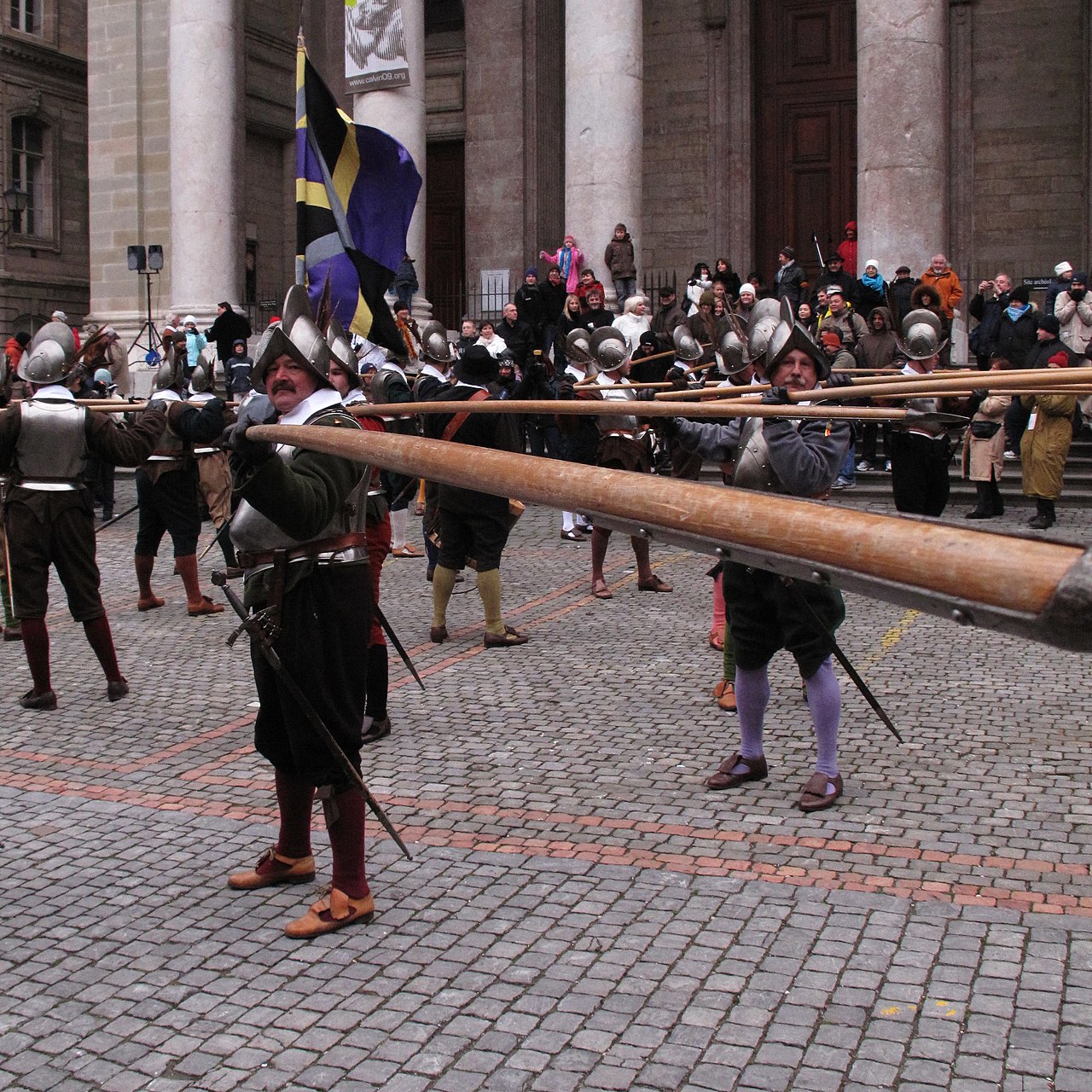


Design and construction
Pikes were simple but carefully constructed. The shaft was normally of a tough hardwood such as ash and was long enough to project many metres ahead of the front rank. The head was metal, shaped for powerful thrusts rather than slashing, and the shaft beneath the head was often reinforced with metal strips (langets) to prevent the tip being cut away by swords or axes. Many pikes also carried a butt spike or ferrule to steady the weapon when planted and to protect the heel of the staff.
- Shaft: straight, long and resilient; increased in length over centuries as tactics evolved.
- Head: sturdy, often leaf-shaped or diamond in section for deep, penetrating thrusts.
- Langets: narrow metal bands running down the shaft beneath the head to guard against bladed attacks.
- Butt spike/ferrule: served as a counterbalance and secondary weapon if needed.
Variations and related polearms
Not all long pole arms are strictly pikes. Shorter staffs used by officers or for signalling, such as the spontoon, and certain polearms with cutting edges coexist in the wider category of pole weapons. A clear distinction is that a true pike is designed primarily for thrusting in formation and not for throwing; it also differs from a cavalry lance, which is adapted for use from horseback.
Formations, tactics and training
Pikes were effective only when used collectively. Pikemen were deployed several ranks deep so that the points of rear ranks extended beyond those in front, allowing the formation to present many spearheads simultaneously and to relieve the front rank when they tired or fell. Such formations demanded drilling, discipline and coordinated movement. When combined with missile troops and early firearms, pikemen provided protection for gunners and formed the backbone of defensive and offensive infantry tactics.
Historical development
The concept of long spears in tight formation dates to antiquity: large shield-and-spear formations such as the classical phalanx and the Macedonian sarissa phalanx established under Philip II of Macedon are well known examples, and similar ideas appear across the ancient world. In medieval and Renaissance Europe, pikes reappeared and evolved as a response to heavy cavalry, becoming prominent among Swiss and other northern infantry. The schiltron or similar dense blocks of spearmen are associated with defensive successes by commanders such as William Wallace and Robert the Bruce against mounted knights, and chronicles describe encounters with the cavalry of rulers like Edward I of England and Edward II of England.
Pike-and-shot and the later decline
From the 16th century the pike was commonly paired with firearms in the so‑called pike‑and‑shot formations: musketeers and arquebusiers provided missile fire while pikemen protected them from cavalry and close assault. This combined‑arms approach dominated many battlefields until the gradual adoption of the socket bayonet and improved musket drill allowed infantry to both fire and defend themselves without separate pikemen. By the later 17th and early 18th centuries the long pike had largely been phased out of regular European service, though shorter spears and ceremonial forms persisted.
Terminology and distinctions
Important distinctions include that a pike is not a javelin (a thrown weapon) and that a pike differs in use and form from cavalry lances. Historical terminology varies by language and period; related concepts include the ancient phalanx and medieval blocks such as the schiltron used in the British Isles. Foot soldiers equipped with pikes are commonly called pikemen or pike troops, and their effectiveness rested on unit cohesion and sustained drill (infantry training and discipline being central).
Legacy and cultural role
Although obsolete as a field weapon, the pike influenced military organization, drill and combined‑arms thinking. Its legacy survives in museum collections, historical reenactment and some ceremonial guards where long spears are used as symbols of tradition. Study of pike warfare illuminates transitions from ancient massed spears through medieval infantry tactics to the gunpowder age and the eventual dominance of firearm‑based infantry.
Because the pike’s effectiveness depended on mass and coordination rather than individual heroics, it helps explain broader changes in army composition, logistics and command that accompanied the rise of standing armies and more complex battlefield management in the early modern era.
For more on the weapon, its variants and its role in specific battles and armies, consult specialized military histories and museum catalogues.
See also: Early Middle Ages for continuity in polearm use and the evolution of infantry tactics.
Related articles
Author
AlegsaOnline.com Pike (weapon): long infantry spear, design, tactics and historical role Leandro Alegsa
URL: https://en.alegsaonline.com/art/76900