
Pincer movement (double envelopment): tactic, history, and modern use
A military maneuver in which forces strike both sides of an opponent to surround or cut it off. Covers execution, history, examples, variations, and tactical limits.
Overview
The pincer movement, often called a double envelopment, is a military maneuver in which opposing forces are attacked simultaneously on both flanks to isolate and surround them. It relies on coordinated movement, timing, and the ability to hold or fix the enemy in the center while mobile elements move around the sides. For a concise primer on the concept see this summary.
Image gallery
3 Images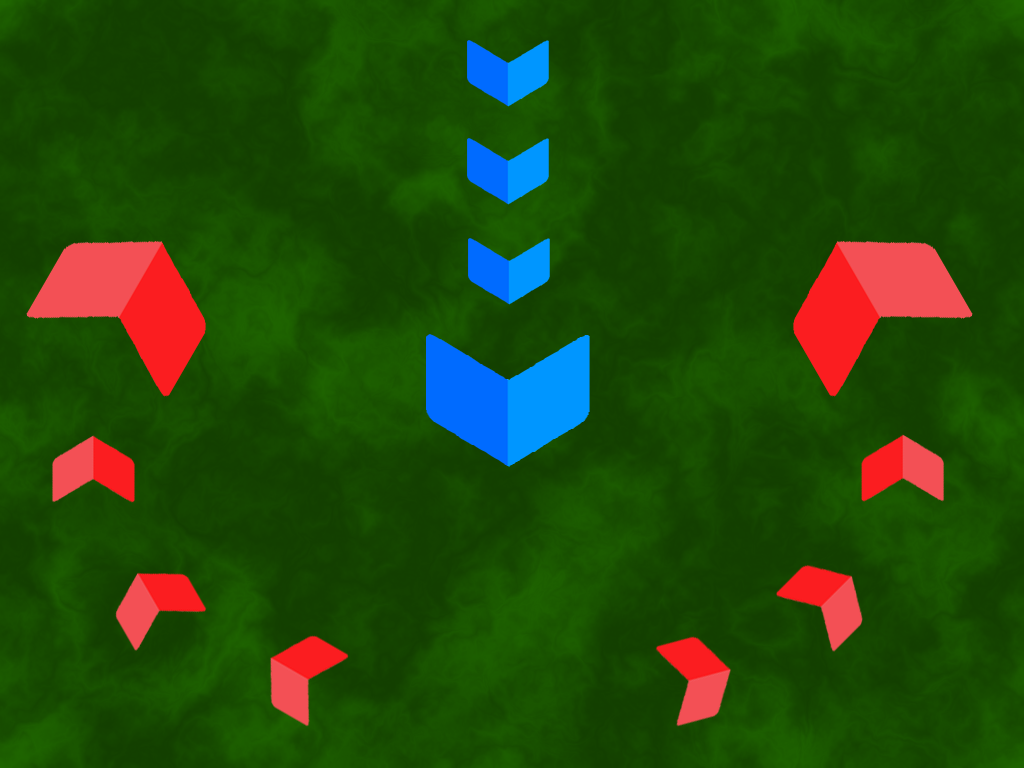


Key components and execution
Successful envelopment depends on several interrelated elements: superior mobility on the wings, reliable communication, a force left in the center to engage and occupy the opponent, and secure lines of supply for the enveloping units. Commanders typically follow a sequence of actions:
- Fix the adversary by engaging its front or center to prevent redeployment.
- Advance the wing forces outward and forward to extend beyond the enemy flanks.
- Link or close behind the enemy to form a continuous encirclement.
Discussion of flank dynamics and related maneuvers often refers to both short and deep flanking operations; see further material on the role of the flanks and the behavior of an enemy formation under pressure.
Historical development and examples
Envelopment has ancient roots and appears in many eras of warfare. Classical commanders used variations of the move; one of the most cited examples is the double envelopment at Cannae in 216 BCE. In later periods, commanders such as Hannibal, Napoleon, and others adapted the principle to available troop types and terrain. Armies have repeatedly returned to envelopment because it can convert tactical advantage into decisive victory by trapping forces and destroying their cohesion.
Modern uses and adaptations
In modern combined-arms operations, pincers are implemented with infantry, armor, artillery, and air support working together. Mechanized forces and aircraft increase the speed and depth of flanking moves, while logistics and electronic coordination determine feasibility. Planners also consider political, humanitarian, and legal constraints before executing large-scale encirclements in contemporary conflicts involving civilian areas or irregular forces.
Variations, limitations, and notable considerations
There are many variants, such as partial envelopment (attacking one flank and rear) or the double-pincer with multiple concentric rings. Limitations include risk of overextension, vulnerability of the wings to counterattack, and the requirement for accurate timing. Commanders must weigh terrain, weather, and the enemy's potential for breakout or relief by friendly forces. For a broad look at how formations adapt, consult resources on the concept of army maneuver and operational art.
- Advantages: Can produce decisive encirclement and surrender of forces.
- Risks: Demands coordination; exposed flanks can be cut off if misjudged.
Questions and answers
Q: What is the pincer movement tactic?
A: The pincer movement, or double envelopment, is a tactic in which forces attack both flanks (sides) of an enemy formation at the same time.
Q: When is the pincer movement used?
A: The pincer movement can be used when opposing forces advance towards the center of an army.
Q: How does an army respond to the pincer movement?
A: That army responds by moving its outside forces to the enemy's flanks to surround it.
Q: What is the purpose of a second layer of pincers in the pincer movement?
A: At the same time, a second layer of pincers may attack on the more distant flanks to cut off the enemy reinforcements.
Q: When is the pincer movement particularly effective?
A: The pincer movement is particularly effective against armies that are weak or divided.
Q: Is the pincer movement an ancient tactic or can it still be used today?
A: The pincer movement is a historically-proven tactic that can still be an effective strategy in modern warfare.
Q: Can the pincer movement be used in offensive as well as defensive situations?
A: Yes, the pincer movement can be used in both offensive and defensive situations.
Related articles
Author
AlegsaOnline.com Pincer movement (double envelopment): tactic, history, and modern use Leandro Alegsa
URL: https://en.alegsaonline.com/art/76949