
Phalanx formation
Dense infantry formation used by ancient Greek city-states and later Macedonians; a tactical block of shields and spears whose design, strengths and limits shaped classical warfare.
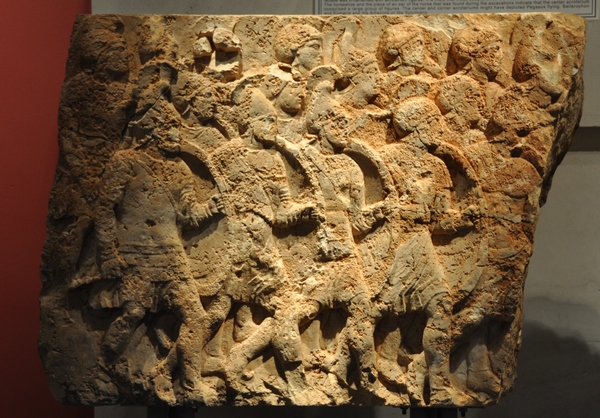
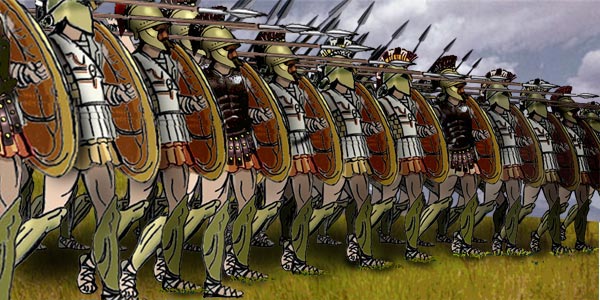
The phalanx was a dominant infantry formation in the ancient Mediterranean and is most closely associated with classical Greek warfare. In simplest terms it was a compact, rectangular block of soldiers who advanced and fought as a single unit, relying on overlapping shields and projecting spearpoints to create a defensive and offensive wall. The name and many modern studies come from Greek sources; for a basic lexical note see Greek terminology.
Image gallery
10 Images



Characteristics and equipment
Different city-states and eras produced variations, but a typical hoplite phalanx was built around heavy infantry carrying a large round shield, a spear and a short sword, supported by protective armor. Key features included:
- Close rank-and-file formation that maximized mutual protection and massed striking power.
- Primary weapon: spear or pike held to present a continuous front of points.
- Shieldwork: shields overlapped to protect the bearer and the soldier to the left, creating collective defense.
- Mobility: limited compared with loose skirmish formations; cohesion was essential to effectiveness.
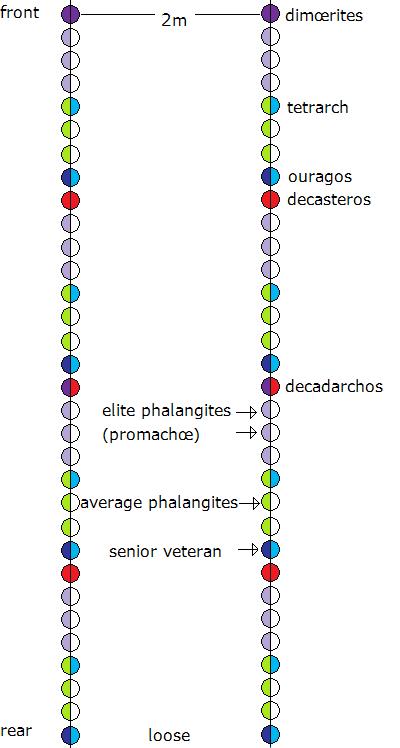
Later innovations, most notably the Macedonian phalanx, substituted a much longer pike (the sarissa) and required different drill and spacing; more on that in the section below. For equipment comparisons see armament studies and weapon reconstructions.
Tactics, strengths and limitations
The principal tactical advantage of the phalanx was its ability to deliver concentrated pressure along a single front: advancing as a compact mass it could push and break thinner or less disciplined lines. When well-drilled, units maintained formation under stress and presented a formidable obstacle to frontal assault.
However, the formation had notable weaknesses. Its flanks and rear were vulnerable if exposed; rough or broken ground reduced cohesion and effectiveness; and the dense block lacked flexibility for independent action. These limitations made combined arms — particularly cavalry and light infantry — increasingly important. For terrain and cavalry considerations consult terrain effects and cavalry complements.
In many mainland Greek states cavalry was limited by the cost of horses and local terrain, which favored infantry-based tactics. This contrast is discussed in sources addressing logistics and landscape: economic constraints and Peloponnesian topography.
Development and historical impact
The phalanx evolved from earlier shield-wall traditions into a disciplined battlefield formation that defined hoplite warfare between city-states. During the fourth century BCE Philip II of Macedon adapted and standardized the model, creating longer-reaching pikes, deeper files and tighter drilling. His son Alexander used a Macedonian phalanx in combination with more developed cavalry to conduct his campaigns across Persia and beyond; for campaign context see Macedonian reforms and Alexander's combined arms.
Although eventually superseded by more flexible legionary systems in the Hellenistic and Roman worlds, the phalanx left a lasting legacy on military thought: it illustrated the power of unit cohesion, the trade-off between protection and mobility, and the value of integrating different troop types. For further reading and archaeological perspectives try specialist analyses.
Questions and answers
Q: What is the phalanx formation?
A: The phalanx formation is an Ancient Greek term for a block-like infantry formation.
Q: Who were the hoplites?
A: The hoplites were heavy infantry in Ancient Greece.
Q: What weapons were used by the hoplites?
A: The hoplites were armed with spears, swords, or similar weapons.
Q: How did the mass of infantry move during battles using the phalanx formation?
A: The mass of infantry marched forward as one entity against opponents using the phalanx formation.
Q: Why was cavalry rare in Ancient Greece?
A: Cavalry was rare in Ancient Greece partly because horses were a scarce resource, and partly because the lack of space on valley floors in the Peloponnese left little room for cavalry manoeuvres.
Q: Was the Macedonian phalanx supported by cavalry?
A: Yes, the Macedonian phalanx was always supported by cavalry in the conquests of Alexander the Great.
Q: Who used the phalanx formation in Ancient Greece?
A: The system was used by city states, who often fought each other.
Related articles
Author
AlegsaOnline.com Phalanx formation Leandro Alegsa
URL: https://en.alegsaonline.com/art/76325