
Edward I of England (Longshanks): king, lawgiver and military ruler
Plantagenet king (1272–1307) known as Longshanks; reformed royal government and law, conquered Wales, fought in Scotland, held the Model Parliament and expelled Jews from England.
Edward I (17 June 1239 – 7 July 1307), commonly called Longshanks and later dubbed the "Hammer of the Scots," was a Plantagenet king whose reign reshaped English government, law and frontier policy. Son of Henry III and Eleanor of Provence, he came to prominence fighting in the baronial conflicts of the 1260s, took part in a crusade as a young prince, and succeeded to the throne in 1272. His reign combined energetic military campaigning with a systematic program of legal reform and administrative centralization.
Image gallery
10 Images




Early life and accession
Edward grew up amid the tensions between the crown and magnates that erupted in the Second Barons' War. In his youth he fought against the baronial leader Simon de Montfort to restore his father's authority, an experience that strengthened his appetite for firm royal government. He travelled to the eastern Mediterranean on crusade in the early 1270s; his father died while Edward was returning, and he was formally proclaimed king in 1272, though he was not crowned until 1274.
Government, law and Parliament
Edward sought to strengthen royal justice and fiscal capacity. His reign issued a sequence of statutes and legal measures that reined in abuses, clarified property law and regulated feudal relationships. Notable legislative acts of the period include statutes often grouped under the Statutes of Westminster and the reforming statute of Quia Emptores, which affected the transfer of land. Edward also convened what historians call the "Model Parliament" in 1295, a broader assembly of barons, knights and burgesses that helped regularize the role of representative councils in royal government and increased parliamentary involvement in taxation and policy (parliament).
Conquest of Wales and frontier policy
Edward led a sustained campaign to bring Wales under English control. After a series of military operations in the 1270s and early 1280s he suppressed Welsh resistance and established a tighter form of rule. To secure the newly acquired territories he commissioned an ambitious program of fortifications and new towns — the famous concentric castles and garrison settlements that became durable symbols of English authority. These measures were accompanied by legal and administrative arrangements that marginalized native Welsh elites and have been described by contemporaries and later writers as harsh or punitive (Wales).
Scotland, warfare and later years
On Scotland Edward attempted to assert overlordship during a period of dynastic crisis. He intervened in Scottish politics, deposed a king and launched invasions that brought parts of Scotland under English control for a time. Prolonged resistance followed, including the rise of figures such as William Wallace and later Robert the Bruce, so that Edward's campaigns became a defining, costly series of conflicts on his northern frontier. His military reputation and determination in these wars contributed to the nickname "Hammer of the Scots" (Scotland).
Other policies, reputation and legacy
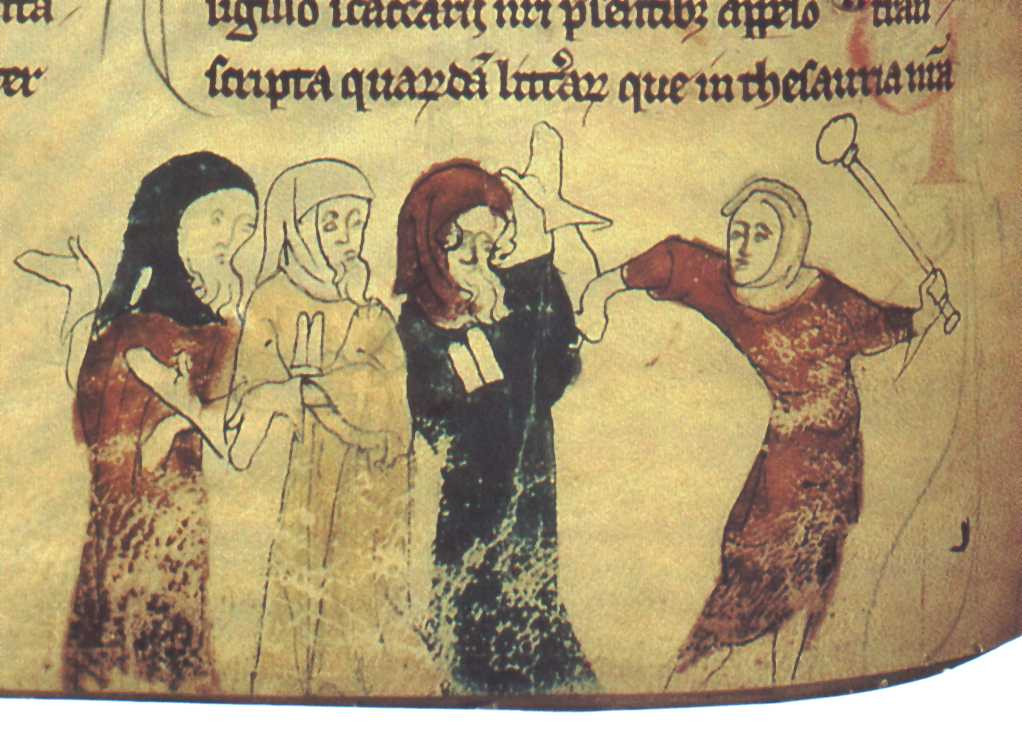
Edward exercised strict fiscal and administrative discipline, improving royal record-keeping and systems of justice. In 1290 he issued an edict ordering the expulsion of the Jewish community from England, a decree that remained in force for several centuries and is a much-criticized aspect of his rule (Jews). He is remembered for a mixed legacy: a stronger, more centralized monarchy, permanent legal and parliamentary developments, an architectural legacy of castles and towns, and a reputation for severity in the pursuit of order and conquest. He died in 1307 while preparing fresh campaigns in Scotland.
Notable points
- Nicknames: "Longshanks" for his height; "Hammer of the Scots" for his campaigns.
- Legal impact: Consolidation of statutes and procedures that influenced English common law and land tenure.
- Military legacy: Edwardian castles and a more professional approach to musters, sieges and logistics.
- Controversies: Harsh policies in Wales and the expulsion of Jews remain focal points for criticism.
For further reading and resources see contemporary chronicles and modern studies that examine Edward's legislation, castle-building program and the long-term consequences of his wars in Wales and Scotland.
Eleanor of Provence | Henry III | Simon de Montfort | Parliament | Wales | Scotland | Jews
Questions and answers
Q: Who was Edward I?
A: Edward I was a Plantagenet King of England who reigned from 21 November 1272 until his death in 1307.
Q: Who were Edward I's parents?
A: Edward I's mother was Queen Eleanor of Provence and his father was King Henry III of England.
Q: What did Edward do to defend his father's crown?
A: As a younger man, Edward fought against Simon de Montfort in defence of his father's crown.
Q: What did he do on a Crusade?
A: On a Crusade, Edward went on an expedition to the Holy Land with other Christian knights.
Q: How did he improve the laws and make Parliament more important?
A: As a ruler, he improved the laws and made Parliament regular, and more important by giving it greater power over taxation and law-making decisions.
Q: How did he conquer Wales?
A: He conquered Wales by subduing them through brutal policies such as building castles throughout their land.
Q: How did he control Scotland during his lifetime?
A: He determined to control Scotland through puppet kings and just managed to do it during his lifetime by installing Scottish lords loyal to him as rulers in various regions.
Related articles
Author
AlegsaOnline.com Edward I of England (Longshanks): king, lawgiver and military ruler Leandro Alegsa
URL: https://en.alegsaonline.com/art/118154