
Piatnitzkysaurus — Middle Jurassic theropod from Argentina
Piatnitzkysaurus is a genus of basal tetanuran theropod from Middle Jurassic Argentina. A lightly built, bipedal carnivore roughly 6.6 m long, important for understanding Jurassic Gondwanan faunas.
Overview
Piatnitzkysaurus (literally "Piatnitzky's lizard") is a small-to-medium sized genus of carnivorous dinosaur that lived during the Middle Jurassic, about 166–164 million years ago. Its fossils have been recovered in what is now Argentina. The animal is interpreted as a lightly built, fast-moving theropod dinosaur that grew to an estimated maximum length of around 6.6 m and occupied a predatory role in Jurassic ecosystems.
Image gallery
10 Images
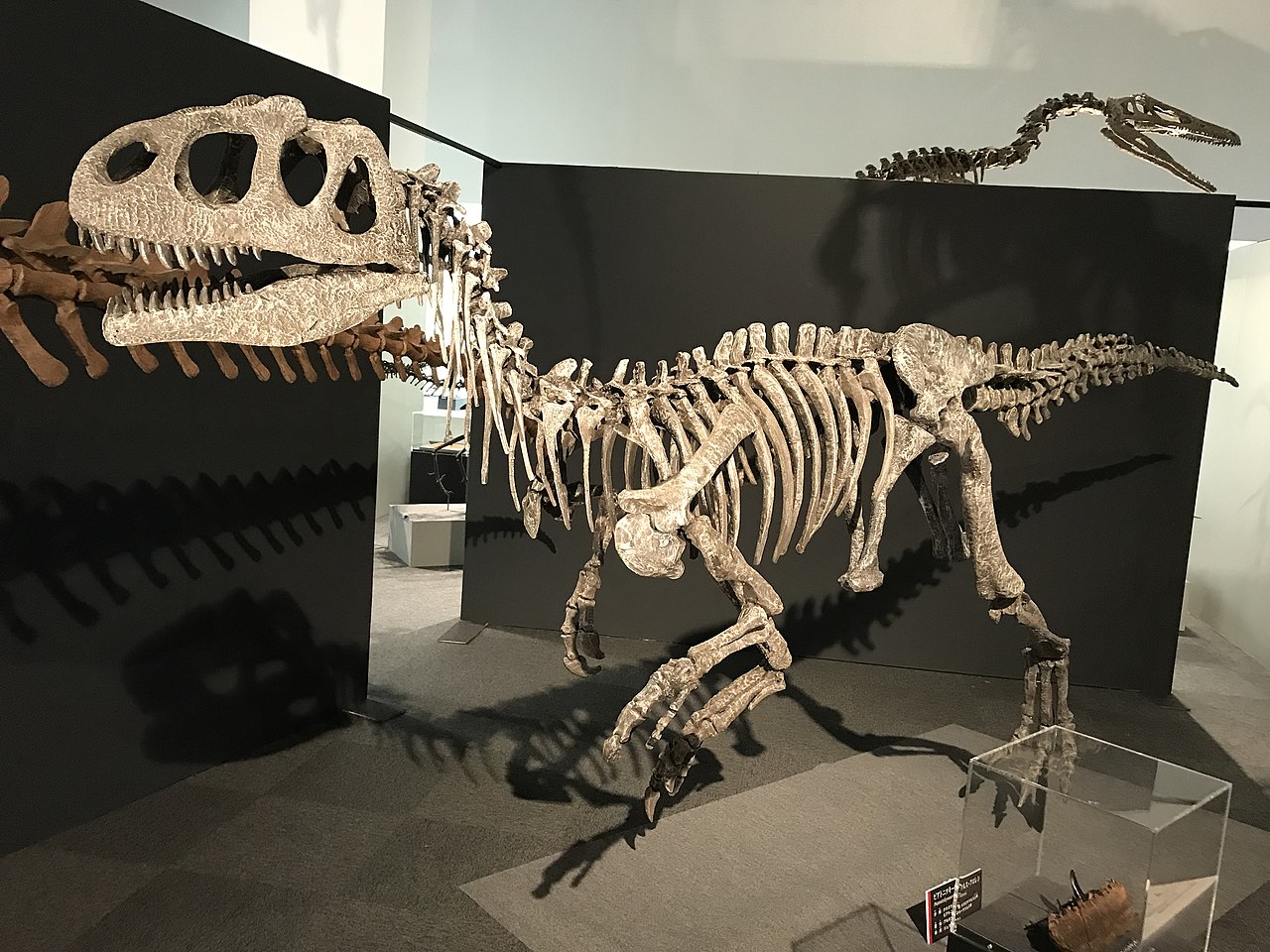


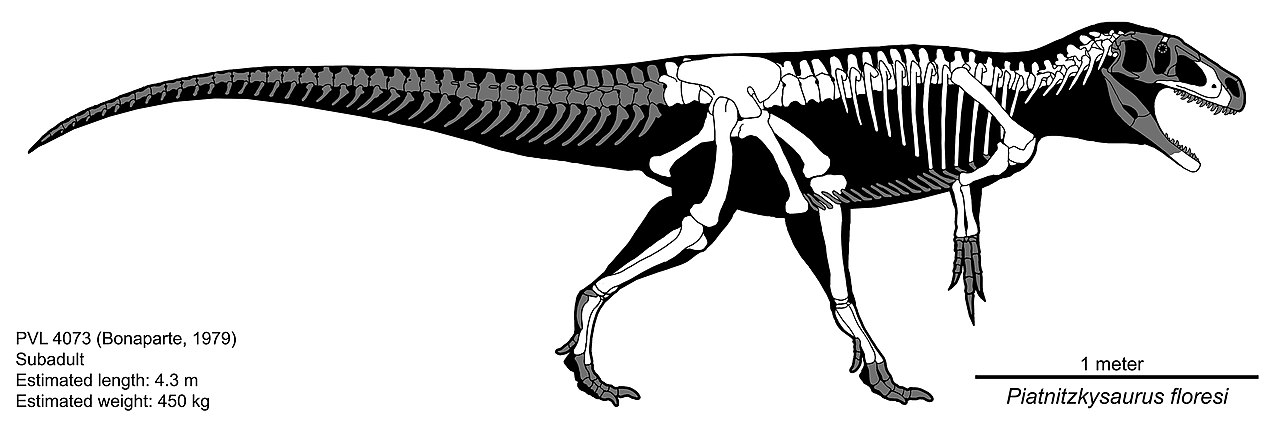
Anatomy and distinguishing features
Piatnitzkysaurus combined a gracile overall build with several features typical of early tetanurans. Notable traits include a relatively long, narrow skull; hollow limb bones adapted for agility; and recurved teeth suited to slicing flesh. Limb proportions indicate an obligate, ground‑dwelling bipedal stance, and its dentition and jaw mechanics are consistent with an active carnivore.
Key characteristics
- Length: up to roughly 6.6 m (about 21.7 ft).
- Body plan: lightly built, long-tailed, bipedal theropod.
- Skull & teeth: blade-like teeth and a lean skull adapted for predation.
- Posture: erect hindlimbs and grasping forelimbs typical of predatory behavior.
Discovery and naming
Material of Piatnitzkysaurus was recovered in Patagonia and subsequently studied by paleontologists in the late 20th century. The name reflects the commemorative epithet "Piatnitzky's lizard"; its formal description helped establish one of the better-documented Middle Jurassic theropods from South America, a period and region with relatively sparse terrestrial records compared with later intervals.
Classification and relationships
Researchers commonly place Piatnitzkysaurus among basal members of Tetanurae, the clade that includes most later theropods and birds, and it has sometimes been assigned to its own family grouping by specialists. Its mix of primitive and derived traits makes it important for studying the early diversification of meat‑eating dinosaurs and how those lineages dispersed across Gondwana during the Jurassic.
Paleobiology and significance
As a mid-sized predator, Piatnitzkysaurus likely preyed on smaller dinosaurs, reptiles and other vertebrates available in Jurassic ecosystems of southern continents. Its anatomy implies active pursuit or ambush strategies rather than scavenging specialization. Paleontologists value the genus because it provides insight into Middle Jurassic faunas in the southern hemisphere and helps bridge morphological gaps between earlier theropods and the more derived tetanuran groups that dominate later Mesozoic faunas.
For concise summaries and specimen records see resources on the genus and related taxa: genus overview, theropod context, dinosaur classification, geologic age, locality information, locomotion studies, and diet and ecology.
Questions and answers
Q: What is Piatnitzkysaurus?
A: Piatnitzkysaurus is a genus of theropod dinosaur.
Q: When did Piatnitzkysaurus live?
A: Piatnitzkysaurus lived about 166 to 164 million years ago in the middle Jurassic Period.
Q: Where were the remains of Piatnitzkysaurus found?
A: The remains of Piatnitzkysaurus were found in Argentina.
Q: What type of animal was Piatnitzkysaurus?
A: Piatnitzkysaurus was a fairly large, lightly built, bipedal, land-based carnivore.
Q: How long could Piatnitzkysaurus grow?
A: Piatnitzkysaurus could grow up to 6.6 m (21.7 ft) long.
Q: What does the name of Piatnitzkysaurus mean?
A: The name Piatnitzkysaurus means "Piatnitzky's lizard".
Q: What period did Piatnitzkysaurus live in?
A: Piatnitzkysaurus lived in the middle Jurassic Period.
Related articles
Author
AlegsaOnline.com Piatnitzkysaurus — Middle Jurassic theropod from Argentina Leandro Alegsa
URL: https://en.alegsaonline.com/art/76703