
Pig-nosed turtle (Carettochelys insculpta)
A distinctive freshwater turtle with a fleshy, pig-like snout and flipper-like limbs, native to northern Australia and southern New Guinea; an evolutionarily unique species facing conservation pressures.
Overview
The pig-nosed turtle, Carettochelys insculpta, is a large freshwater species notable for its unusual appearance and evolutionary distinctiveness. Commonly called the pig-nosed or Fly River turtle, it combines features seen in sea turtles (paddle-like forelimbs) with the freshwater habits of riverine turtles. It occupies a specialized ecological role in the rivers and floodplains where it lives.
Image gallery
1 Image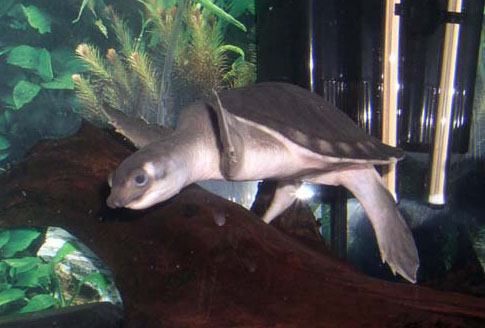
Physical characteristics
This turtle has a smooth, leathery carapace with reduced scutes that gives a pitted or textured look, and a soft underside. The most striking feature is a short, flexible snout shaped somewhat like a pig's nose, used to breathe while submerged. Its forelimbs are broad and paddle-shaped, adapted for efficient swimming, while rear limbs retain webbing and claws.
Habitat and distribution
Found in freshwater rivers, streams and associated lagoons, the species ranges through parts of northern Australia and southern New Guinea. It prefers slow-moving waters with sandy banks for nesting and adjacent forest or floodplain vegetation that provides food and cover. The pig-nosed turtle is one of the few freshwater turtles with flipper-like limbs.
Diet and behaviour
Omnivorous in habit, the pig-nosed turtle eats a mix of aquatic plants, fallen fruit, and animal matter such as insects and small invertebrates. Adults are largely aquatic but females come ashore to lay clutches of eggs in sandy nests. Young turtles spend months in river margins where shelter and food are abundant.
Conservation and human interactions
This species is evolutionarily unique and has attracted attention in the pet trade, which, together with hunting for meat, egg collection and habitat alteration, has placed pressure on wild populations. It is listed by international assessments as facing conservation concern. Management actions include protected nesting sites, trade regulation and community-based programs to reduce illegal harvest.
Notable facts
- It is the only living member of its family, giving it high scientific interest.
- Its combination of freshwater habits and sea-turtle-like limbs makes it readily distinguishable from most other river turtles, including more familiar turtle species.
Related articles
Author
AlegsaOnline.com Pig-nosed turtle (Carettochelys insculpta) Leandro Alegsa
URL: https://en.alegsaonline.com/art/76871