
Parnassiinae: the Apollos and Parnassians (a Holarctic butterfly subfamily)
Parnassiinae is a subfamily of Papilionidae—commonly called Apollos or Parnassians—found across the Holarctic. This article describes their appearance, life cycle, mimicry, sphragis mating plug, habitat and conservation.
The Parnassiinae are a distinctive subfamily of butterflies within the swallowtail family Papilionidae. Often referred to as Apollos or Parnassians, these butterflies are mostly associated with cool, open habitats of the northern hemisphere. They are best known for pale, often translucent wings marked with contrasting spots and for life histories adapted to alpine, montane and steppe environments.
Image gallery
9 Images






Appearance and distinguishing traits
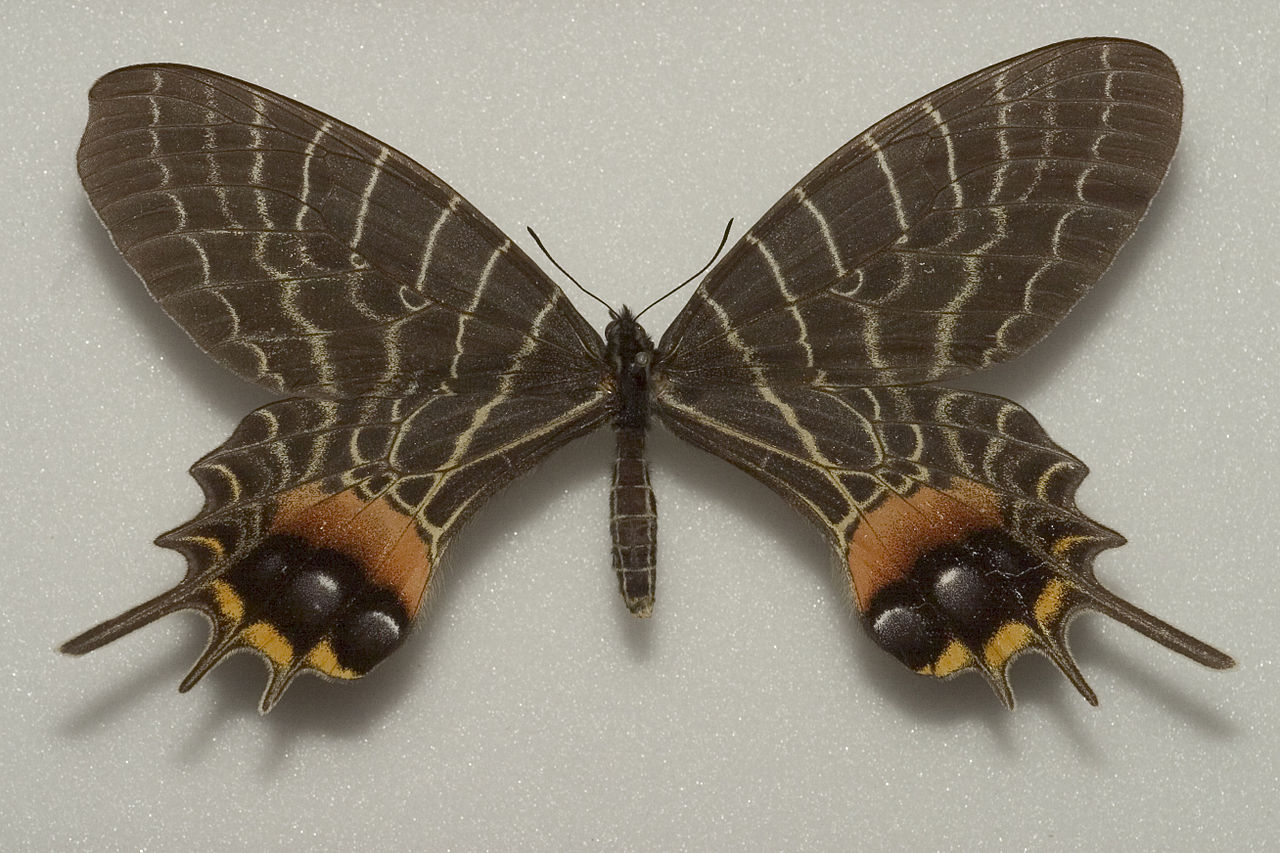
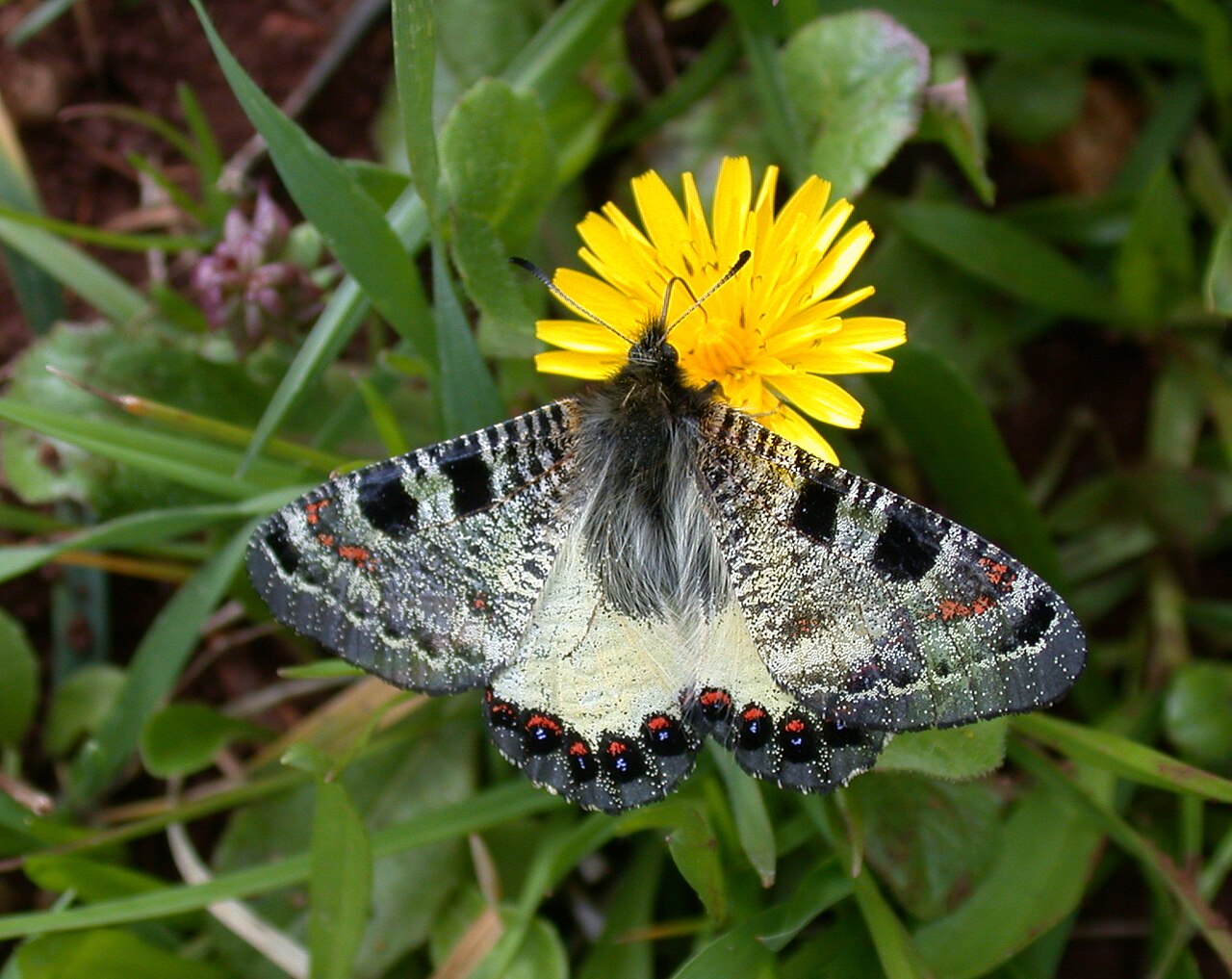
Adults typically show white, cream or pale yellow backgrounds with black, red or orange eye-spots and dark venation. Their flight is frequently slow and fluttering, allowing easy observation of wing patterns and markings. The larvae are usually robust and conspicuous; both the caterpillars and the adults possess chemical defenses that make them poisonous or unpalatable to many predators, particularly vertebrates. These warning signals are often reinforced by mimicry complexes: caterpillars can resemble distasteful millipedes (a possible case of Müllerian mimicry), and adults may share pattern features with some Pieridae, the so-called adult Whites, helping predators learn to avoid them.
Distribution and habitat
Parnassiinae are restricted to the Holarctic realm, meaning their natural range includes much of northern North America and large parts of Eurasia. Many species occupy high-altitude alpine meadows, rocky slopes and tundra-like habitats where their host plants and cool microclimates occur. Some taxa are widespread across mountain ranges, while others are narrowly endemic to single ranges, valleys or plateaus.
Life cycle, host plants and reproduction
Larvae feed on a variety of low-growing herbaceous plants; host preferences vary by species and can include members of several plant families common in open, rocky habitats. After mating the male often applies a specialized structure to the female’s abdomen that functions as a physical mating plug: during mating the male glues a sclerotized pad to the end of the female's abdomen. This sphragis reduces the chance of subsequent mating and is a notable reproductive adaptation in this group. Pupation and overwintering strategies are tied to seasonal climates; many species have a single generation per year in cold habitats.
Conservation, research and human interest
Several Parnassiinae species attract attention from entomologists and nature photographers because of their beauty and montane specializations. At the same time, their reliance on restricted habitats makes some species vulnerable to habitat loss, climate change and over-collecting. Conservation measures emphasize habitat protection, monitoring of population trends and research into the effects of warming on elevational ranges. Scientific study of their chemical defenses, mimicry relationships and the evolutionary origin of the sphragis continues to provide insights into insect ecology and reproductive biology.
Notable points and study directions
- Presence of visual warning signals and chemical defenses in both life stages.
- Müllerian mimicry complexes that involve both larvae and adults.
- Specialized mating adaptations such as the sphragis, uncommon in most butterflies.
- High conservation value due to many range-restricted species and sensitivity to climate shifts.
For further general reading and species accounts consult regional guides and taxonomic treatments; specialized literature explores phylogeny, biogeography and the ecology of alpine Lepidoptera. Additional online resources and databases can provide distribution records and conservation status assessments for specific Parnassiinae taxa.
Related articles
Author
AlegsaOnline.com Parnassiinae: the Apollos and Parnassians (a Holarctic butterfly subfamily) Leandro Alegsa
URL: https://en.alegsaonline.com/art/74782