
Parrotfish: colorful reef grazers and reef engineers
Parrotfish are tropical marine fishes (about 95 species) notable for a beak-like dental plate, colourful sex-dependent coloration, mucous sleeping cocoons, and a key role in coral reef grazing and bioerosion.
Overview
Parrotfishes are a group of marine fishes found in shallow tropical and subtropical waters worldwide, with greatest diversity in the Indo-Pacific. Historically treated as their own family (Scaridae), modern classifications usually place them within the larger wrasse family (Labridae). There are roughly 90–100 described species; they are most commonly encountered around coral reefs and adjacent seagrass beds. Parrotfishes are strikingly colorful and ecologically important grazers.
Image gallery
10 Images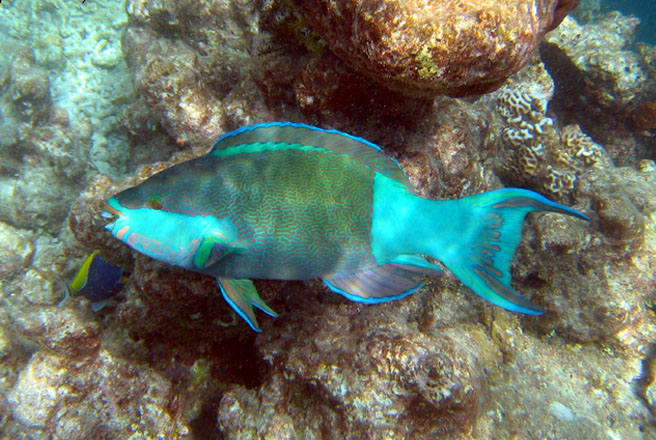


Physical characteristics
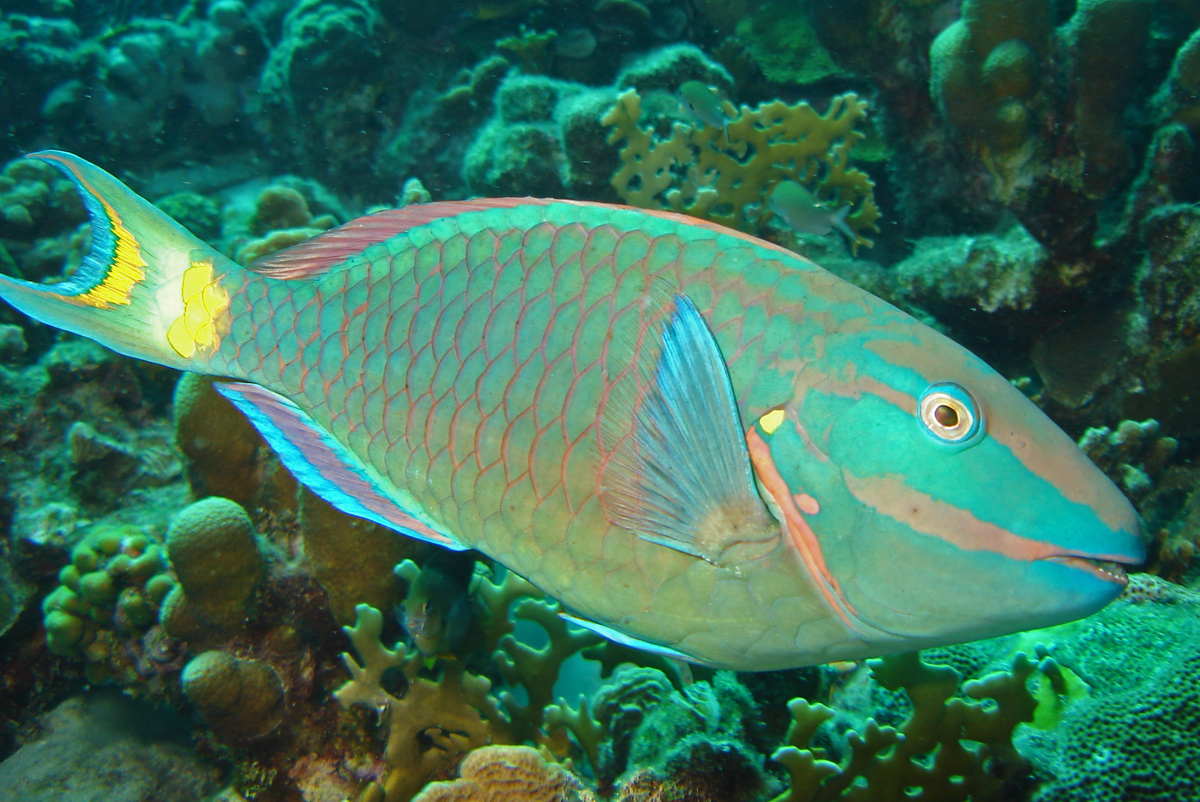
Parrotfish are named for the strong, parrot-like 'beak' formed by tightly packed teeth fused into a dental plate, used for scraping and biting substrate—a resemblance to a parrot beak is the origin of their common name (beak analogy). Their bodies often show dramatic color differences between sexes and life stages; many species exhibit an initial (often female or juvenile) phase and a terminal (often male) phase with distinct patterns. Typical traits include:
- Fused teeth forming a robust scraping plate.
- Flattened, elongated bodies suited to reef crevices.
- Bright, variable coloration and sometimes complex sexual dichromatism.
Feeding, behavior and 'sleeping sacks'
Most parrotfishes feed by rasping algae, filamentous plant material, and the organic layer from coral and rock surfaces. In the process some species bite and grind bits of coral skeleton, a behavior that contributes to bioerosion and sand production on reefs. At night many parrotfishes produce a mucous cocoon or 'sleeping sack' before settling to rest; this semi-translucent envelope is secreted by the fish’s mucous glands and is thought to mask scent from predators and reduce parasite contact.
Reproduction and social structure
Parrotfishes display varied reproductive systems. A large proportion are sequential hermaphrodites—commonly protogynous—where individuals begin life as females and later change to males, often associated with social hierarchies and territory control. Others maintain separate sexes. Social groups, spawning aggregations and lek-like behaviors occur in some species, and color phases frequently signal sex or status within the group.
Ecological role and human importance
Parrotfishes play several key roles on reefs:
- Grazing on algae helps prevent algal overgrowth that can smother corals.
- Bioerosion and the breakdown of coral produce white sand and shape reef structure.
- As prey and consumers, they are integral to reef food webs.
Conservation, threats and notable facts
Threats to parrotfish populations include overfishing, habitat loss, and the indirect effects of climate change on coral reefs. Protecting parrotfishes can support reef resilience by maintaining grazing pressure and sand production. Interesting points: their vivid coloration often changes with age and sex, their dental plate is constantly worn and regrown, and their nightly mucous cocoons are one of the more unusual vertebrate behaviors described for reef fishes.
Further reading and resources: see materials on marine habitats, taxonomic notes on Scaridae and Labridae, ecological studies of coral reef dynamics, and general references on the parrot-like parrot analogy and tooth beak structure.
Related articles
Author
AlegsaOnline.com Parrotfish: colorful reef grazers and reef engineers Leandro Alegsa
URL: https://en.alegsaonline.com/art/74805